


Published on •Updated
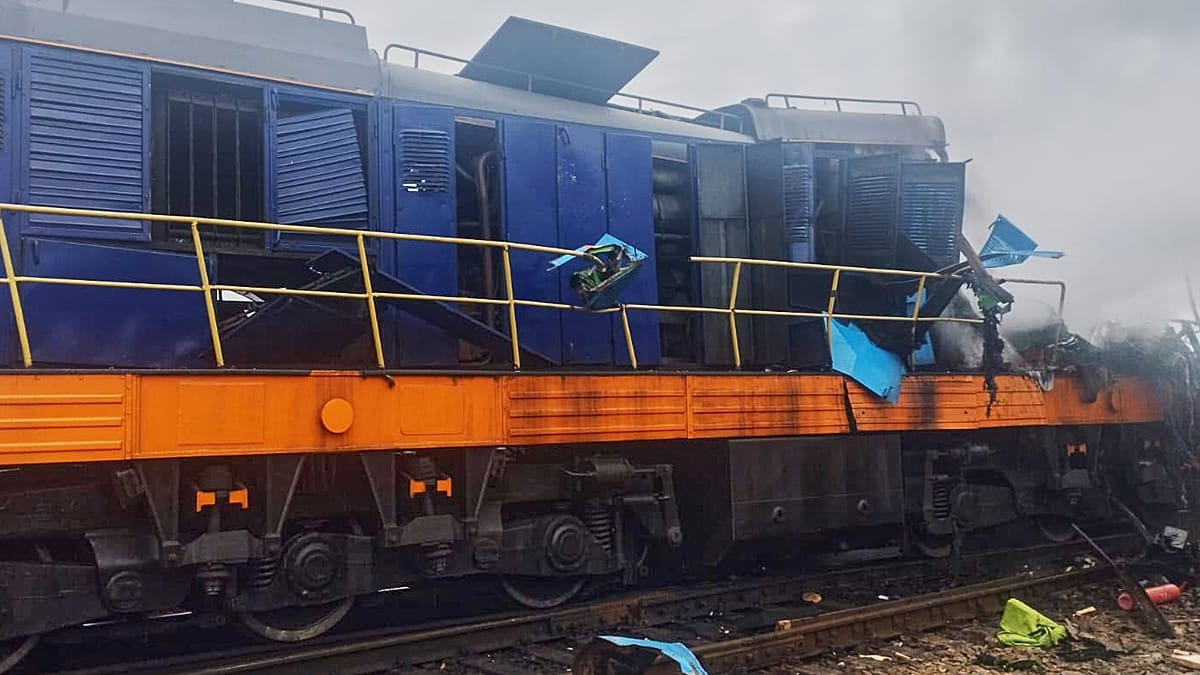
Poland’s Prime Minister Donald Tusk said he expected Moscow to escalate the war in “in the coming weeks”, following Russian strikes that hit a Warsaw-bound train in Ukraine, just two kilometres from its border with Poland.
EU foreign policy chief Kaja Kallas said she believed Russia’s strike to close to the Polish border was designed to “scare” Western countries backing Kyiv.
“It is clearly meant to scare Western countries from supporting Ukraine, from going to Ukraine to show support,” Kallas said, urging Kyiv’s supporters to do “the opposite”.
Meanwhile the country’s foreign minister Radoslaw Sikorski urged allies to “double” their support for Ukraine, following what he also called an “escalation”.
The train was at Yahodyn station when the strike occured. According to reports, only the train’s engine was hit. Ukrainian authorities said all passengers were evacuated and no casualties were reported.
Shortly before the train was hit, a different train carrying senior EU officials and the former British prime minister Boris Johnson, passed through Yahodyn on the same line towards Poland on their way back from a conference in Kyiv.
At the time of the attack, on board a different train at the same station was the former CIA director David Patraeus. He told the New York Times that he heard Russian drones overhead and a subequent explosion, describing it as “terrifying”.
Russia said it had hit “railway infrastructure used to transport military cargo” from European countries.
Ukraine’s president Volodymyr Zelenskyy accused Moscow of “deliberately” striking the locomotive.
“It is precisely to prevent these strikes from spreading further into Europe that Ukrainian men and women fight every day, give their lives, and do not allow the aggression to expand,” Zelensky said.
Elsewhere, Russia’s strikes on Ukraine on Sunday killed at least two people in the city of Kramatorsk.
Ukrainian officials also reported that 20 people, including two children, had been injured in the southern port city of Odesa.
Additional sources • AP, AFP