
Published on
The United States began 2026 with fire and fury. From the toppling of President Nicolás Maduro in Venezuela in January, to today’s open conflict with Iran, which has already claimed several high-profile casualties including Ayatollah Ali Khamenei.
Europe appears shaken by the latest developments. According to a new YouTrend poll, trust in the United States is at a record low.
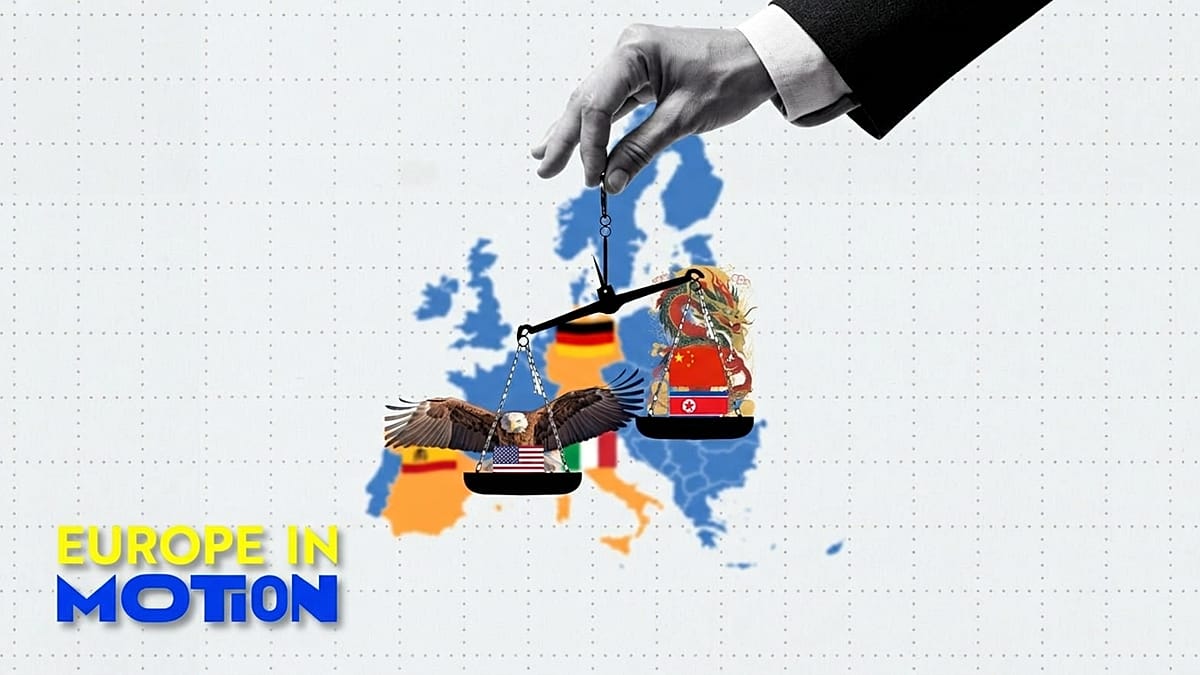
Around 20% of respondents in the UK, Germany, France, Italy, Spain and Poland now see Washington a “major threat” – a higher share than those who said the same about North Korea.
Beyond recent military operations, this judgment might also stem from the steady stream of criticisms the Trump administration has launched at Europe since taking office.
For example, claims that the EU was created to “screw the US”, or that Europeans don’t pay enough for NATO, warnings of “civilisational suicide. Not to mention the tariff war, or attempts to take Greenland.
The way each country answered about the United States closely mirrors the reactions their political leaders had to the recent geopolitical crisis.
Spain, for example, whose respondents come out as the most worried about the US (31%), was also the only EU country to openly condemn the attack on Iran, as Prime Minister Pedro Sánchez called it an “unjustified, dangerous military intervention”.
Is Trump inadvertently pushing Europeans into China’s arms?
The survey also points to a subtle shift.
Europeans appear to be warming to Washington’s main global rival, China.
Not only does Beijing rank last among the major powers considered dangerous, but in a broader list of 19 potential threats (including corruption, cybersecurity, climate and nuclear wars), almost no one (2.8%) picked China’s foreign policy as a main concern.
Yesterday, the country firmly condemned the US killing of Ali Khamenei, defining it “a grave violation of Iran’s sovereignty and security” and against UN principles.
Washington’s foreign policy, by contrast, placed second on average (21.5%).
US-Europe relationship: Point of no return or temporary crisis?
In any case, the vast majority of people in the surveyed countries see the current crisis in the US-Europe relationship more as a temporary breakup rather than a divorce.
Most respondents in France, Spain, Poland, Italy and the UK think that once Donald Trump is no longer president, US foreign policy and attitudes towards Europe will soften, with Spain being the most optimistic (55%).
Germany, however, is far more sceptical than any other country about a post-Trump normalisation of relations, with 47% thinking the rift has hit a point of no return.
Migration perceived as top issue to address across Europe
With 31% on average, migration emerges as the major concern across the countries surveyed – especially in Britain (40%) and Spain (34%).
The only exception on the migration issue is Poland, as its respondents overwhelmingly choose a potential Russian aggression as the main danger (42%), as well as armed conflicts in general (30%).
At the same time, Italians once again stand out as the population with comparatively milder views on Russia, reporting the lowest percentages among those viewing Moscow as a major threat (39%), and those who fear another military aggression in Europe (11%).