
Close Menu
Daily Guardian EuropeDaily Guardian Europe
  • Home
  • Europe
  • World
  • Politics
  • Business
  • Lifestyle
  • Sports
  • Travel
  • Environment
  • Culture
  • Press Release
  • Trending
What's On

Europe’s autonomy push exposes old fault lines – POLITICO

February 11, 2026

Ireland pushing to free citizen held by ICE in Texas – POLITICO

February 10, 2026

Lunar New Year: Travellers brave 30-hour train journeys with record 9.5 billion trips expected

February 10, 2026

EU must urgently bring down energy prices, says Austrian chancellor – POLITICO

February 10, 2026

EU Parliament reaches deal on US trade pact  – POLITICO

February 10, 2026
Facebook X (Twitter) Instagram
Web Stories
Facebook X (Twitter) Instagram
Daily Guardian Europe
Newsletter
  • Home
  • Europe
  • World
  • Politics
  • Business
  • Lifestyle
  • Sports
  • Travel
  • Environment
  • Culture
  • Press Release
  • Trending
Daily Guardian EuropeDaily Guardian Europe
Home»Environment
Environment

‘Nobody gives us any incentive’: A family’s solitary fight to save endangered plants in the Amazon

By staffFebruary 9, 20263 Mins Read
‘Nobody gives us any incentive’: A family’s solitary fight to save endangered plants in the Amazon
Share
Facebook Twitter LinkedIn Pinterest Email

By&nbspGonzalo Solano&nbspwith&nbspAP

Published on
09/02/2026 – 8:54 GMT+1

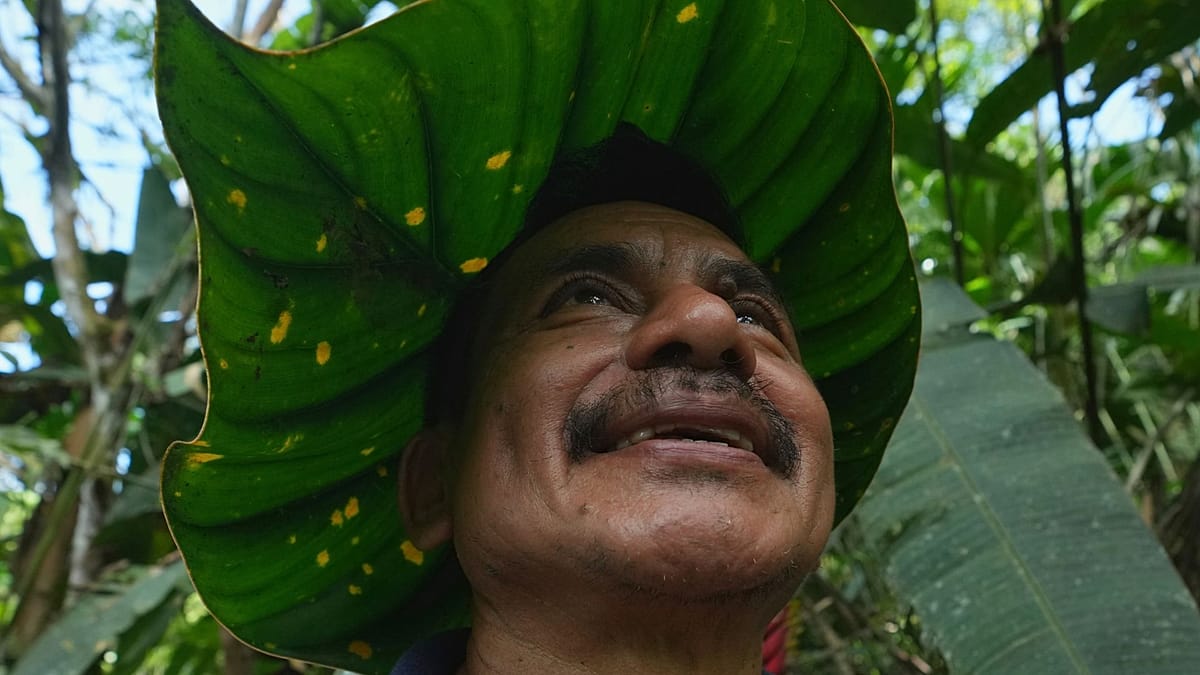
On a recent journey into the Ecuadorian Amazon jungle, Ramón Pucha realized he was being trailed. Fresh puma tracks now lined the path alongside his own footprints. Unfazed, he continued his trek, focused entirely on the precious cargo he carried – seeds from some of the world’s most endangered plant species.

Pucha and his family have spent years recreating their own piece of jungle with rescued species on a 32-hectare farm called El Picaflor in the Indigenous Quichua community of Alto Ila, 128 kilometres southeast of the capital, Quito.

“I have a passion for nature, for plants, for animals,” says Pucha, 51, noting that his drive to protect the environment is so intense that many people in his community consider him “crazy.”

Saving the Amazon, one seed at a time

To save endangered plant species, Pucha ventures deep into the jungle, often alone, for up to five days at a time. On more than one occasion, he said he returned empty-handed because – as a consequence of climate change and severe droughts across the region – many of the large trees had stopped producing seeds annually.

Once the seeds reach home, Pucha’s wife, Marlene Chiluisa, takes charge. She plants them in suitable soil and compost so that they can begin to grow into plants that are then replanted in the rainforest. The family even shares the fruits of their labor, selling or gifting a percentage of the plants to neighbours committed to forest regeneration.

Jhoel, the couple’s 21-year-old son, has stepped into his father’s role as the family’s successor. An expert botanist, he moves through the forest identifying plants by their common, traditional and scientific names with ease. He also serves as a guide, ferrying visitors across the turbulent Ila River in a precarious craft made of wooden planks lashed to a buoy.

Yet, for all their effort, the family’s struggle remains a solitary one.

“Nobody gives us any incentive – not the government, not foundations, not anyone,” says Chiluisa.

Ecuador’s Ministry of Agriculture and Livestock recognises the importance of the family’s work, calling El Picaflor a “living laboratory” and a vital seed bank in an area scarred by 50 years of constant logging.

But while Ecuador was the first country to enshrine the “rights of nature” in its constitution, that reputation is now at risk. Environmentalists and Indigenous groups warn that President Daniel Noboa’s decision to merge the Ministry of Environment with the Ministry of Energy and Mines threatens the very landscape the family is fighting to save.

‘That is my legacy’

As he walks across the property that was once barren pastureland, Pucha pauses to observe the plants, describing the unique purpose of each one.

His eyes light up as he points to a small, growing tree, which he says is now rare in the area – a type of fine wood that will reach maturity in 100 years. Though he knows he will never see it fully grown, he remains committed to his mission.

“That is my legacy for my children and for humanity,” he says, noting that these species are essential to the Amazon’s survival, serving as medicine for humans and a food source for the animals that naturally replant the forest.

Share. Facebook Twitter Pinterest LinkedIn Tumblr Email

Keep Reading

‘I don’t even have gloves on’: Olympic town warms up as climate change puts Winter Games on thin ice

Black carbon needs to be regulated to save the Arctic – but geopolitical tensions overshadow it

Amsterdam to enact landmark ban on fossil fuel and meat advertising in public spaces

‘A half-baked roadmap’: What’s missing from the EU and UK’s so-called crackdown on forever chemicals

Economic models ‘fail to capture’ severity of climate damages. Is a global financial crash looming?

‘Not a dumping ground for the world’: Malaysia announces immediate ban on e-waste imports

Wind power pacts and pollution-busting kitchen appliances: Positive environmental stories from 2026

‘Doomsday Glacier’ is melting faster than we thought. Can a 150-metre wall stop it flooding Earth?

Wind and solar are booming in China. So why is it building so many new coal plants?

Editors Picks

Ireland pushing to free citizen held by ICE in Texas – POLITICO

February 10, 2026

Lunar New Year: Travellers brave 30-hour train journeys with record 9.5 billion trips expected

February 10, 2026

EU must urgently bring down energy prices, says Austrian chancellor – POLITICO

February 10, 2026

EU Parliament reaches deal on US trade pact  – POLITICO

February 10, 2026

Subscribe to News

Get the latest Europe and world news and updates directly to your inbox.

Latest News

European Parliament’s political groups agree EU-US trade deal

February 10, 2026

Buddhist monks on ‘Walk for Peace’ across the United States arrive in Washington after 108 days

February 10, 2026

Video. Palazzo Altemps: a hidden museum of ancient sculpture in the heart of Rome

February 10, 2026
Facebook X (Twitter) Pinterest TikTok Instagram
© 2026 Daily Guardian Europe. All Rights Reserved.
  • Privacy Policy
  • Terms
  • Advertise
  • Contact

Type above and press Enter to search. Press Esc to cancel.