
A new wave of global shocks mainly caused by the war in the Middle East is pushing up the cost of living once again and bringing about a revised economic outlook, the IMF’s outlook report for sub-Saharan Africa titled ‘Hard-Won Gains Under Pressure’ shows.
From food to fuel costs, and fertiliser prices, the pressure is being felt on the ground—raising fresh concerns about economic resilience across the region in 2026.
According to the IMF’s report, regional growth is expected to slightly ease to 4.3% while median inflation is expected to increase to 5.0% by the end of 2026.
The latest revision comes just as many sub-saharan African economies were beginning to recover, with the region entering 2026 with significant momentum having notched its fastest growth rate in 10 years—4.5 percent in 2025—buoyed by reduced macroeconomic imbalances, rising investment levels, and a generally supportive external environment.
Countries such as Benin, Côte d’Ivoire, Ethiopia, and Rwanda led the charge, with growth exceeding 6 percent while the median inflation rate fell to about 3.5 percent and public debt levels had started to decline.
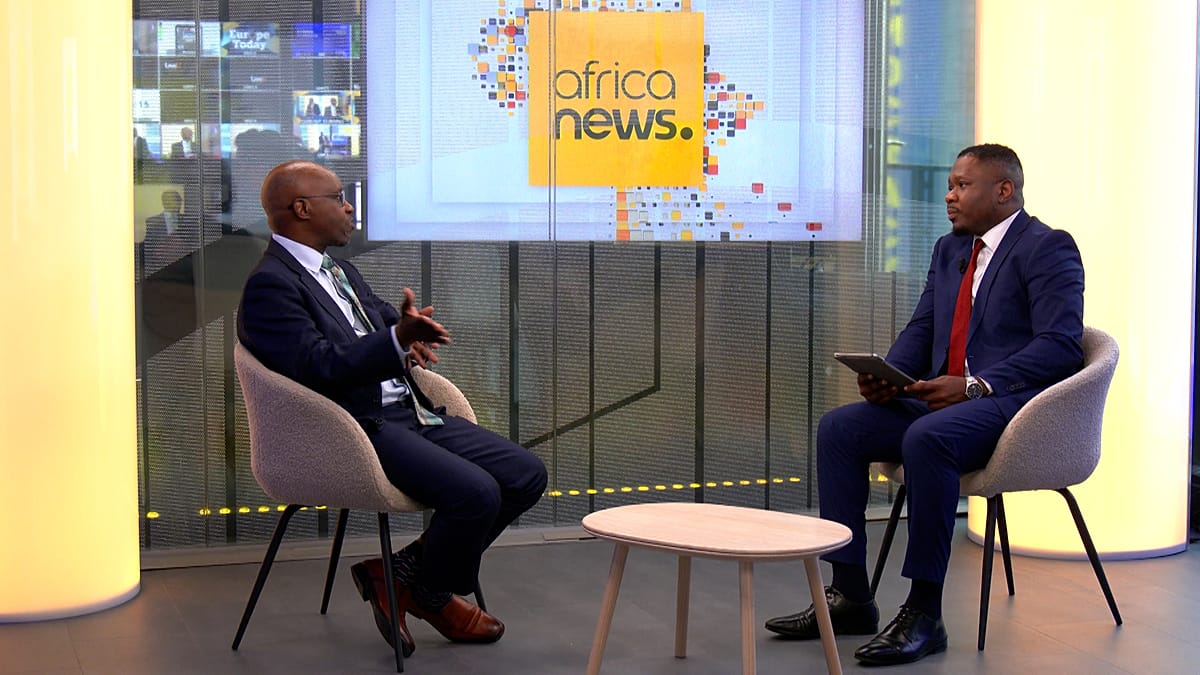
“But the war in the Middle East has really put a damper on all this” Montford Mlachila, deputy director of the IMF African Department told Africanews.
Speaking in a special interview, Mlachila said the impact of the war has affected many areas, “first and foremost, by increasing the prices of oil itself, as well as for fertilisers, as well making it a lot more difficult for transportation, and also in areas such as tourism”.
The region is now facing another major shock and this is the latest in a series of shocks since the pandemic, according to Mlachila.
20 million people face food insecurity across Africa, IMF warns
One of the IMF report’s current risk estimates warns a 20% increase in international food prices can push as many as 20 million people into moderate or severe food insecurity across Africa. According to the IMF, there are a number of countries and economies that are at risk.
These are mostly the countries that are oil importers, but at the same time, there are other countries that are starting from a poor economic position.
“For example, those countries with very high levels of inflation, very low levels of international reserves, low growth, and high deficits. So those countries are really not able to meet these challenges caused by the oil price shock as a result of the war” said Mlachila.
Countries that have adequate reserves, whose inflation is low and growth is sufficiently high can more easily afford to address this shock head-on, while those countries, on the other hand, which have high vulnerabilities, such as very high levels of debt, high fiscal deficits, those countries will have no doubt bigger challenges to address these shocks, according to the deputy IMF chief.
Sierra Leone, Central African Republic, South Sudan are among countries cited by the IMF as facing particular pressures in being able to address these kind of challenges.
Africa saw 4-7 billion dollars in unprecedented aid cuts in 2025
Meanwhile, sub-Saharan Africa, the largest global recipient of aid, saw an estimated 16–28 percent cut in bilateral aid last year, potentially cutting between $4 and $7 billion in 2025 relative to the 2024 levels.
These sharp and unprecendented cuts in aid that began in 2025 differ in scale, nature, and breadth, hitting low-income countries and fragile and conflict-affected states hardest.
The impact of that is going to be felt quite a lot especially in the most vulnerable countries, Mlachila told Africanews.
“These are the poorest countries, and those countries especially that are facing major humanitarian needs, especially in the areas like health and education. So this is quite a big impact, a big shock, because it’s happening at the same time”, said Mlachila.
To address the situation, the IMF says part of its policy support is to make countries a lot more resilient and to be able to face all these shocks.
“We are providing support to allow countries to adjust to these major shocks by providing financial assistance and, crucially also, by trying to build up their resilience” Malchila said.
“At the very least, the additional support should ease the shock, at least should cushion the shock. Because the impact, if this support is not given, countries will face even tougher circumstances to address, for example, very high oil prices. They will not be able to meet some of their day-to-day needs, and some countries may even run out of reserves, or they have very reduced reserves”, he stressed.
Mlachila also urged governments to help with the more targeted assistance to at least alleviate the problem. “So they can provide, for example, cash transfers to ameliorate the situation”.
When asked about the widely held perception and fears in some countries that IMF-advised fiscal or monetary policies may bring about more hardship for member states, Mlachila rejected the notion saying, “we will ameliorate the situation compared to a situation when there is no support whatsoever”.
“And don’t also forget that the presence of the IMF can be a catalyst for support from other development partners, including our sister organisation, the World Bank, as well as traditional economic partners such as the European Union and other bilateral donors. So when we step in, other donors feel more comfortable to be able to support. So we hope that that will certainly happen this time around”. he said.