
Published on
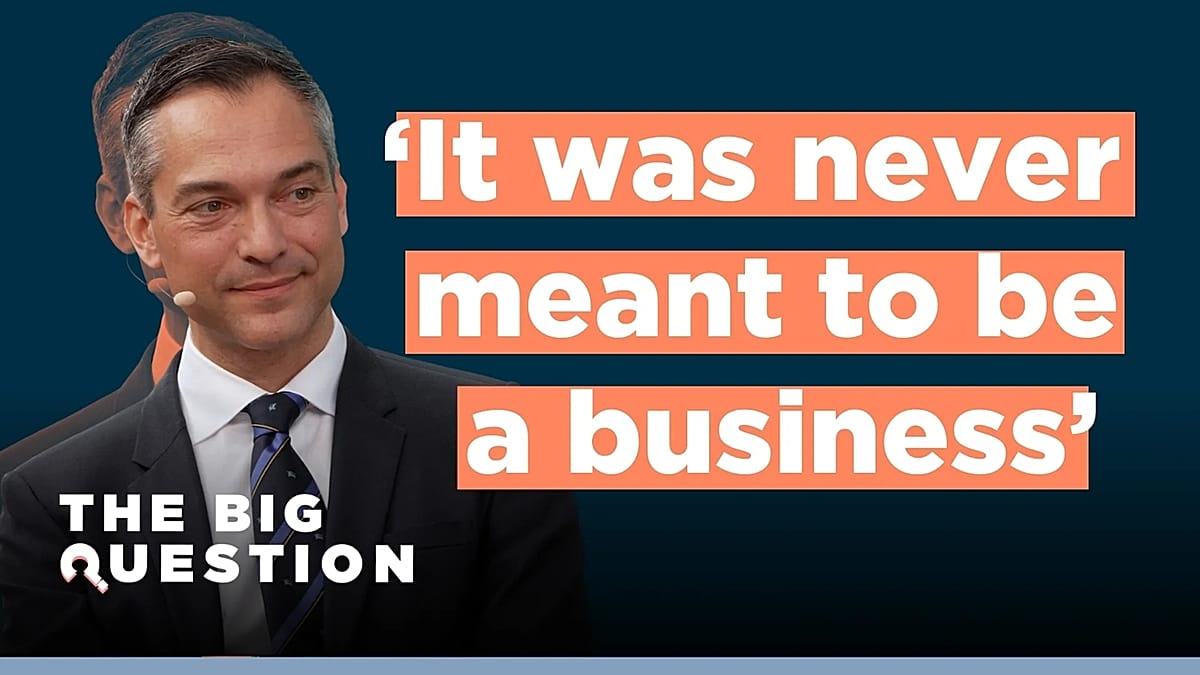
“It was never meant to be a business,” Nathan Blecharczyk, co-founder of Airbnb, told Angela Barnes on The Big Question.
In fact, Airbnb’s origin story is pretty interesting. What began as a group of young guys in San Francisco struggling to pay their rent after a 25% price hike and spotting a shortage of accommodation for a nearby industry event, has now become a behemoth of the travel industry.
“Fast forward to today and we have nine million homes on the platform in 220 countries and territories across 150,000 different cities,” Nathan added.
“More than 2.5 billion people have stayed in other people’s homes.”
Making a stay an experience
Despite initial hesitations on whether we could trust strangers in our homes and strict regulations on rentals in many destinations, since its founding in 2008 Airbnb has grown into a business with a market cap of around $80bn (€69bn) and contributes around €149 billion to the EU economy every year.
But is there still room for growth?
“We are thinking about additional opportunities, and not just about the home, but the entire trip,” Nathan explained.
“So it’s now possible to have experiences on Airbnb. We’re now offering services, like the home can be stocked with groceries, airport pickup, all the practical things you need when you travel, but all bookable through the app in a seamless way.”
They’re even adding hotels onto the platform, which might seem like the opposite of their main business model, but it’s their way of offering their customers everything they might need on one handy platform.
Airbnb for good
Many local governments expressed fears that a rise in Airbnb offerings in their destination could have a negative effect on rental prices for locals. And in certain tourist hotspots, authorities have been grappling with the problem of overtourism. Both of these factors have led to legislation and increased regulation on Airbnb’s operations.
“In 2019, [Amsterdam] passed regulation that resulted in 54% of the listings on Airbnb being removed. The motivation for that was housing costs.”
“But what played out over the next five years, although the number of listings dropped in half, the rents increased by a third. And so, you know, there was no impact of that regulation on the cost of housing.”
According to Nathan, where Airbnb can make a positive difference is by drawing people to new destinations and building tourism there.
“One of the special things about Airbnb is how we can disperse tourism. If you look at our business in Europe, 60% of the nights booked are not in cities at all. They’re actually in rural areas”
“Many of these small towns don’t even have hotels. They didn’t have accommodation, they weren’t able to support tourism, and now visitors can have more local, more authentic experiences.”
The Big Questionis a series from Euronews Business where we sit down with industry leaders and experts to discuss some of the most important topics on today’s agenda.
Watch the video above to see the full discussion with Airbnb’s Nathan Blecharczyk.
Additional sources • Edited by Arno Aubert