
Close Menu
Daily Guardian EuropeDaily Guardian Europe
  • Home
  • Europe
  • World
  • Politics
  • Business
  • Lifestyle
  • Sports
  • Travel
  • Environment
  • Culture
  • Press Release
  • Trending
What's On

5 things Westminster doesn’t really know about the UK economy (but probably should) – POLITICO

October 30, 2026

The change vote turns: Why America’s midterms could punish the party that promised it

October 30, 2026

Crypto platform Binance confirms major hack with more than $2.5bn frozen

October 30, 2026

Elif Eralp und der Palästina-Sumpf – POLITICO

October 30, 2026

Inside America’s midterm election battle – POLITICO

October 30, 2026
Facebook X (Twitter) Instagram
Web Stories
Facebook X (Twitter) Instagram
Daily Guardian Europe
Newsletter
  • Home
  • Europe
  • World
  • Politics
  • Business
  • Lifestyle
  • Sports
  • Travel
  • Environment
  • Culture
  • Press Release
  • Trending
Daily Guardian EuropeDaily Guardian Europe
Home»Lifestyle
Lifestyle

Magnetic ‘nanoflowers’ trap and transform nanoplastics in water

By staffSeptember 4, 20263 Mins Read
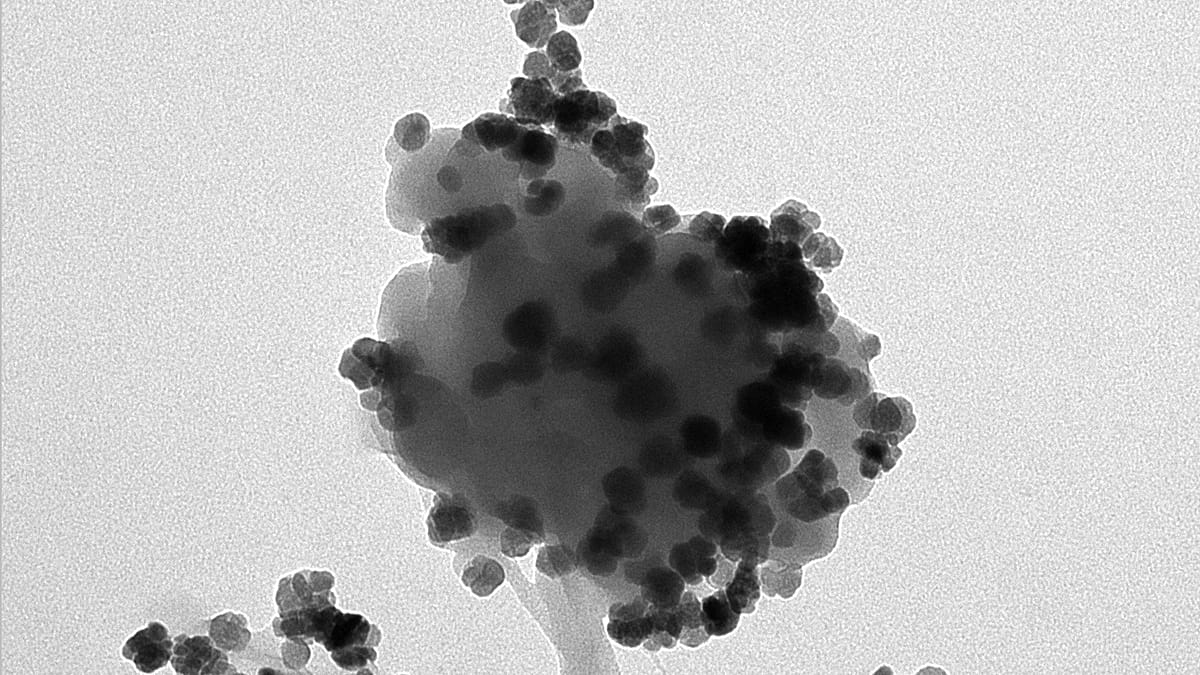
Magnetic ‘nanoflowers’ trap and transform nanoplastics in water
Share
Facebook Twitter LinkedIn Pinterest Email

From plastic that pollutes water to a tool that helps clean it up. Researchers at Madrid’s Institute of Materials Science (ICMM), part of the CSIC, have developed flower-shaped iron oxide nanoparticles capable of capturing nanoplastics, fragments a thousand times smaller than a microplastic, derived from PET, one of the most common materials used in bottles, packaging and polyester clothing. The study has been published in the Chemical Engineering Journal.

The secret lies in the shape. “Iron oxide is a magnetic material that allows many pollutants to be trapped at once. In addition, its nanoflower structure means that the particles have several cores that cooperate to enhance their magnetic properties,” explains Álvaro Gallo-Córdova, a researcher at ICMM-CSIC and one of the lead authors of the study, together with Rafael Herrera-Aquino and María del Puerto Morales.

From the microplastics in make-up to PET nanoplastics

It is not the first time these particles have proved their usefulness: in 2024 they already managed to extract and degrade microplastics measuring between 0.001 and 5 millimetres, originating from cosmetics. The step forward now is one of scale. Nanoplastics measure a billionth of a metre, a thousand times smaller than those microplastics.

“When they reach the end of their useful life, a large proportion of PET plastics ends up in the environment, where sunlight and physical wear act like sandpaper, grinding them down and turning them into nanoplastics, a kind of ultra-fine dust that contaminates our soils and water sources,” adds Gallo-Córdova.

Just one gram of these magnetic nanoflowers can capture up to 10,000 milligrams of nanoplastics, a figure the team itself describes as unprecedented until now.

The pollutant that helps clean up other pollutants

The work does not end with capture. Once the nanoplastic has been trapped, the team turns it into a magnetic material capable of extracting heavy metals or organic dyes from water, and can even take part in catalytic degradation processes.

“After capturing the nanoplastics thanks to our magnetic nanoparticles, we upcycle them into functional materials, turning a polluting waste into a new raw material within a circular economy approach,” the researcher sums up. In other words, they use the waste itself to remove other pollution, giving a second life to something that would normally end up in the bin.

The process uses barely any energy, because magnetic heating works locally, right on the surface of the nanoparticles, without the need to heat all the water.

And it stands up to repeated use: after five cycles, the nanoflowers retained 88% of their decontamination capacity and released into the water less than 0.82% of the iron they contained at the start, confirming that they are stable, reusable and safe. The ICMM-CSIC team is now looking towards advanced water treatment as the next field in which to apply this technology.

Share. Facebook Twitter Pinterest LinkedIn Tumblr Email

Keep Reading

Mistral releases latest AI model for download, giving companies more control over their cybersecurity

US vs China: As the world splits into AI blocs, where does Europe stand?

Gene therapy beyond rare diseases with Alessandra Biffi

EU approves €319 million in state aid to Austrian ‘first of a kind’ next generation semiconductor factory

Satellites the size of drinks cans: Young engineers take on a space challenge in Uzbekistan

Using artificial intelligence to step up the fight against doping

Space Industries opens Stellar Hub in Turin, one of Europe’s largest satellite factories

Social media on trial again: Meta and Snap face jury over alleged harm to teens

Norway says ‘successful’ cyberattacks against the country have tripled in last six months

Editors Picks

The change vote turns: Why America’s midterms could punish the party that promised it

October 30, 2026

Crypto platform Binance confirms major hack with more than $2.5bn frozen

October 30, 2026

Elif Eralp und der Palästina-Sumpf – POLITICO

October 30, 2026

Inside America’s midterm election battle – POLITICO

October 30, 2026

Subscribe to News

Get the latest Europe and world news and updates directly to your inbox.

Latest News

Canada and Europe share challenge of diversifying without antagonizing US and China – POLITICO

October 30, 2026

Video. Spain: minute of silence for train crash victims as king visits hospital

October 30, 2026

Russian strike on busy train platform kills at least 14 in Dnipro – POLITICO

October 30, 2026
Facebook X (Twitter) Pinterest TikTok Instagram
© 2026 Daily Guardian Europe. All Rights Reserved.
  • Privacy Policy
  • Terms
  • Advertise
  • Contact

Type above and press Enter to search. Press Esc to cancel.