
Close Menu
Daily Guardian EuropeDaily Guardian Europe
  • Home
  • Europe
  • World
  • Politics
  • Business
  • Lifestyle
  • Sports
  • Travel
  • Environment
  • Culture
  • Press Release
  • Trending
What's On

Magnetic ‘nanoflowers’ trap and transform nanoplastics in water

September 4, 2026

‘A Dubai invite’: Registrations close after 90,000 applications from residents

September 4, 2026

Belgian PM’s chocolate gift to Modi doesn’t survive journey to India – POLITICO

September 4, 2026

Lorry driver’s botched escape attempts fail to outrun oncoming Polish train

September 4, 2026

Malaysia declares air quality emergency as haze linked to Indonesia fires reaches critical level

September 4, 2026
Facebook X (Twitter) Instagram
Web Stories
Facebook X (Twitter) Instagram
Daily Guardian Europe
Newsletter
  • Home
  • Europe
  • World
  • Politics
  • Business
  • Lifestyle
  • Sports
  • Travel
  • Environment
  • Culture
  • Press Release
  • Trending
Daily Guardian EuropeDaily Guardian Europe
Home»Lifestyle
Lifestyle

Magnetic ‘nanoflowers’ trap and transform nanoplastics in water

By staffSeptember 4, 20263 Mins Read
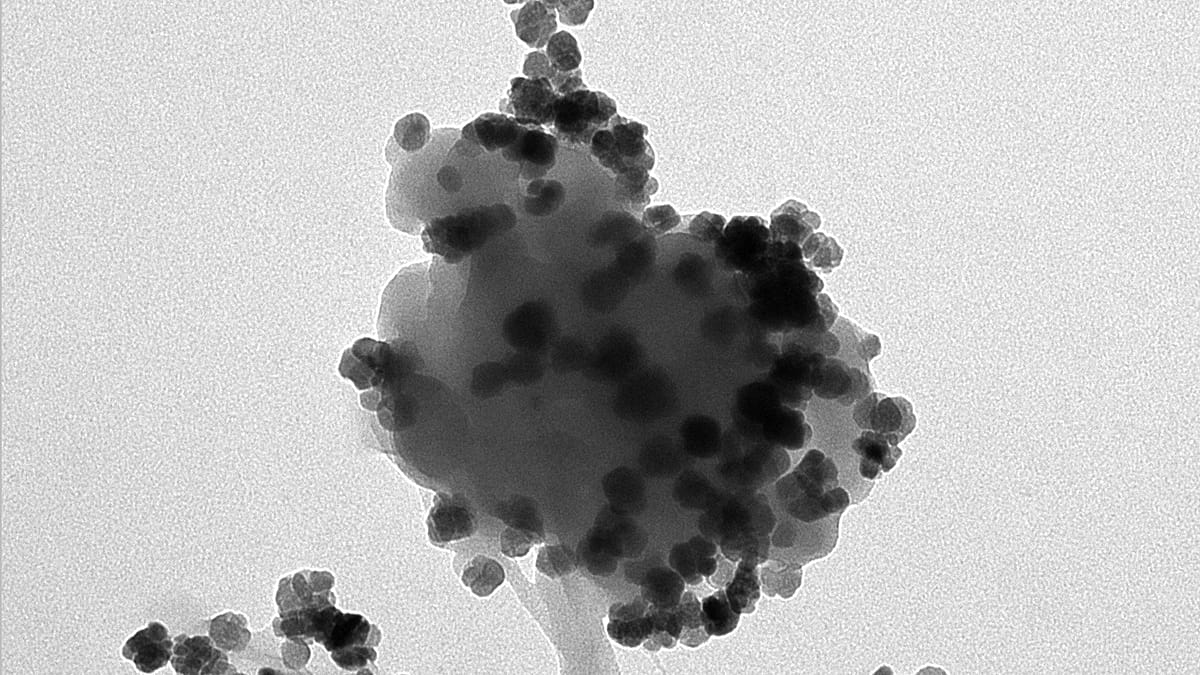
Magnetic ‘nanoflowers’ trap and transform nanoplastics in water
Share
Facebook Twitter LinkedIn Pinterest Email

From plastic that pollutes water to a tool that helps clean it up. Researchers at Madrid’s Institute of Materials Science (ICMM), part of the CSIC, have developed flower-shaped iron oxide nanoparticles capable of capturing nanoplastics, fragments a thousand times smaller than a microplastic, derived from PET, one of the most common materials used in bottles, packaging and polyester clothing. The study has been published in the Chemical Engineering Journal.

The secret lies in the shape. “Iron oxide is a magnetic material that allows many pollutants to be trapped at once. In addition, its nanoflower structure means that the particles have several cores that cooperate to enhance their magnetic properties,” explains Álvaro Gallo-Córdova, a researcher at ICMM-CSIC and one of the lead authors of the study, together with Rafael Herrera-Aquino and María del Puerto Morales.

From the microplastics in make-up to PET nanoplastics

It is not the first time these particles have proved their usefulness: in 2024 they already managed to extract and degrade microplastics measuring between 0.001 and 5 millimetres, originating from cosmetics. The step forward now is one of scale. Nanoplastics measure a billionth of a metre, a thousand times smaller than those microplastics.

“When they reach the end of their useful life, a large proportion of PET plastics ends up in the environment, where sunlight and physical wear act like sandpaper, grinding them down and turning them into nanoplastics, a kind of ultra-fine dust that contaminates our soils and water sources,” adds Gallo-Córdova.

Just one gram of these magnetic nanoflowers can capture up to 10,000 milligrams of nanoplastics, a figure the team itself describes as unprecedented until now.

The pollutant that helps clean up other pollutants

The work does not end with capture. Once the nanoplastic has been trapped, the team turns it into a magnetic material capable of extracting heavy metals or organic dyes from water, and can even take part in catalytic degradation processes.

“After capturing the nanoplastics thanks to our magnetic nanoparticles, we upcycle them into functional materials, turning a polluting waste into a new raw material within a circular economy approach,” the researcher sums up. In other words, they use the waste itself to remove other pollution, giving a second life to something that would normally end up in the bin.

The process uses barely any energy, because magnetic heating works locally, right on the surface of the nanoparticles, without the need to heat all the water.

And it stands up to repeated use: after five cycles, the nanoflowers retained 88% of their decontamination capacity and released into the water less than 0.82% of the iron they contained at the start, confirming that they are stable, reusable and safe. The ICMM-CSIC team is now looking towards advanced water treatment as the next field in which to apply this technology.

Share. Facebook Twitter Pinterest LinkedIn Tumblr Email

Keep Reading

NERDs: The Gen Zers who believe they will never be able to retire

IFA 2026: What could the home of the future look like?

Trump arcade: White House launches pro-MAGA games with a deportation twist

CSIC develops magnetic “nanoflowers” to capture and convert water nanoplastics

France tests Tesla self-driving two months after calling it too risky

Before New York City, Norway had already banned AI in schools

Nvidia to buy open-source AI hub Hugging Face for $12.9bn

Politicians are letting AI write speeches and laws without telling voters, study says

“Smart javelin” brings sensors and real-time data analysis to athletics

Editors Picks

‘A Dubai invite’: Registrations close after 90,000 applications from residents

September 4, 2026

Belgian PM’s chocolate gift to Modi doesn’t survive journey to India – POLITICO

September 4, 2026

Lorry driver’s botched escape attempts fail to outrun oncoming Polish train

September 4, 2026

Malaysia declares air quality emergency as haze linked to Indonesia fires reaches critical level

September 4, 2026

Subscribe to News

Get the latest Europe and world news and updates directly to your inbox.

Latest News

NERDs: The Gen Zers who believe they will never be able to retire

September 4, 2026

Film director Tony Gatlif, maker of “Gadjo Dilo”, dies aged 77

September 4, 2026

Ukraine renews push for Russia’s frozen assets – POLITICO

September 4, 2026
Facebook X (Twitter) Pinterest TikTok Instagram
© 2026 Daily Guardian Europe. All Rights Reserved.
  • Privacy Policy
  • Terms
  • Advertise
  • Contact

Type above and press Enter to search. Press Esc to cancel.