
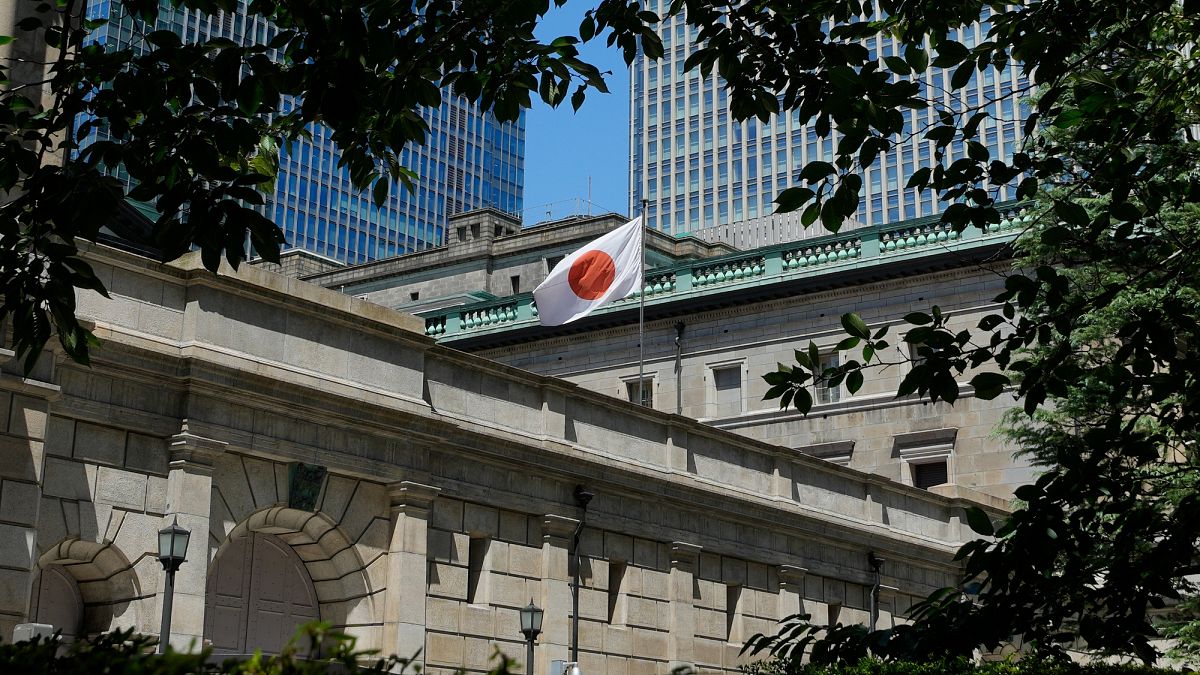
The BoJ held off on hiking its headline rate on Friday as expected, following signs of panic in Japan’s bond market this week.
Just last month, the Japanese central bank raised its key interest rate to 0.75%, a 30-year high, in a bid to normalise fiscal policy after a long era of near-zero or negative rates.
In its latest update, the BoJ also lifted its GDP growth expectations for 2025 to 0.9% and to 1% for this fiscal year. Both figures represent an increase from the 0.7% forecasted previously.
The decision to hold allows the Japanese economy to digest the December hike but it does not fully address the fear that spooked global markets this week, namely surrounding Japan’s national debt and political instability.
This Tuesday, Japanese bonds suffered a historic rout, with the yield on the 40-year note surpassing the 4% mark for the first time since 2007. The 30-year bond yield also rose almost 30 basis points during the session, to roughly 3.9%, the highest level on record.
The catalyst for the sell-off was Prime Minister Takaichi’s announcement on Monday that snap elections will be held on 8 February, and the pledge to suspend the 8% consumption tax on food for two years, in an attempt to woo voters.
The annual revenue from the tax is roughly ¥5tr (€31.5bn), and with markets already concerned about Japan’s debt-to-GDP ratio hovering near 240%, the highest in the developed world, the prospect of an unfunded tax cut has become controversial.
Prime Minister Takaichi also unveiled a spending package of roughly ¥21.5tr (€115bn), further fuelling criticism of fiscal recklessness.
These domestic policy decisions have drawn uncomfortable comparisons to Liz Truss’s disastrous “mini-budget” of unfunded tax cuts in the UK, back in 2022.
Politics vs. Economics
Sanae Takaichi took office in October 2025 becoming Japan’s first female prime minister, following the resignation of her predecessor, Shigeru Ishiba, after a series of political setbacks.
Takaichi’s party, the ruling right-wing Liberal Democratic Party (LDP), lost its majority in the upper house. The long-standing coalition with the centrist party, Komeito, which withdrew over a political funds scandal, collapsed.
Nonetheless, the LDP formed a new coalition with the centre-right Japan Innovation Party (JIP), and under Takaichi’s leadership, it has held a slim majority and enjoyed high approval ratings, particularly among young voters.
The ruling coalition now aims to leverage Prime Minister Takaichi’s popularity in the snap elections to lock in a fresh mandate.
During her speech this Monday, Takaichi proclaimed: “I am putting my position as prime minister on the line. I want the people themselves to decide whether they are willing to entrust Takaichi Sanae with the task of running our nation.”
Takaichi’s opponents merged at the start of this year, forming the Centrist Reform Alliance (CRA), and are trying to capitalise on voter anger over the cost of living.
The proposed food tax cut was Takaichi’s ace in the hole, a direct transfer to households struggling with inflation. Instead, it has so-far backfired, driving up mortgage rates and corporate borrowing costs via the bonds.
The “Abenomics” ideology, the loose fiscal and monetary policy championed by Takaichi’s mentor, the late Shinzo Abe, supports the narrative that an inflationary spike may be brewing. The CPI rate has already sat above the central bank’s 2% target for four years.
Even so, volatility seemed to have somewhat subsided on Thursday as government officials talked down the panic, with Chief Cabinet Secretary Minoru Kihara insisting the administration is “keeping a close eye” on bond movements.
However, the yield on the 10-year government bond is still at its highest level since 1999, at around 2.25%.
Impact on global markets
Fears of a ballooning deficit, just as the BoJ is tapering its decades-long bond-buying programme, have severe implications for global markets.
For many years, investors worldwide have enjoyed the so-called “yen carry trade”. This is a strategy of borrowing money in Japanese yen, which typically has very low interest rates, to invest in assets denominated in currencies with higher returns, like US dollars.
Investors profit from the difference, or the “spread”, between the low interest they pay on the loan and the high interest they earn on the investment.
Conversely, if the Japanese yen suddenly strengthens or the BoJ raises interest rates, the cost of repaying the loan spikes, often forcing investors to panic-sell their assets to cover their debts.
The rout that Japanese bonds experienced on Tuesday also forced a violent repricing in other markets throughout the following days, causing US Treasury yields to jump.
The US is particularly affected as Japan is the largest foreign holder of their debt, with over $1tn (€850bn) in US Treasuries.
Speaking at the World Economic Forum in Davos this Wednesday, US Secretary of the Treasury, Scott Bessent, stated: “It’s very difficult to disaggregate the market reaction from what’s going on endogenously in Japan.”
Secretary Bessent also completely dismissed the idea that the “Greenland crisis” was responsible for any volatility in US markets, emphasising that the primary pressure remains the fiscal shift currently unfolding in Tokyo.
Prime Minister Takaichi’s policies involve massive government spending to stimulate economic growth which fans inflationary risks. This could ultimately mean further hikes from the BoJ and more unwinding of the yen carry trade.