
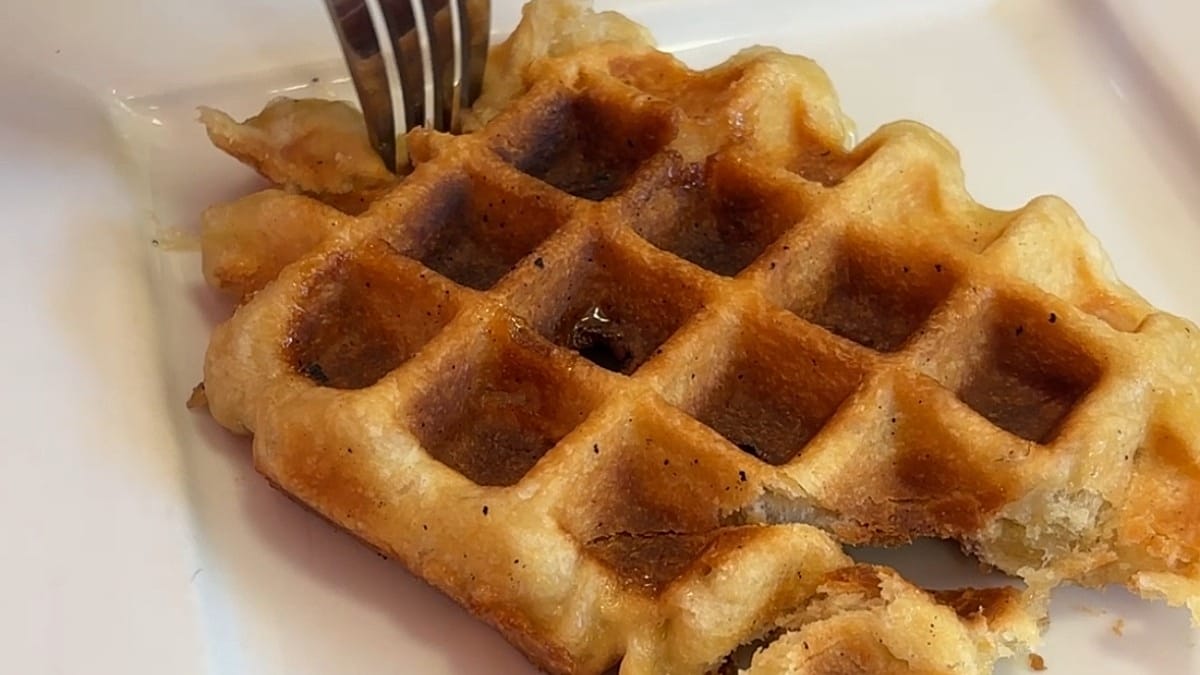
Waffle lovers around the world have been given extra incentive, if needed, to indulge in the sugary goodness of a delicious waffle, and they have the Swedes to thank for this!
International Waffle Day celebrated on 25 March originated in the Scandinavian country.
The Feast of Annunciation, also on 25 March, is an important religious occasion amongst Christians because it marks when the archangel Gabriel visited the Virgin Mary and told her she was to be the mother of Jesus Christ.
The religious day is also known as “Our Lady’s Day,” which in Swedish is “vårfrudagen.” When said aloud, this sounds extremely similar to the Swedish word for waffle: “våffeldagen.”
And thus, Swedes began referring to this day as Waffle Day, which went international because of a widely recognised universal love for waffles, although nowadays, most people choose to eat waffles rather than celebrate the religious occasion.
Waffles from around the world
With more than two dozen types of waffles worldwide, there are plenty of ways to celebrate this special day for waffles.
If you are looking to stay true to International Waffle Day’s origins, try a Swedish waffle. These waffles are heart shaped and typically served with fruit, whipped cream or ice cream. Unlike the popular Belgian waffle, Swedish ones do not contain yeast. This makes the waffles thinner and have a texture more similar to pancakes.
There is also the stroopwafel, which is a traditional Dutch treat. The name translates to “syrup waffle” in English, accurately describing this unique type of waffle. It is made with two thin, crispy waffle-like cookies sandwiched together with caramel syrup.
Another special type of waffle is an egg or bubble waffle. This type of waffle comes from Hong Kong, where it is an iconic street food. The spherical egg-waffles are described as crisp in texture and vanilla in flavor. The “bubbles” can be broken off for snacking, or the waffle can form a cone to easily hold toppings.
Brussels waffle versus Liège waffle
The most popular type of waffle globally is the Belgian waffle. But there are actually two different types of Belgian waffles: the Brussels waffle and the Liège waffle.
The Brussels waffle originally came from Ghent, Belgium, but it eventually made its way to the capital city and became an icon. This waffle is rectangular-shaped, light and sweet.
The Liège waffle comes from a city in Belgium’s Wallonia region with the same name. This waffle is a round shape with dense dough.
Liège’s waffle is made using Belgian pearl sugar, which is not used in the Brussels waffle. Because of this, Liège waffles are considered sweeter than Brussels waffles, and they are often eaten without any toppings.
Sebastien Nyssen, manager of the waffle shop Capoue, said the main difference between the two waffles is the sugar used to make it.
“It’s already [has] enough sugar, and we don’t need to add anything to make it more tasty,” said Nyssen.
Because there are typically no toppings on Liège waffles, they are easy to eat on-the-go. Brussels waffles, on the other hand, are often eaten sitting down at a table using a knife and fork.
It is also more common to put toppings on Brussels waffles because they are lighter and not as sugary as the Liège ones. You can often find Brussels waffles topped with powdered sugar, whipped cream, caramel or chocolate sauce, or even ice cream.