
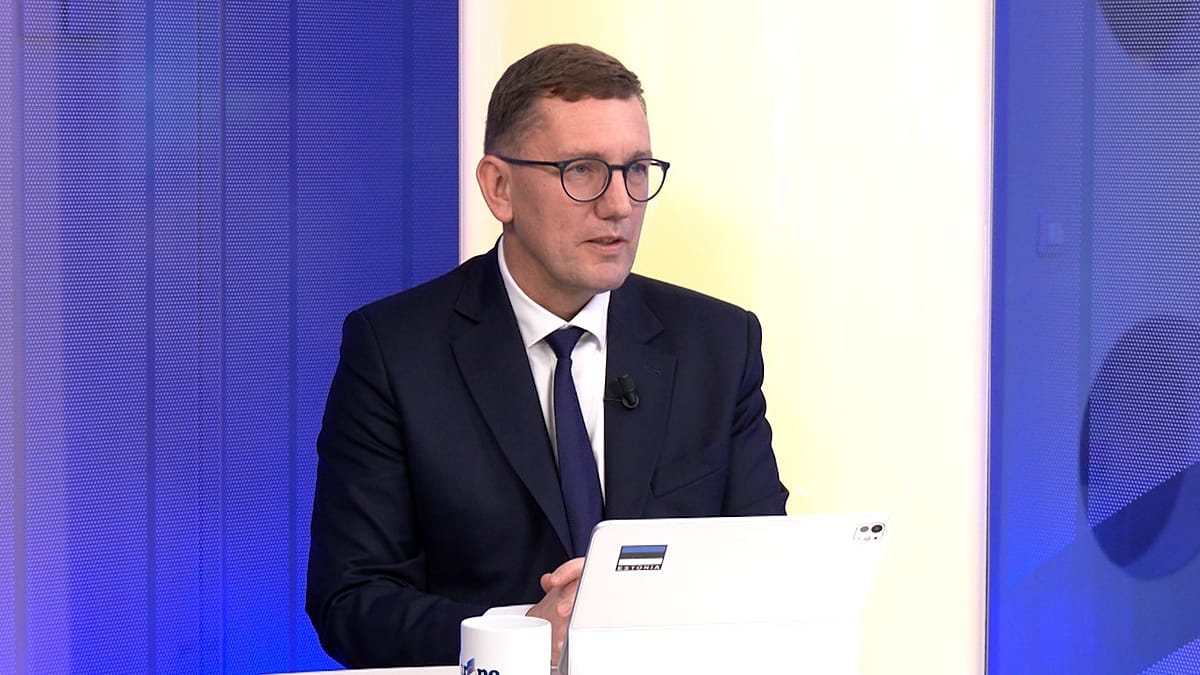
Estonian PM Kristen Michal told Euronews’ flagship morning show Europe Today that Russian President Vladimir Putin cannot afford to end Moscow’s war in Ukraine, comparing his grip on power to “riding a bike”.
While Michal said he does not claim to understand Putin, he believes the logic of dictatorship explains Moscow’s continued aggression, even as negotiations take place.
“Right now Putin has more men under arms than at the start of the war,” Michal said. “If he stopped killing in Ukraine, what would he do with them?”
“In Russia they glorify the hero. If he stops, he falls,” he added.
Michal warned that a premature peace without firm security guarantees could create instability not only inside Russia but across Europe.
His comments come as an EU plan to mobilise €90 billion in support for Ukraine remains politically blocked.
Michal expressed confidence that European Commission President Ursula von der Leyen and European Council President António Costa would find alternative ways to unlock the funding.
“They have different plans how to deliver the money,” he said, referencing European leaders’ speech in Kyiv. Pressed on what those plans entail, Michal declined to clarify. “They will tell,” he said, stressing that the stakes are high.
“If Europe cannot make these kind of big decisions which affect our security, then probably there will be many discussions about how Europe will decide things altogether,” he said.
Frozen Russian assets still in play
On the issue of frozen Russian assets, often discussed as a potential source to aid Ukraine, Michal insisted they remain “not off the table.”
“They are still frozen, which is a good thing,” he said, noting that sanctions rollovers used to require six-month renewals but are now locked in more firmly.
However, he stated that the €90 billion commitment must be delivered regardless of dissent from Hungary and Slovakia.
“We decided. Everybody was in this room,” he said. “They decided to opt out, but we still decided.”
Michal also commented on Hungarian Premier Viktor Orbán’s position on Russia, noting that it remains unclear to the leaders of other EU member states. “He exactly knows that nobody understands his position, that we should ask for European security from a dictator from Russia,” Michal said.
He suggested that upcoming Hungarian elections could prove a “game changer,” while broader debates are emerging over whether the EU should move towards more centralised decision-making, particularly on security.
He also floated the idea of enhanced cooperation frameworks involving non-EU allies such as Norway, the UK, Canada and Iceland.
On strained transatlantic ties, Michal said the tension was there but backed US President Donald Trump’s calls for Europe to take more responsibility for its own defence.
“Europe should invest more in security,” he said. “That’s a message we understand.” Estonia is spending 5.4% of its GDP on defence this year, one of the highest levels in NATO.
“This is not easy,” Michal said. “But I know my grandchildren will live in peace because our neighbour knows that we take ourselves seriously.”
Pushing back against rhetoric that portrays Europe as weak or declining, Michal argued that if the continent follows through on defence commitments, it will be “better off in five, seven, 10 years.”
The Estonian PM also strongly rejected the rhetoric of Europe as a “decaying gold” and stressed that the continent, despite its challenges, remains one of the “freest nations in the world”.