


Published on
Uzbekistan has added 5,600 megawatts of solar and wind capacity to its national grid, through partnerships with international developers, as the government accelerates investment in renewable energy and electricity infrastructure.
According to President Shavkat Mirziyoyev, renewable sources now account for around 30% of the country’s electricity mix. Authorities plan to increase that share to 54% by 2030 as electricity demand continues to rise.
“Through $35 billion (approximately €31bn) in investment projects, electricity production has increased 1.5 times, reaching 87 billion kilowatt-hours,” Mirziyoyev said.
Officials say the expansion is aimed at strengthening energy security, reducing dependence on natural gas and supporting industrial growth.
Renewable projects and grid expansion
International financial institutions and private developers are supporting solar, wind and electricity infrastructure projects across several regions.
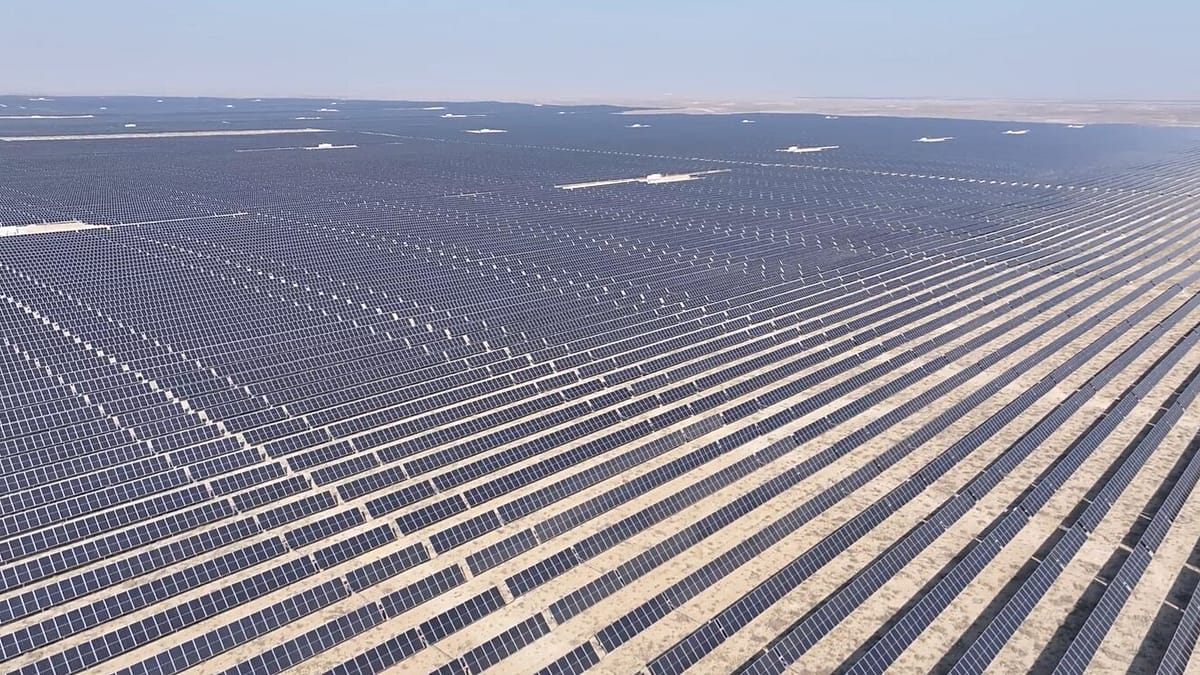
One of the largest projects currently under development is a solar power plant in Samarkand backed by the Asian Development Bank.
“When it’s finished, this solar plant in Samarkand will produce half a gigawatt of renewable energy. This means it is going to be the largest in Central Asia,” Kanokpan Lao-Araya, country director for Uzbekistan at the Asian Development Bank, said.
“In the past, they used a lot of natural gas and now they want to use new technologies, a new way of generation like wind and solar,” she added.
The government is also investing in energy storage systems and grid modernisation projects designed to improve electricity transmission capacity and network stability.
Energy transition linked to AI and data centres
Alongside energy generation, authorities are expanding digital infrastructure linked to the energy sector, including artificial intelligence laboratories and large scale data centres.
Saudi Arabia’s ACWA is among the companies involved in these projects.
“We are bringing now the AI data centre. 100% green data centre is under construction in the IT park in Tashkent,” Muhammad Abunayyan, chairman of ACWA, said.
“By the end of December or beginning of January, we will complete this project,” he added.
Officials say the integration of renewable energy and digital infrastructure is expected to support future demand linked to artificial intelligence and data processing technologies.
Foreign investment and economic reforms
Uzbekistan rose 14 places in the latest Index of Economic Freedom, entering the category of “moderately free” economies for the first time.
Foreign investment has increased in recent years, particularly in energy, infrastructure and industrial sectors. Saudi Arabia has emerged as one of the country’s largest partners in the energy transition.
“We started this partnership journey in January 2021, and today it spans all sectors. Serious and committed investors will succeed. Our total investment here is over 26 billion dollars,” Abunayyan said.
The Asian Development Bank has also supported the government in developing Public Private Partnership frameworks and financing mechanisms aimed at increasing private sector participation in infrastructure and energy projects.