
Close Menu
Daily Guardian EuropeDaily Guardian Europe
  • Home
  • Europe
  • World
  • Politics
  • Business
  • Lifestyle
  • Sports
  • Travel
  • Environment
  • Culture
  • Press Release
  • Trending
What's On

Serbia’s protesting students mount serious challenge to Vučić’s power – POLITICO

October 23, 2026

Drones, AI and cybersecurity on display as Milipol Qatar brings together firms from 33 countries

October 23, 2026

Oil prices climb above $113 as AI sell-off rattles stocks and investors buy bonds

October 23, 2026

Québec, Kyoto and Wachau Valley: These are the world’s best places to visit for autumn foliage

October 23, 2026

Can Europe save the world’s war crimes court from Trump? – POLITICO

October 23, 2026
Facebook X (Twitter) Instagram
Web Stories
Facebook X (Twitter) Instagram
Daily Guardian Europe
Newsletter
  • Home
  • Europe
  • World
  • Politics
  • Business
  • Lifestyle
  • Sports
  • Travel
  • Environment
  • Culture
  • Press Release
  • Trending
Daily Guardian EuropeDaily Guardian Europe
Home»Lifestyle
Lifestyle

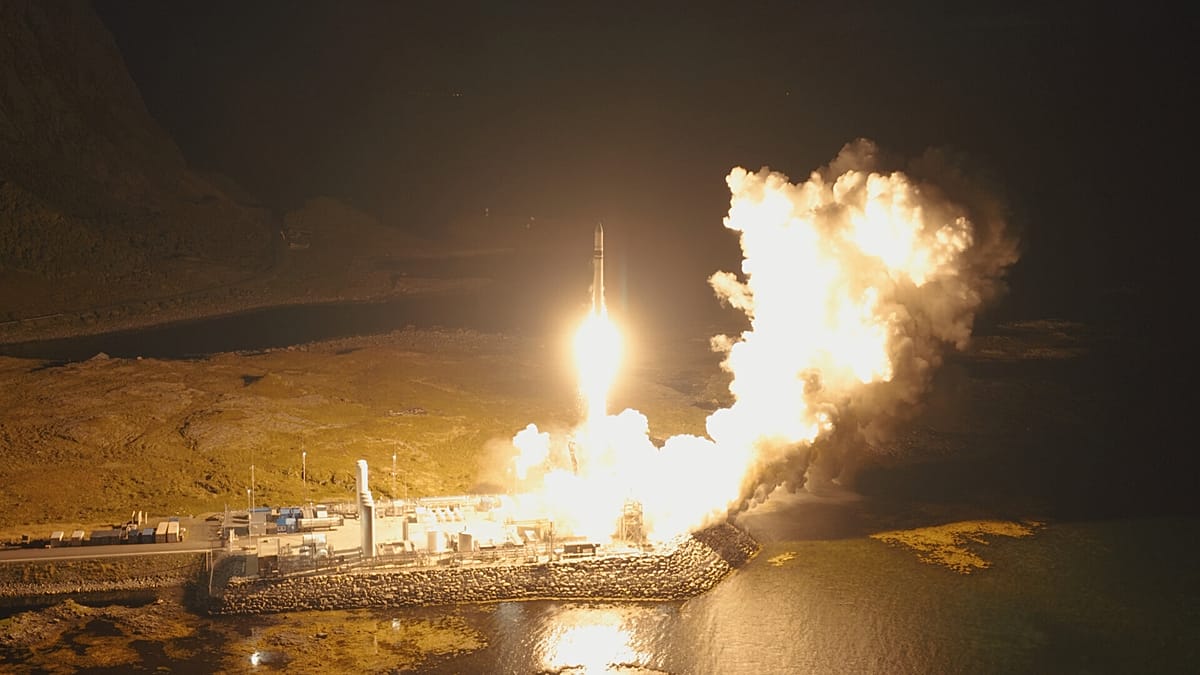
Germany’s satellite rocket marks first successful launch from continental Europe

By staffSeptember 6, 20263 Mins Read
Germany’s satellite rocket marks first successful launch from continental Europe
Share
Facebook Twitter LinkedIn Pinterest Email

Published on 06/09/2026 – 13:09 GMT+2•Updated
13:13

The Spectrum launcher, developed by German company Isar Aerospace, has lifted off from the Andøya spaceport in Norway and placed its payload into low Earth orbit. This was the rocket’s second flight; the first, carried out in 2025, managed only to clear the launch pad for 30 seconds before crashing into the sea.

Spectrum is 28 metres tall and 2 metres in diameter. It is powered by ten engines, nine on the first stage and one on the second, and is designed to carry payloads of up to 1,000 kilograms to low Earth orbit (LEO).

Unlike the first flight, which carried no passengers, this mission, named “Onward and Upward”, included six commercial and educational payloads, among them several CubeSats and an experiment designed to test new technologies in space and give European students practical, hands-on experience.

A milestone for the European Launcher Challenge

The Director General of the European Space Agency, Josef Aschbacher, described the launch as historic and hailed it as the first time a European competitor in the launcher sector has reached orbit. He said that Isar Aerospace, founded only eight years ago, has taken an important step towards a more diverse and autonomous European space sector.

The mission was supported by ESA’s Boost! programme, which funds commercial space transport initiatives. Isar Aerospace had already received backing through the agency’s Business Incubation Centre, and also won the first Microlauncher Competition organised by the German Space Agency (DLR), a contest that determined the selection of the payloads carried on this flight.

In 2025, Isar Aerospace was selected, along with other companies, to take part in the European Launcher Challenge, a programme that requires providers to achieve an orbital launch before 2027. With this flight, the company has become the first to reach that initial milestone of the programme.

Géraldine Naja, ESA’s Director of Space Transportation, stressed that this is the first European company to reach orbit with its own launch vehicle and congratulated the teams involved, while pointing to the expectation of seeing more launches from Andøya in the near future.

A fast-growing sector

Isar Aerospace’s success comes at a time of strong momentum for Europe’s microlauncher ecosystem, with companies such as Spain’s PLD Space also beginning to secure contracts under the same European Launcher Challenge.

At the end of August, ESA signed a 158.9 million-euro contract with the Alicante-based company to increase the launch rate of its MIURA 5 rocket, in a move designed to serve the same objective: reducing Europe’s dependence on foreign launchers to put satellites into orbit.

Share. Facebook Twitter Pinterest LinkedIn Tumblr Email

Keep Reading

PHP security flaw: Why websites across Europe went dark and what it means for you

Palantir says NATO AI system has no ‘kill switch’ after Starlink disruptions in Ukraine

Trump tells companies to pay ‘dividend’ to communities to make data centres popular

AI and digital transformation reshape aviation, but safety remains non-negotiable

Digital bank Revolut down in major worldwide outage

Japan launches unprecedented mission to bring back samples from Mars’ moon Phobos

Norway to extend proposed under-16 social media ban to online games and messaging apps

Polish satellite maker Creotech Instruments plans tenfold capacity boost by 2029

Daedalus: Greece unveils new supercomputer as it eyes role in Europe’s AI race

Editors Picks

Drones, AI and cybersecurity on display as Milipol Qatar brings together firms from 33 countries

October 23, 2026

Oil prices climb above $113 as AI sell-off rattles stocks and investors buy bonds

October 23, 2026

Québec, Kyoto and Wachau Valley: These are the world’s best places to visit for autumn foliage

October 23, 2026

Can Europe save the world’s war crimes court from Trump? – POLITICO

October 23, 2026

Subscribe to News

Get the latest Europe and world news and updates directly to your inbox.

Latest News

Albanian opposition and ruling party lawmakers scuffle in parliament over student protest tensions

October 23, 2026

Die Suche nach dem Super-Sozi – POLITICO

October 23, 2026

Who really writes the budget? – POLITICO

October 23, 2026
Facebook X (Twitter) Pinterest TikTok Instagram
© 2026 Daily Guardian Europe. All Rights Reserved.
  • Privacy Policy
  • Terms
  • Advertise
  • Contact

Type above and press Enter to search. Press Esc to cancel.