
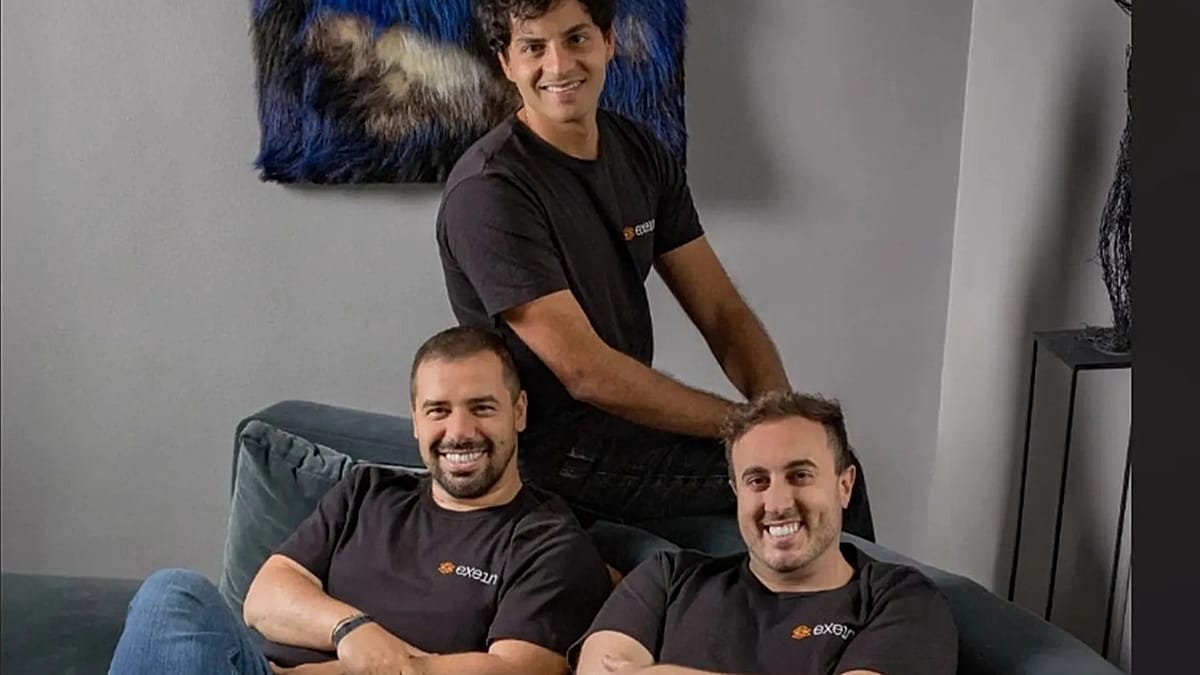
Italian startup Exein, which specialises in cybersecurity for industrial devices and machinery, has joined the ranks of digital unicorns after closing a 270-million-dollar funding round.
The deal, led by global fund Headline and backed by institutional investors including the European Investment Bank (EIB), which Exein announced on Tuesday, gives the company an overall valuation of 1.7 billion dollars.
In just two years the company’s value has increased thirtyfold, making it Europe’s highest-valued hardware cybersecurity firm.
“Devices are no longer just connected; they are becoming intelligent. They run models, make decisions and act in the physical world,” reads Exein’s website.
“The core idea is that every device should be able to defend itself autonomously, regardless of the security of the network it is connected to,” added CEO Gianni Cuozzo in an interview with TechCrunch. (source in Italian)
What cybersecurity for Physical AI means: how to protect robots, automotive systems and drones
Founded in 2018 in Rome by Cuozzo (and now with offices in Germany, the United States and Taiwan and around forty employees in total) to fix vulnerabilities in industrial firmware, Exein was set up with the mission of securing modern hardware by working closely with manufacturers.
In particular, the focus is on security for Physical AI, meaning those autonomous systems driven by artificial intelligence that interact with the real world. Among them are industrial robots, self-driving vehicles, drones, medical devices, energy infrastructure and aerospace systems.
In these fields, a cyberattack on the firmware entails direct physical risks, making it advantageous to have internal, ultra-low-latency protection capable of neutralising threats directly on the device.
It is known as embedded security and has become a priority because of the challenges posed by today’s advances and applications in artificial intelligence. If a hacker were to compromise the firmware of a self-driving car or a robotic arm, for example, the consequences would not only be data loss but also physical damage to infrastructure and people.
Moreover, since AI-generated attacks unfold in just a few milliseconds, having a defence system inside the machine keeps latency to a minimum.
Artificial intelligence has in fact boosted everyone’s capabilities, including those of hackers. According to Cuozzo, this is made possible by open-source models that can run without protection mechanisms, making it much easier and cheaper to target physical devices in new ways.
Industrial defence against threats in the age of AI
In the global cybersecurity landscape, various companies, such as Palo Alto Networks, Microsoft Defender for IoT, Claroty and Armis, analyse threats “from the outside”. Others operate, like Exein, at operating-system level (for example Sternum IoT, Drivesec, Nothreat and MicroSec), but not directly in the kernel, the central core of the system that controls all hardware and software, before malicious code is executed, as the Italian start-up proposes.
The global tech debate has recently raised catastrophic scenarios, following cases where AI agents have gone out of control. Before such scenarios materialise, Exein aims to provide a kind of digital immune system for connected devices.
So far the company has focused on two products: Pulsar and Photon. Pulsar is a Linux defence tool that monitors and protects the device in real time using eBPF technology, which allows the core of the operating system to be controlled with very low resource consumption, and Rust, a programming language designed to be fast and free of vulnerabilities.
Built on this infrastructure is Photon, the preventive platform for Physical AI, which operates in kernel space to block malicious execution paths in a timely manner before infection takes hold.
Global expansion and compliance with EU directives
According to the company, this technology protects more than 1.5 billion devices worldwide every day, ensuring security at every level: from the software that processes data remotely (cloud workloads) to edge systems, meaning all those machines and robots that analyse information directly on site and in real time to cut response times to a minimum.
Thanks to the new capital, the company is planning an expansion in the US and Asia-Pacific markets (which already generate 50% of its revenues) and the strengthening of its sites in Italy and abroad.
Exein’s growth is also being driven by global regulatory alignment and EU directives such as the Cyber Resilience Act, which sets strict security-by-design standards for hardware and IoT products sold within the European single market.