
European demand for critical minerals is prompting discussions with Central Asian producers over investment in mining and processing. While European industries are looking for alternative sources of supply, countries such as Kazakhstan and Uzbekistan want foreign investment and technology to develop their own manufacturing capabilities.
These different priorities were discussed at the International Mining and Metals Forum, held in Tashkent, where industry representatives examined opportunities for commercial cooperation.
“Brussels expects not just agreements. It expects development of clear investment partnerships with countries like Uzbekistan, Kazakhstan in the broadest sense,” said Marat Terterov, founder of the Brussels Energy Club, an independent non-profit organisation that brings together energy experts, policymakers and industry representatives.
Terterov also pointed to the need for investment in mineral processing, industrial supply chains and transport infrastructure, including the Middle Corridor linking Central Asia to European markets.
Europe’s search for alternative suppliers
The EU identifies materials including lithium and tungsten as critical because of their economic importance and supply risks.
Germany is among the European economies seeking to diversify its sources.
“In Germany we need a lot of critical minerals because we invest in renewable energies, we invest in electric cars, we invest in high technology,” Matthias Vollert, Germany’s ambassador to Uzbekistan, told Euronews.
In a joint declaration issued on 29 September, Germany and Kazakhstan endorsed a 2026–2028 roadmap covering industrial cooperation, mineral extraction and processing, as well as increased production of higher-value goods in Kazakhstan.
German company HMS Bergbau AG is also pursuing a lithium extraction and processing project in eastern Kazakhstan. The potential investment could reach $500mn (approximately €449mn), subject to confirmation of commercially viable reserves. The project remains in the exploration and development phase.
Uzbekistan seeks greater value from mineral processing
Uzbekistan is pursuing a similar industrial approach, seeking to develop the domestic processing of minerals rather than relying primarily on exports of raw materials and concentrates.
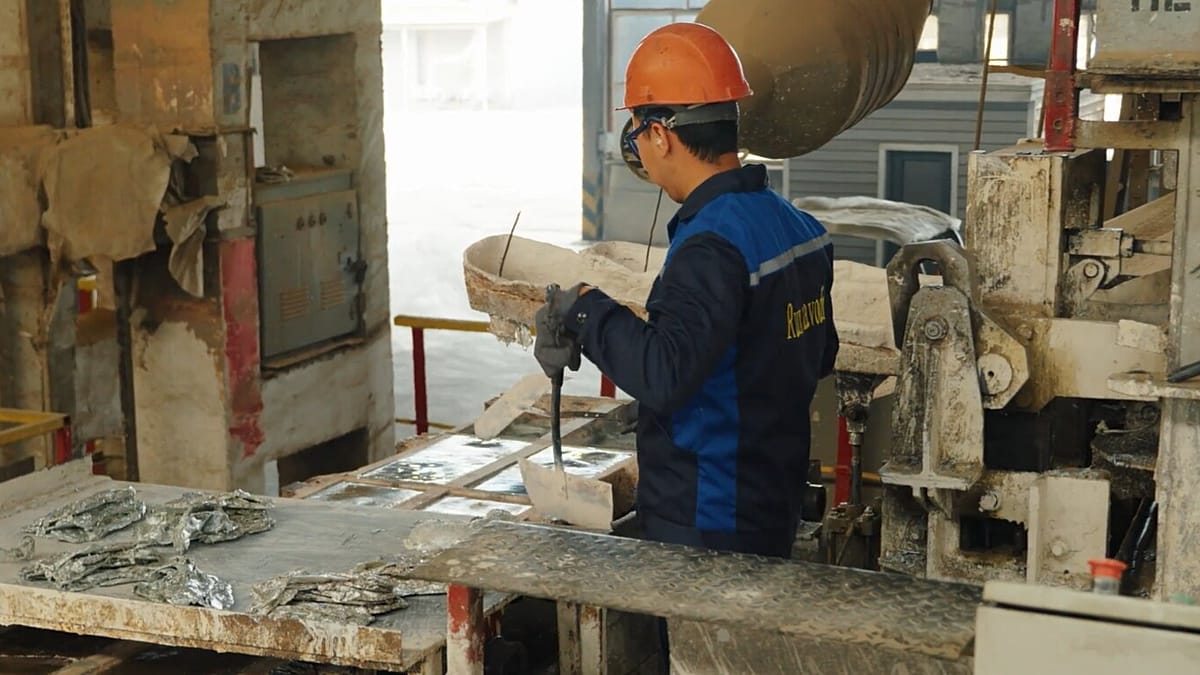
The Uzbekistan Technological Metals Complex (TMK) is a state-owned industrial company established in 2024 to develop the country’s mineral processing industry. It works with materials including tungsten and molybdenum, producing industrial products such as tungsten oxide and carbide, as well as molybdenum bars and briquettes.
“The main reason is making value. So in every step, in every stage we are making the value and then exporting,” said Timur Khikmatullaev, TMK’s Special Representative for Global Integration.
According to Khikmatullaev, Germany was the company’s first export market. TMK also reports exports to Belgium, the Netherlands, Türkiye, the United States, Canada, South Korea and Japan.
According to shipment records published by 52wmb, a commercial trade-data platform, TMK exported molybdenum products to Belgium and the Netherlands, as well as tungsten oxide to the Netherlands, in August 2026.
European technology and financing
Alongside its existing exports, TMK is seeking investment and manufacturing expertise to expand production within Uzbekistan.
In September, the company held a roadshow in Berlin, bringing together representatives of around 20 German companies and international financial institutions.
Discussions covered supplies of critical minerals, technology transfer and participation in new manufacturing projects. TMK presented a portfolio of more than 140 proposed investment projects, with a combined estimated value of $4.2bn (approximately €3.77bn), according to the company.
On 16 October, TMK and France’s Société Générale signed a preliminary term sheet for pre-export financing.
The discussions follow a mandate agreement signed in June to arrange €50mn in financing intended to support production capacity and export operations. A final loan agreement has not yet been announced.
International mining partnerships beyond Europe
Cooperation in Uzbekistan’s mining sector also extends beyond European investors.
AzerGold, Azerbaijan’s state-owned mining company, established its first foreign subsidiary in Uzbekistan in October. The company is seeking permits to begin an 18-month exploration programme at the Akba gold deposit in the Kashkadarya region.
“If the results are going to be positive, we plan to establish the joint venture and then to develop the deposit,” Ilyas Ismayilli, General Director of AzerGold Uzbekistan, told Euronews.
Separately, AzerGold is working towards a trilateral joint venture with Uzbekgeologorazvedka JSC and the Azerbaijan–Uzbekistan Investment Company to explore gold and rare earth minerals in the Navoi region. The partners signed a preliminary agreement in July, but the venture has yet to be formally established.