
Establishing a “Made in Europe” preference in public contracts is a “fine line to walk”, Ursula von der Leyen has warned on the eve of an informal summit of European Union leaders where the divisive topic is set to be firmly on the table.
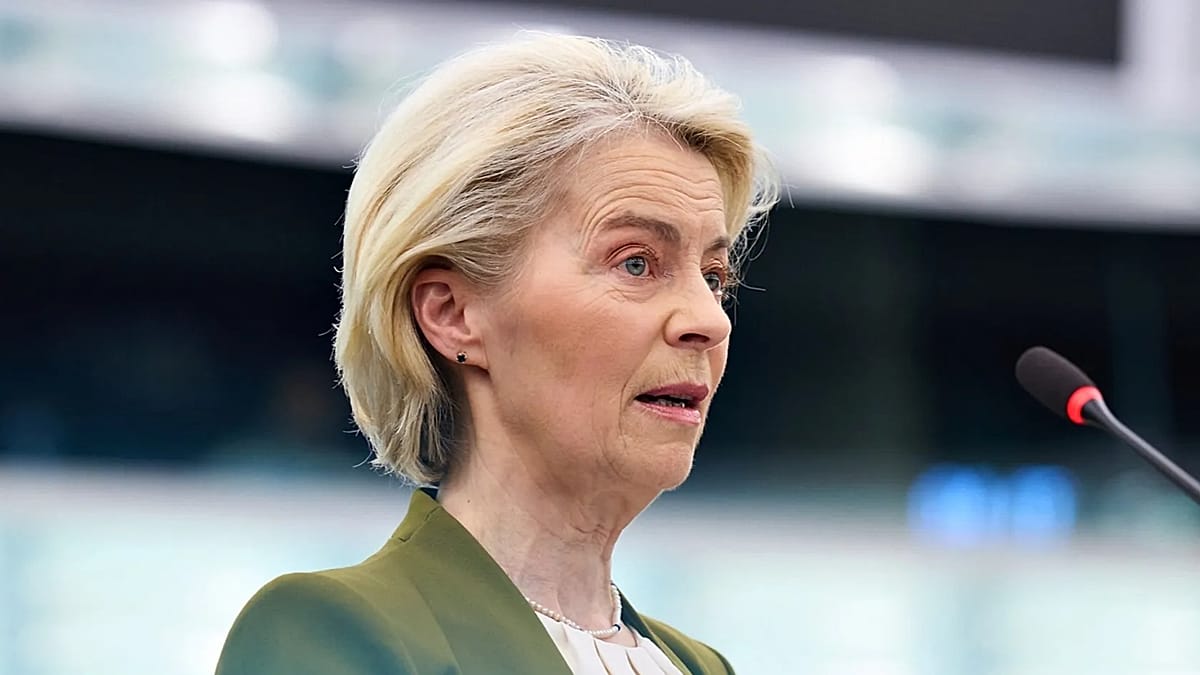
“I believe that in strategic sectors, European preference is a necessary instrument that will contribute to strengthen Europe’s own production base. It can help create lead markets in those sectors and support the scaling-up of European production capabilities,” the president of the European Commission said in Strasbourg on Wednesday morning.
“But I want to be clear – it is a fine line to walk,” she added. “There is no ‘one-size-fits-all’. That is why every proposal must be underpinned by robust economic analysis and be in line with our international obligations.”
Von der Leyen’s cautious endorsement of “Made in Europe” reflects the controversial nature of the concept, which has become increasingly prominent in the EU’s political debate amid economic stagnation, punitive US tariffs and aggressive Chinese trade practices.
The surge in public spending across the bloc over the last year, with a €150 biillion programme to boost defence spending and a €90 billion loan to support Ukraine, has fuelled worries that foreign companies rather than domestic ones would reap the benefits.
French President Emmanuel Macron has long been the most ardent supporter behind the in-built preference, also known as “Buy European”.
Speaking to several newspapers ahead of Thursday’s summit, Macron said the clause was a “defensive measure” against those who “no longer respect” trade rules.
“We must protect our industry. The Chinese do it, and so do the Americans. Europe is currently the most open market in the world. Faced with this, the solution isn’t to be protectionist, but to be consistent, meaning not to impose rules on our producers that we don’t impose on non-European importers,” Macron said.
“We won’t apply European preference to mobile phones; we no longer produce them in Europe. We must focus on certain strategic sectors, such as clean tech, chemicals, steel, automotive, and defence. Otherwise, Europeans will be left behind.”
Mario Draghi, the former president of the European Central Bank, who authored a highly influential report on competitiveness and is set to attend Thursday’s summit, has also backed the European preference, albeit in a targeted manner.
A nuanced debate
By contrast, the French pitch has been met with strong resistance from the Netherlands, the Nordics and the Baltics, who argue the European preference would increase regulatory burdens, close down markets and scare investors away.
“The basic idea of trying to protect European business, if that is the purpose of Buy European, to try to avoid trading with or partnering with other countries, then I’m very sceptical,” Swedish Prime Minister Ulf Kristersson told the Financial Times ahead of the summit.
“We need to be able to compete because of quality and because of innovation, not because we try to protect the European markets,” he added. “We do not want to protect European businesses that are basically not competitive.”
Meanwhile, Germany is advocating what it calls “Made with Europe”, a wider concept to cover “like-minded” partners and countries that have signed trade deals with the bloc.
Thursday’s summit at the Alden Biesen castle in eastern Belgium has been designed as an informal retreat, allowing leaders to have a free-flowing conversation. There will be no written conclusions nor formal decisions taken.
The European preference will be high on the agenda, said a senior EU official.
“What we have seen talking to leaders is that more and more, perhaps all of them, are ready to have a debate on this. Perhaps the equilibrium is not the same. Some don’t want the European preference to be applied across the board,” the official said.
“But it’s an important debate to be had. A few years ago, it would not have had the same level of consensus.”