
Published on •Updated
The global demand for advanced chips is growing at an unprecedented pace.
Innovation hubs such as the Belgian research centre imec, are shaping the next generation of technology by training talent and supporting startups to meet global challenges across computing, healthcare and AI.
“If you open your phone or any modern device, you will see chips. Semiconductors have driven the renaissance in computing and communication, and today they’re enabling AI,” said Max Mirgoli, Chief Global Development, Partnerships and Venturing Officer and EVP at imec.
Leading nanoelectronics
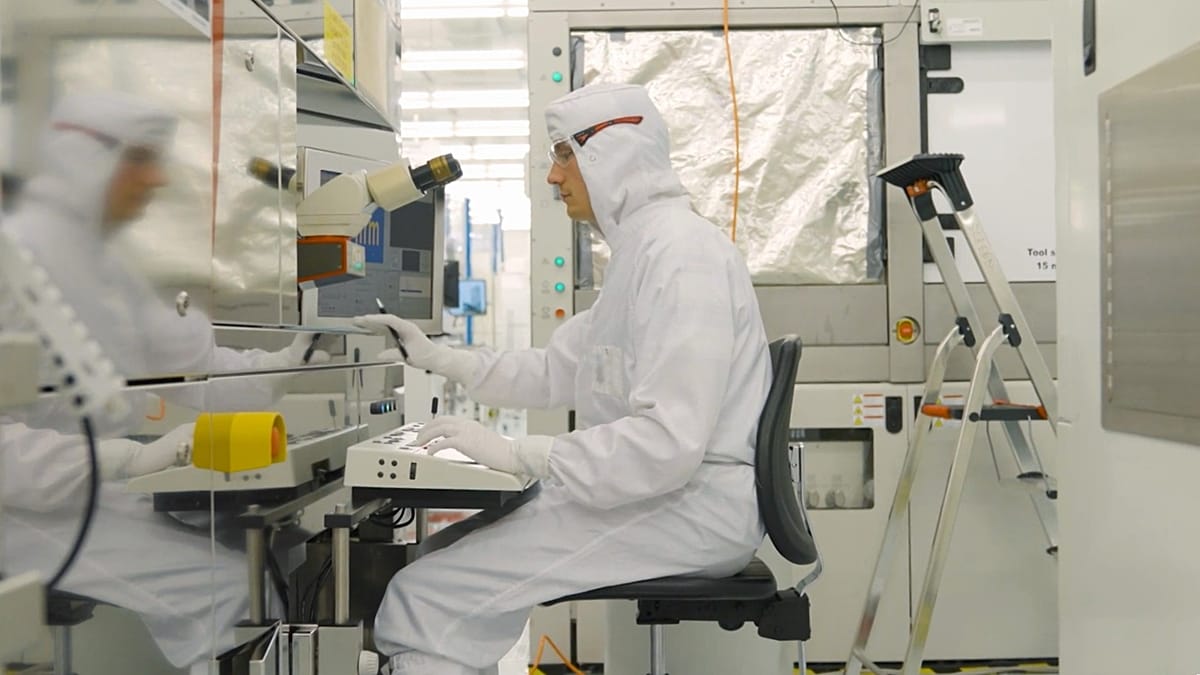
Imec, headquartered in Belgium and often called the ‘chip lab of the world,’ is a global leader in nanoelectronics research and development. It connects universities and industry to develop next-generation semiconductor technology.
“For four decades, the industry has run on four pillars: performance, power, area and cost,” he said.
“We’ve been improving performance, reducing the power, reducing the area of the chip and reducing the cost. As you go from seven nanometres to five, three and two nanometres, you constantly reduce the power,” he added.
“The biggest challenge of data centres today is power consumption. There is still a lot of innovation that needs to be done in the semiconductor ecosystem.”
Efficiency and Qatar expansion
As data centres face rising energy demands, efficiency has become the industry’s biggest challenge. “Semiconductors are the bread of the modern world.
Every country needs them, every industry depends on them,” he said. “As demand grows, so does the race for talent.”
To meet that demand, imec plans to open a new office in Doha, Qatar, at the Qatar Science and Technology Park. “Everybody needs access to the ability to make semiconductors,” he added.
“Qatar has had a very methodical approach. Our purpose is to help train talent, attract skilled professionals from elsewhere and for us to benefit from that talent.”
Over time, the semiconductor ecosystem has evolved. Companies now specialise in what they do best, within deeply interconnected global supply chains.
“As far as the competition’s concerned, the semiconductor industry has managed to specialise and each company does what it does best,” he noted.
Backing startups
Imec isn’t just a research hub; it is also a launchpad for innovation. Beyond developing breakthrough technology internally, it supports deep-tech startups with funding, mentorship and access to its platform.
“In order to do that, we needed to have financial support for them, for Seed. Our first fund was €135 million,” he said, adding, “We closed our second fund last year at over €400 million, and we’re working on a third fund to be about €1 billion.”
He noted that the most valuable companies today are deep-tech firms.
“These are companies that use a combination of hardware and software to create fully disruptive platforms in sectors such as life sciences, computing and communications.”
With its new Doha office, imec aims to strengthen the region’s semiconductor ecosystem and support innovation across the Middle East.