
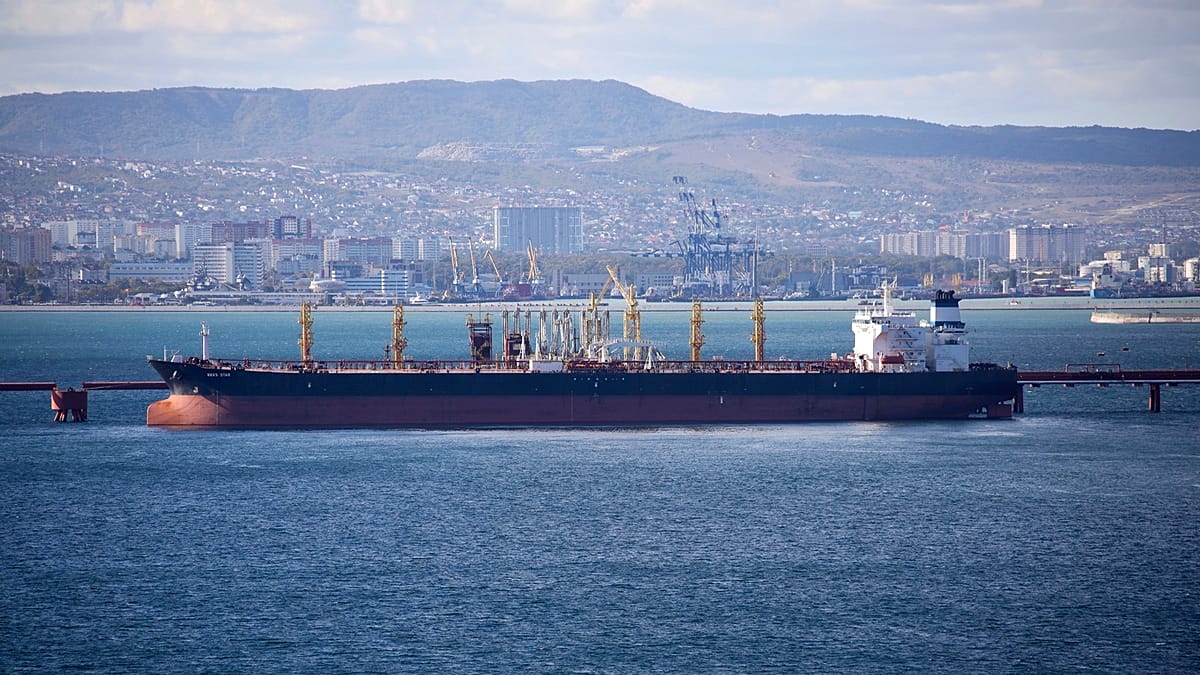
The European Union has vowed to stand firm with its strategy to squeeze Russia’s war economy, as the United Kingdom scrambles to reassure its allies that its latest decisions fall short of lifting sanctions.
The British government caused confusion and dismay on Tuesday when it published an open-ended licence allowing the import of diesel and jet fuel made from Russian crude oil in other countries, such as Turkey and India, where the oil is purchased at discounted prices.
A separate licence enables the provision of short-term service contracts with Russia’s Sakhalin-2 and Yamal LNG projects until January 2027.
The publication caught Ukraine and its European allies by surprise.
The office of Ukrainian President Volodymyr Zelenskyy said it was in “very active communication” with its British counterparts to understand the details of the decision. Zelenskyy’s sanctions envoy, Vladyslav Vlasiuk, said the concerns related to the “additional revenues” that might be generated for Moscow’s budget.
In Brussels, the European Commission insisted the bloc would continue on its current path.
“We remain committed to our sanctions on imports of Russian oil and gas,” Paula Pinho, the Commission’s chief spokesperson, said on Wednesday. “We need to reiterate the call for Russians not to benefit from the ongoing conflict in the Middle East. It’s too ironic.”
Meanwhile, London sought to portray the debacle as a case of bad communication.
The government argued that the licences were necessary to gradually introduce a ban on refined oil products derived from Russian crude oil and the provision of maritime services for Russian LNG without causing further disruption to the country’s energy supplies, already strained by the closure of the Strait of Hormuz.
Amid intense backlash from the opposition, Prime Minister Keir Starmer framed the licences as “short-term measures” to protect British consumers.
“This is not a question of lifting existing sanctions in any way whatsoever, and we will continue to work with our allies on further sanction packages,” he told Parliament.
Trade Minister Chris Bryant apologised for the “clumsy” roll-out of the watered-down sanctions and promised to revise the licences “as soon as possible”.
Full ban on hold
The news from London landed just a day after Washington confirmed it would extend its waiver on Russian oil at sea for the third time this year, arguing it would provide “additional flexibility” to “the most energy-vulnerable countries”.
The announcement by US Treasury Secretary Scott Bessent coincided with a G7 meeting of finance ministers and central bank governors in Paris, which he attended.
Valdis Dombrovkis, the European Commissioner for the Economy, sharply criticised the extension. “From the EU point of view, we do not think that this is the time to ease pressure on Russia,” he said in Paris, referring to the steep rise of Urals crude price.
“If anything, we need to strengthen that pressure,” he added.
Brussels is currently trying to convince Western allies to introduce a far-reaching ban on maritime services — including banking, shipping, and insurance — for Russian oil tankers. Once in force, it would replace the price cap that the G7 has operated since 2022.
But the Commission is caught between two competing forces.
On the one hand, two member states, Greece and Malta, which have economic stakes in the shipping and flagging services, are adamant that the full ban must only be imposed if the G7 acts together.
On the other hand, the US and the UK, which play a leading role in the banking and insurance services respectively, are amending their sanctions regimes to cope with the shockwaves unleashed by the closure of the Strait of Hormuz.
The unresolved tensions between the camps have left the EU in the extraordinary position of having the ban approved in theory but suspended in practice.
At the end of the G7 meeting, finance ministers reaffirmed their “unwavering commitment to continue to impose severe costs on Russia” and left the door open to “potential measures on maritime services”, without committing to a timeline.