
The European Commission has proposed a new round of sanctions against Russia in a fresh attempt to intensify pressure on Moscow’s high-intensity war economy and force concessions at the negotiating table.
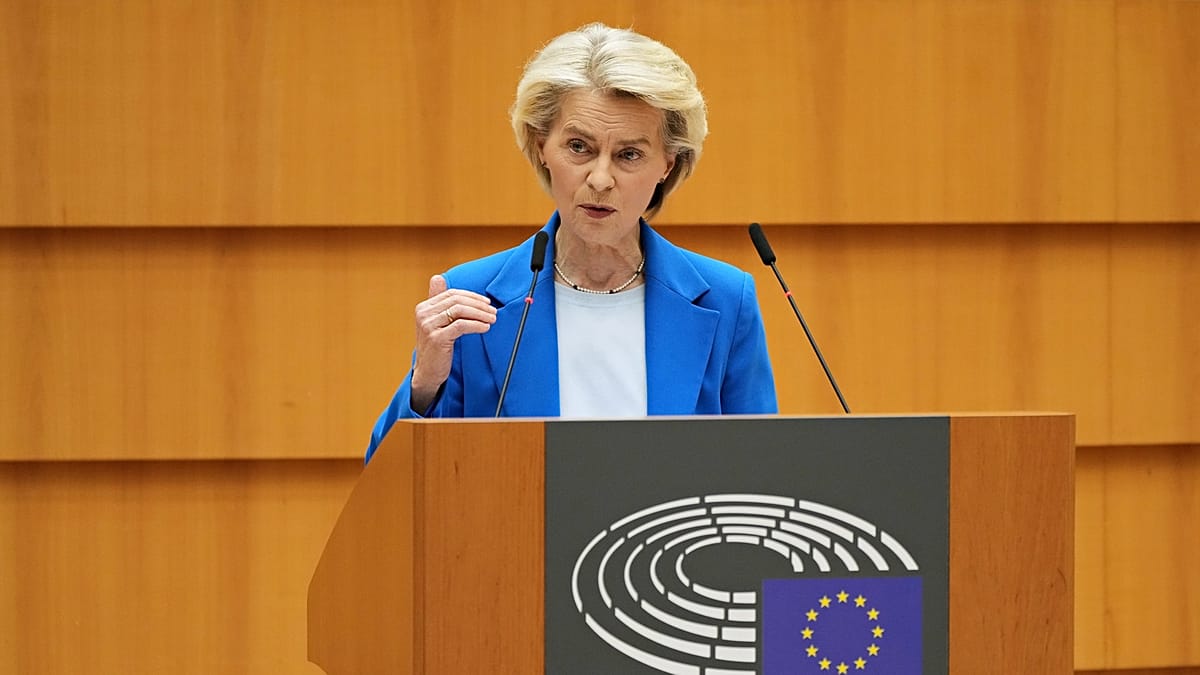
“While Ukraine continues to defend itself with extraordinary courage on the battlefield, the Kremlin is doubling down on war crimes, deliberately striking homes and civilian infrastructure,” Commission President Ursula von der Leyen said on Friday afternoon.
“Russia will only come to the table with genuine intent if it is pressured to do so. This is the only language Russia understands. That is why we are stepping up today.”
The main element inside the package is a full ban on maritime services aimed at further weakening Russia’s energy revenues, which von der Leyen says should be implemented “in coordination with like-minded partners after a decision” at the G7 level.
The plan, previously advocated by Finland and Sweden, would prohibit EU companies from providing any type of service, such as insurance, shipping or port access, to vessels carrying Russian crude oil.
Until now, the EU has allowed such services to be offered – but only to tankers that comply with the G7 price cap, which has been in place since December 2022.
The cap was recently adjusted to $44.10 per barrel in an attempt to reflect market trends and tighten the screws on Russia’s war economy.
The dynamic price cap is followed by the EU, the UK, Canada, Japan and Australia, while the United States retains the original level of $60 per barrel.
In practice, the full ban would mean the cap would effectively cease to apply within EU jurisdiction, as companies would be forbidden from servicing all Russian vessels without exemption, regardless of whether they sell above or below the price limit.
Finland and Sweden had argued the prohibition would significantly drive up material costs for Russia’s oil sector, be easier to implement for EU actors and crack down on falsified documents, which Moscow often uses to bypass sanctions.
However, it is not yet clear if the other member states would be on board with the idea. Any decision would require the unanimity of the 27 capitals.
A similar ban would apply to the maintenance of Russian tankers of liquefied natural gas (LNG) and icebreakers, von der Leyen said. An extra 42 vessels from Moscow’s “shadow fleet” would be blacklisted, bringing the total to 640.
Crackdown on circumvention
Besides energy, the proposed package targets 20 Russian regional banks as well as companies and platforms trading in cryptocurrency, which is used to bypass sanctions.
The EU would also restrict Russian imports of metals, chemicals and critical minerals worth about €570 million, and establish a quota on ammonia, used in fertilisers.
For the first time, von der Leyen added, the EU would trigger the Anti-Circumvention Tool to prohibit sales of computer numerical control machines and radios to countries “where there is a high risk that these products are re-exported to Russia”.
The tool has remained untouched since 2023, despite ample evidence of circumvention by Russia’s neighbours and political allies, namely China.
Brussels is keen to approve the 20th package of sanctions by the time the war crosses its fourth-year mark on 24 February.
Von der Leyen and António Costa, the president of the European Council, are set to travel to Ukraine on that date to reaffirm the EU’s continued support.
“I now call on the member states to swiftly endorse these new sanctions,” she said.
“Doing so would send a powerful signal ahead of the grim 4th anniversary of this war: our commitment to a free and sovereign Ukraine is unwavering. And if anything, it grows stronger day by day, month by month, year by year.”
US considers extra sanctions
Friday’s announcement comes after two days of trilateral talks in Abu Dhabi between Ukrainian, Russian and American officials. The diplomatic effort has raised hopes that the war might end sometime in 2026, even if progress has been so far limited.
At the end of the meeting in Abu Dhabi, Ukraine and Russia agreed to swap 314 prisoners of war. Meanwhile, the US and Russia decided to re-establish high-level military dialogue for the first time in more than four years.
The talks were marked by the failure of an energy ceasefire brokered by US President Donald Trump. Just four days after Trump called the truce, Russia hit Ukraine’s energy infrastructure with 450 drones and 70 missiles. The constant barrages have plunged Ukrainians into painful blackouts at sub-zero winter temperatures.
US Treasury Secretary Scott Bessent indicated that additional punitive measures against Russia were “under consideration”.
“We will see where the peace talks go,” he said.
Washington spent most of last year avoiding sanctions on Russia, hoping to strike a fast deal to end the war. But in October, the White House decided to sanction Russia’s two largest oil companies, Rosneft and Lukoil, after sensing that President Vladimir Putin’s maximalist demands remained unchanged.
Due to the dominance of the US dollar in global trade, Washington’s sanctions had an extraterritorial effect, forcing Moscow to sell its Urals crude at a larger discount.