
Close Menu
Daily Guardian EuropeDaily Guardian Europe
  • Home
  • Europe
  • World
  • Politics
  • Business
  • Lifestyle
  • Sports
  • Travel
  • Environment
  • Culture
  • Press Release
  • Trending
What's On

What can governments do? – POLITICO

September 12, 2026

European Commission pushes for all-English trade deals despite French opposition

September 12, 2026

Kazakhstan’s AIFC says other countries are seeking to replicate its model

September 12, 2026

EU delays key tobacco tax vote until after Swedish election – POLITICO

September 12, 2026

EU’s economy chief Dombrovskis on Euronews as 9/11 attacks mark 25 years

September 12, 2026
Facebook X (Twitter) Instagram
Web Stories
Facebook X (Twitter) Instagram
Daily Guardian Europe
Newsletter
  • Home
  • Europe
  • World
  • Politics
  • Business
  • Lifestyle
  • Sports
  • Travel
  • Environment
  • Culture
  • Press Release
  • Trending
Daily Guardian EuropeDaily Guardian Europe
Home»Lifestyle
Lifestyle

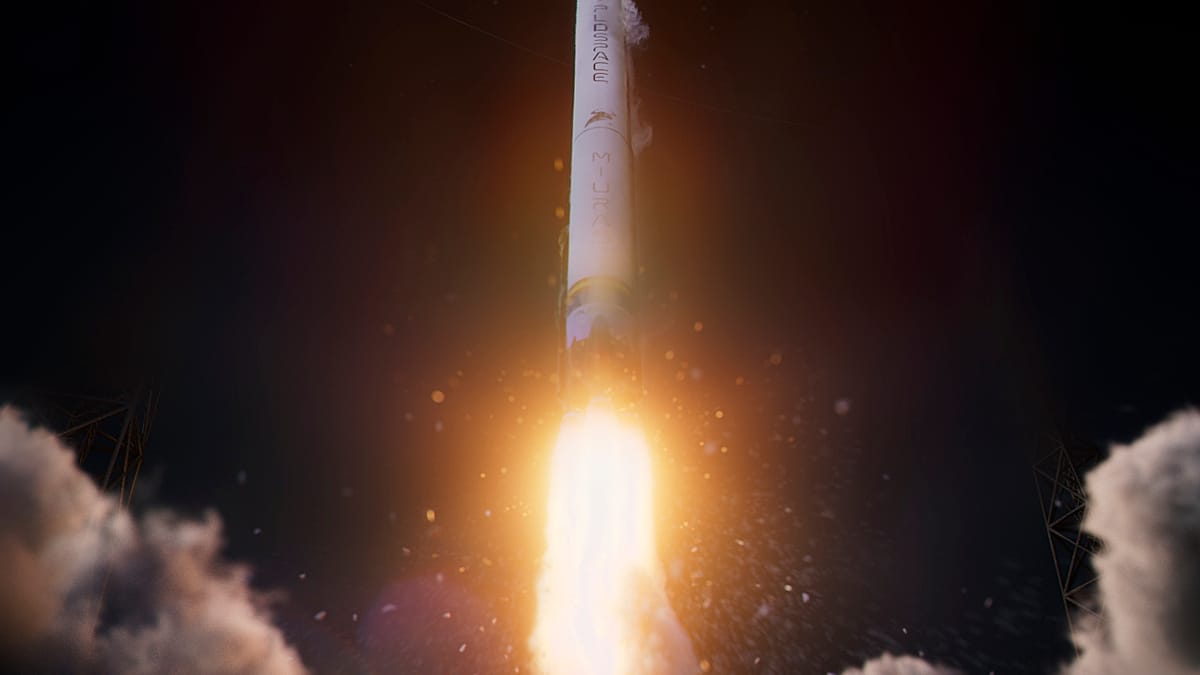
ESA signs first major European Launcher Challenge contract with Spain’s PLD Space

By staffAugust 27, 20263 Mins Read
ESA signs first major European Launcher Challenge contract with Spain’s PLD Space
Share
Facebook Twitter LinkedIn Pinterest Email

The European Space Agency (ESA) has begun signing the first contracts for its European Launcher Challenge (ELC), a programme designed to help Europe stop relying on foreign launchers to put satellites into orbit. Among the companies selected is PLD Space, the Elche-based firm that in 2023 launched its MIURA 1 demonstrator rocket on a suborbital flight.

The contract, worth 158.9 million euros and financed mainly by Spain with German support, positions the company as one of the central players in the future European launcher ecosystem.

The agreement is split into two components. The first aims to consolidate the commercial MIURA 5 service and progressively ramp up its launch rate until 2030, at a time when the company says it is already seeing growing commercial interest in the rocket in international markets.

The second, focused on what PLD Space describes as “enhanced orbital capability”, will fund upgrades to MIURA 5 so it can carry heavier payloads and reach more distant orbits, as well as adding propulsive landing, the first step towards reusing the rocket.

The prelude to MIURA Next

According to the company, many of the subsystems developed under this orbital-improvement programme will not remain confined to MIURA 5: they are designed to be transferred directly to MIURA Next, the future family of heavy launchers with which PLD Space hopes to scale up. The idea is that every technical improvement certified now will shorten timelines and reduce risks when it is the turn of the larger launcher.

“ESA’s selection of PLD Space confirms the maturity of the roadmap we have been building for years,” summed up Ezequiel Sánchez, the company’s executive chairman, who sees the contract as part of a trajectory that began with MIURA 1 and which, he says, should end with the transfer of critical technology to the heavy launcher.

The PLD Space deal is not the only contract ESA has concluded in this round. Germany’s Rocket Factory Augsburg has been awarded 186.9 million euros for its RFA One launcher, which will operate from the SaxaVord base in Scotland, and Isar Aerospace has secured 197.8 million euros for its Spectrum rocket. The three were part of a group of five finalists, completed by MaiaSpace and Orbex, that ESA shortlisted in July 2025 after receiving twelve proposals from across Europe.

The ELC was launched in 2023 with the aim, among others, of having a European successor to Ariane 6 in place before 2030 that does not depend on a single operator, and at the ministerial meeting in Bremen in November 2025 member states doubled down on their funding commitment, bringing it up to 900 million euros.

For PLD Space, the contract comes on top of the 42 million euros it has already received from CDTI through the Aerospace PERTE, and arrives in the final phase of development of MIURA 5, the orbital rocket that is due to succeed MIURA 1.

Share. Facebook Twitter Pinterest LinkedIn Tumblr Email

Keep Reading

French ESA astronaut Thomas Pesquet: Europe must ‘maximise scientific return’ from ISS before closure

OpenAI makes U-turn and calls for binding national AI safety rules

Anthropic says it stopped AI misuse for cyberattacks, propaganda and bioweapons

Japanese company unveils ‘robot ambulance’ for on-site humanoid repairs

3D printing to colonise Mars after the Moon: the biomaterials tested by scientists

Russia’s Starlink copycat has failed so far but still threatens Ukraine

‘Smart javelin’ brings sensors and real-time data analysis to athletics

Macron, von der Leyen call for stronger European space sector amid rising security concerns

New Spanish-made zinc-air battery design boosts capacity and power by 80%

Editors Picks

European Commission pushes for all-English trade deals despite French opposition

September 12, 2026

Kazakhstan’s AIFC says other countries are seeking to replicate its model

September 12, 2026

EU delays key tobacco tax vote until after Swedish election – POLITICO

September 12, 2026

EU’s economy chief Dombrovskis on Euronews as 9/11 attacks mark 25 years

September 12, 2026

Subscribe to News

Get the latest Europe and world news and updates directly to your inbox.

Latest News

Israeli strike in Gaza kills family of four, including two children

September 12, 2026

Norway’s Princess Astrid dies two days after funeral of brother King Harald

September 12, 2026

Houthis seize key Yemeni island in Bab el-Mandeb, taking control of the strait

September 12, 2026
Facebook X (Twitter) Pinterest TikTok Instagram
© 2026 Daily Guardian Europe. All Rights Reserved.
  • Privacy Policy
  • Terms
  • Advertise
  • Contact

Type above and press Enter to search. Press Esc to cancel.