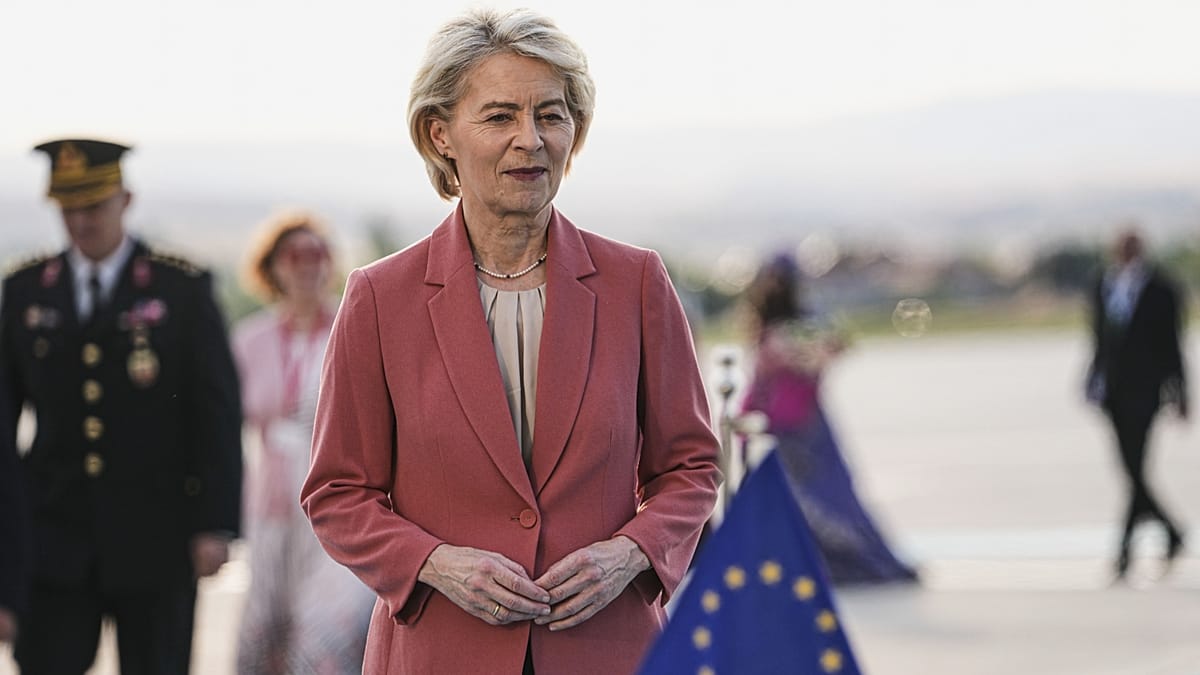





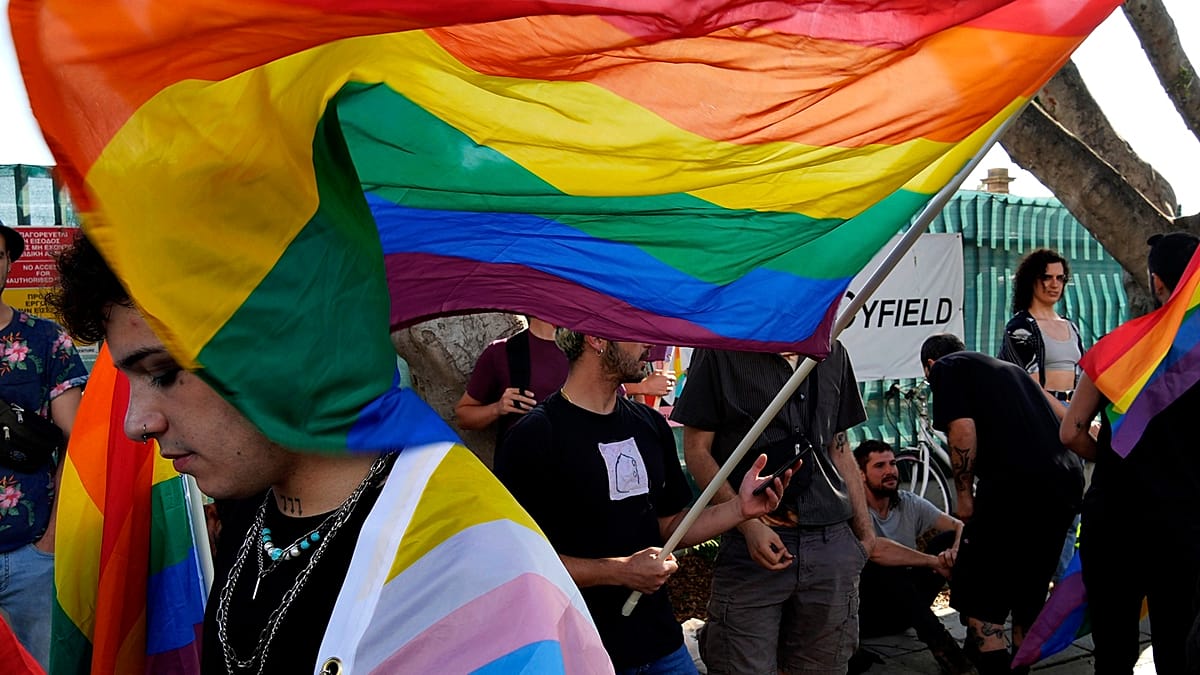
European Union countries must take immediate action to end “barbaric” conversion practices targeting LGBTIQ+ people, Hadja Lahbib, the European Commissioner for Equality, said on Wednesday as she announced a non-binding recommendation.
“Conversion practices are built on a lie. The lie that LGBTIQ+ people need to be fixed,” Lahbib said on Wednesday. “You cannot torture away a person’s identity.”
The recommendation, she added, sends a “powerful signal that these practices are harmful but also must be illegal”, and will cover actions to increase societal awareness, help victims seek legal action, and strengthen medical and psychological support.
It will be formally presented next year.
Wednesday’s announcement falls short of the EU-wide ban that advocates had called on the Commission to present as part of a citizens’ initiative. Asked why the executive had not gone as far, Lahbib admitted a lack of unanimity among member states.
Article 19 of the EU treaties compels unanimity to tackle discrimination based on sex, racial or ethnic origin, religion or belief, disability, age or sexual orientation.
“The European Commission is sending a very clear message without ambiguity to every member state in this union: ban conversion practices now,” Lahbib said.
“Member states have an essential role to play because this largely falls under their responsibility,” she added, placing the burden on capitals.
As of today, eight of 27 member states – Belgium, Cyprus, France, Germany, Greece, Malta, Spain and Portugal – have bans in place. The laws are not identical. For instance, they foresee various degrees of financial penalties and prison sentences.
“They have shown it can be done,” Lahbib went on, praising the eight countries. “We are building on that momentum, calling on the rest to follow.”
Conversion practices encompass interventions, such as psychotherapy, medication, electroshock and exorcism, aimed at changing a person’s sexual orientation, gender identity or gender expression. Widely dismissed as pseudo-science, they are performed by private and public health providers, faith-based organisations, state agents and family members, and often involve abuse, violence and humiliation.
A 2020 report endorsed by the United Nations warned that conversion practices can result in “long-lasting psychological and physical damage” and urged countries around the world to introduce bans at the national level, including restrictions on public funding and advertising, penalties for non-compliance and reparations to victims.
In January 2024, an NGO named ACT registered a European Citizens’ Initiative asking the Commission to propose an EU-wide prohibition on conversion practices by either expanding the list of euro-crimes or amending the Equal Treatment Directive, which has been stuck since 2008 due to the lack of unanimity that Lahbib evoked.
The initiative surpassed the threshold of one million signatures from at least seven member states, compelling the Commission to analyse it and issue an official response, which Lahbib delivered on Wednesday.
“These practices are shameful and unacceptable,” Lahbib said. “It’s not about healing or helping someone. No, it’s about violence. A hidden violence.”
Almost a quarter of LGBTIQ+ citizens in the EU have been subjected to some form of conversion practices, according to the bloc’s Fundamental Rights Agency, with trans women and men exposed the most.
In some cases, the treatment was administered with the adult’s consent. The citizens’ initiative envisioned an EU-wide ban where consent would be deemed “irrelevant.”