
“The thing about football – the important thing about football – is that it is not just about football.”
British author Terry Pratchett was right about “the beautiful game” when he wrote those lines in his Discworld novel “Unseen Academicals”. And some are taking it too far.
While Germany is licking its wounds over its penalty shootout failure and some Dutch fans are facing police investigation for racially abusing their players who missed their spot kicks, the reactions to South Korea’s exit threatens to bring the culture of football into further disrepute.
In case you haven’t been keeping track of every team exiting the World Cup, South Korea crashed out after the group stage. Their campaign started with a promising 2-1 win against the Czech Republic but then spiraled downwards when they lost 1-0 to Mexico and couldn’t beat South Africa (1-0) to qualify for the knockout stage.
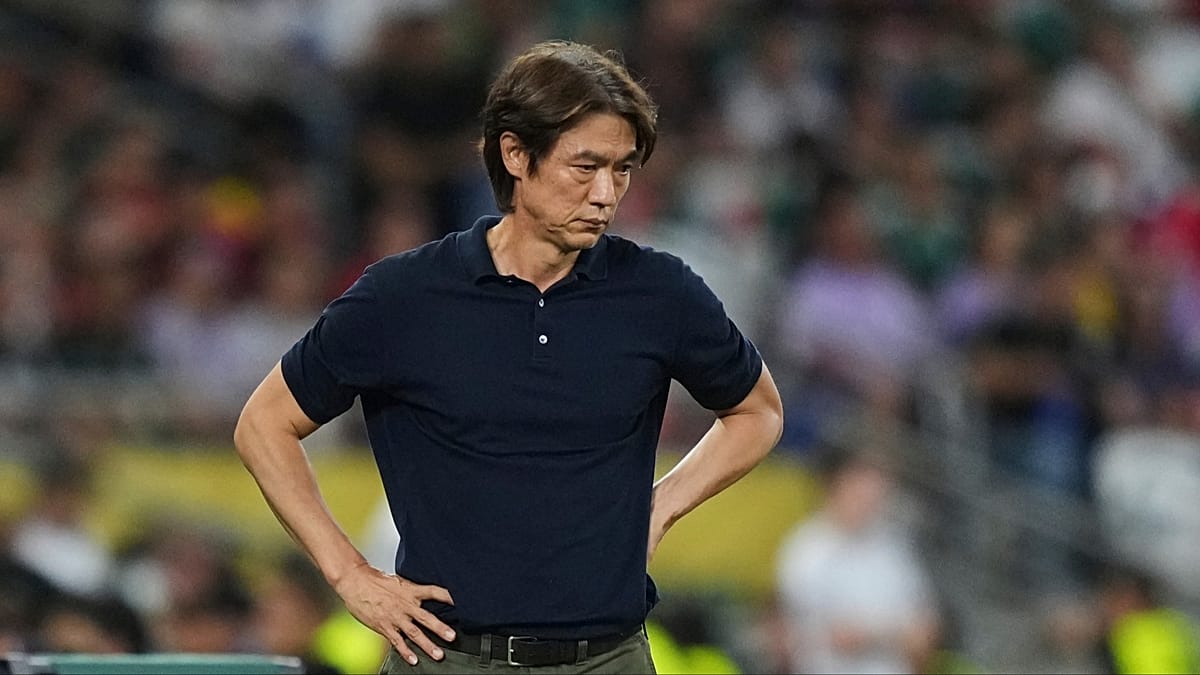
“I am genuinely very sorry,” said former footballer and head coach Hong Myung-bo on Sunday, before resigning as coach of South Korea. “Even though I am leaving the national team, I am not abandoning Korean football altogether. I will cheer for the national team from the bottom of my heart and hope that the team will be trusted and loved by the people once again.”
The South Korean squad previously exited World Cups at the Group stage in 2006, 2014 and 2018, and Hong Myung-bo captained the team to their best result at the 2002 tournament by finishing in fourth place.
But those glory days are over, and his apology has not been accepted by fans. Or the South Korean President Lee Jae Myung, who posted an extraordinary statement on social media in which he said he felt “profound disappointment”.
“”When favouritism and cronyism take precedence over competence in selecting a commander, the result is as predictable as fire burning paper,” he wrote. “I offer my deepest apologies to the public for the profound disappointment caused by this unacceptable outcome. We will move swiftly to reform sports administration to ensure that nothing like this happens again.”
It didn’t end there though.
The national team’s official fan club Red Devils issued a statement calling on Hong to “kneel before the entire nation and leave the football world forever”.
He was greeted with boos from angry fans upon returning to Seoul, with police having to cordon off a route extending from inside the airport terminal to the waiting bus outside.
“South Korean football is dead,” read one fan banner at Incheon International Airport.
There have also been death threats. As reported by Korea JoongAng Daily, a post titled “I’ll take responsibility and kill Hong Myung-bo” appeared on an online community last weekend. The author wrote: “I’ll go to Incheon International Airport and kill Hong Myung-bo on the day he returns.”
Police are reportedly closely monitoring the situation.
Local media also reported that restaurants and bars are banning Hong, with signs reading: “Hong Myung-bo is banned from entering.”
To explain the deep animosity – without condoning any violent threats – Hong has been a much-maligned figure since 2024, when he became the national team coach again, having previously resigned in 2014. His return was mired in controversy, with many fans criticising the appointment and calling out favouritism, with Korea Football Association (KFA) committeemen perceived to have given the top job to their friend.
Not helping his case this year was Hong’s decision to drop veteran captain and former Tottenham Hotspur player Son Heung-min for the South Africa game, in which they only needed a draw to progress to the next stage.
“I cannot say every decision has been the right one, but I can tell you that I have made every decision with Korean football in mind,” Hong said.
A Seoul Metropolitan Police Agency official confirmed that investigations are mounting regarding the allegations that the KFA president interfered in Hong’s appointment, and the public backlash continues to grow over the lack of transparency in the selection process.
It is never just about football.