
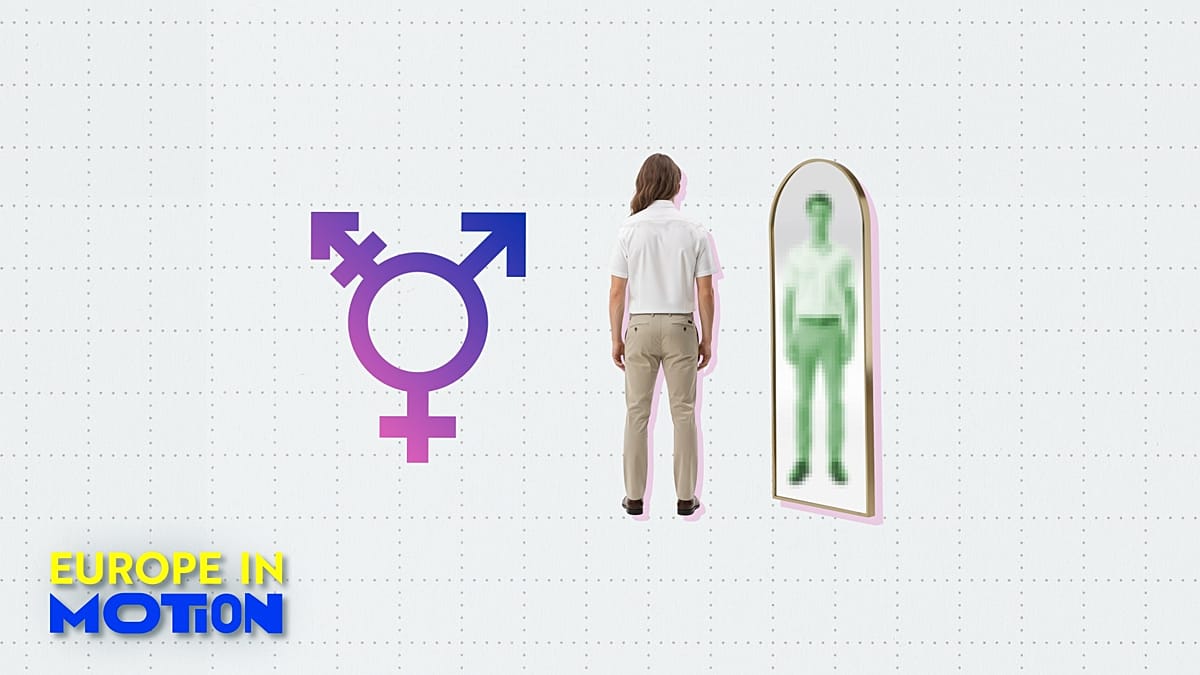
Almost a quarter of all EU citizens have been subjected to some form of conversion practices, according to the latest ILGA Europe report.
Greek respondents claim to have been the most exposed to it in the EU, at 38%, while French, Italian, and Dutch respondents said they had the least exposure, all at 18%.
Conversion practices, or so-called conversion therapy, wrongly claim to be able to change the sexual orientation or gender identity of a person. They’ve regularly been described as harmful, ineffective and pseudoscientific.
These practices can take a variety of forms, including intervention by family members, religious rituals and counselling, psychiatric treatment, medication, physical and sexual violence, verbal abuse and humiliation.
Trans, non-binary, and intersex individuals experienced greater exposure than cisgender respondents, according to the ILGA Europe report.
It’s the first study in its new “Intersections reports” series and is based on data from the European Union Agency for Fundamental Rights (FRA), included in its 2023 LGBTIQ III Survey.
The impact
Nearly all respondents who had experienced conversion practices in the form of physical, sexual, or verbal abuse avoided certain places in fear of being assaulted, threatened or harassed because they were LGBTQ+.
Other factors like age and finances can play a part in how likely someone is to agree to so-called conversion therapy and under what conditions.
More than a quarter of trans men respondents who struggled to make ends meet have previously given consent to conversion practices due to pressure or threats, according to the report.
Meanwhile, 22% of respondents who were trans women aged between 40 and 54 have at some point freely given consent to conversion practices.
‘Practices grounded in a lie’
The EU loses up to €89 million in GDP every year due to discrimination based on sexual orientation, according to an OECD report. The shortfall is caused by reduced workplace productivity, lower earnings and employment barriers.
Nevertheless, a wider European effort to clamp down on discrimination and conversion practices appears to be in the works: in late January, the Parliamentary Assembly of the Council of Europe, the continent’s human rights watchdog in Strasbourg, approved a resolution urging countries to introduce a ban on conversion practices.
It said that such practices should be clearly defined in national law and met with criminal sanctions, and that monitoring and reporting mechanisms should also be set up.
The approved resolution also proposes a set of measures concerning victim support and protection, evaluating the legislation implemented, and encouraging research and data collection on the prevalence and impact of conversion practices.
“These practices are grounded in a lie, the lie that diversity is a defect,” said Helena Dalli, former European Commissioner for Equality and former Minister for European Affairs and Equality of Malta, during the debate on the resolution. “They are sustained by stigma, and they persist only because institutions and states have allowed them to persist.”
The resolution is not legally binding, but can act as a form of political pressure on the Council of Europe’s 46 member states.
The EU itself is also taking steps to combat discrimination: at the end of 2025, the European Commission adopted a strategy to combat growing attacks against members of the LGBTQ+ community.
Half of EU countries currently have a national strategy for LGBTQ+ equality, and at least eight member states, including Belgium, Cyprus, France, Germany, Greece, Malta, Portugal and Spain, have banned conversion practices.