


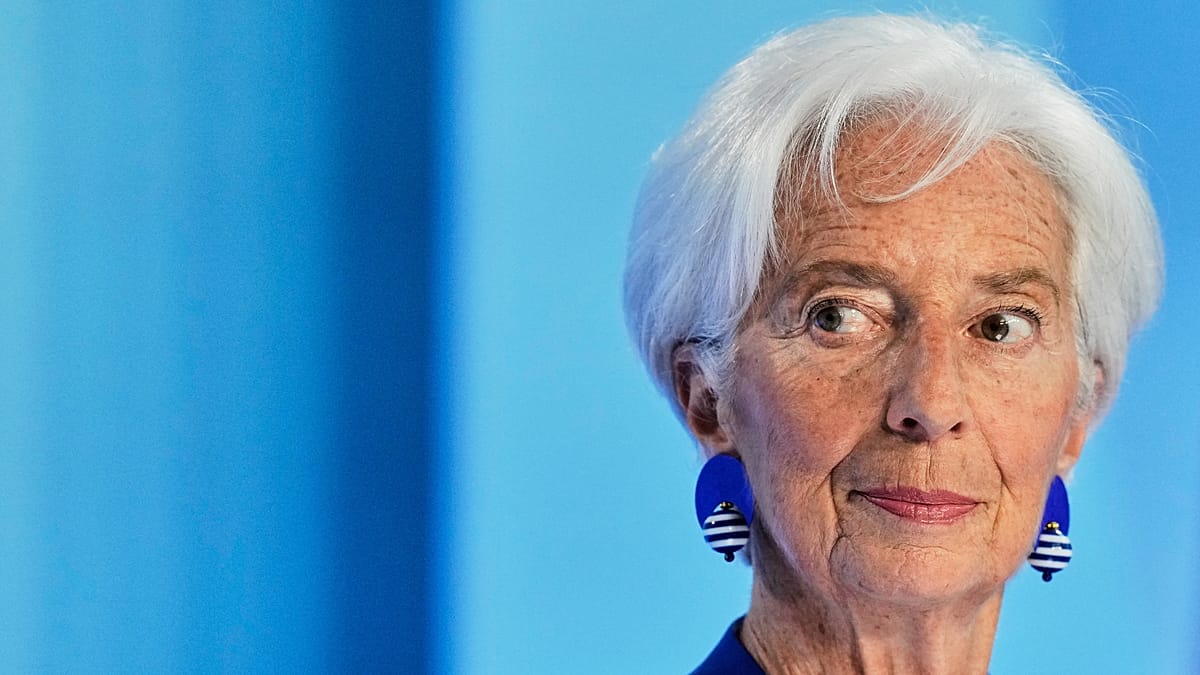



The announcement clears the way for a package deal among EU capitals over at least three appointments to the ECB’s six-strong Executive Board. Isabel Schnabel, head of the Bank’s markets department, is due to leave in January to take a senior role at the International Monetary Fund, while Philip Lane is due to depart the influential chief economist’s position in May.
Negotiations over the appointments are likely to be intense, given the ECB’s vital influence in international markets, and the never-ending pressure on European government finances. Former Dutch central bank chief Klaas Knot and Spain’s Pablo Hernández de Cos, who heads the Bank for International Settlements, are seen as the two frontrunners in the race for the top job.
The timing of the announcement means that President Emmanuel Macron will have a say in choosing Lagarde’s successor before he himself leaves office next spring. Marine Le Pen, the National Rally leader and a longtime critic of the EU, is currently well ahead in the polls to win the French presidency, and may take a radically different view about who should lead the ECB.
“The EU is trying to guard at least somewhat against the risk that right-wing Marine Le Pen may win the French presidential election,” said Berenberg Bank’s head of research Holger Schmieding.
Speculation has long swirled that Lagarde, formerly finance minister under President Nicolas Sarkozy, may throw herself back into French politics. She has stressed the need for “a pro-European voice” in the French elections, while still being consistently coy about running herself. Thursday’s announcement comes at a time when candidates from mainstream camps in France are all losing ground to far-left hopeful Jean-Luc Mélenchon, who wants the ECB to “set fire” to its French debt holdings. None looks likely to make the final round of the presidential election in May.
Whoever follows her as ECB president will inherit an increasingly tense situation in Europe’s bond markets, where borrowing costs are hitting their highest level in years due to a cocktail of war-fueled inflation, demographics and competition from capital from Big Tech companies chasing AI-related riches.


