
Close Menu
Daily Guardian EuropeDaily Guardian Europe
  • Home
  • Europe
  • World
  • Politics
  • Business
  • Lifestyle
  • Sports
  • Travel
  • Environment
  • Culture
  • Press Release
  • Trending
What's On

Armenia detains former President Kocharyan on corruption charges

August 25, 2026

Sophie Adenot makes her second spacewalk

August 25, 2026

Polish prosecutors charge MEP with Holocaust denial over Auschwitz ‘fake’ claim – POLITICO

August 25, 2026

Three arrested after Slovak police say they thwarted a planned arson attack

August 25, 2026

Video. Video shows tornado forming over village in France

August 25, 2026
Facebook X (Twitter) Instagram
Web Stories
Facebook X (Twitter) Instagram
Daily Guardian Europe
Newsletter
  • Home
  • Europe
  • World
  • Politics
  • Business
  • Lifestyle
  • Sports
  • Travel
  • Environment
  • Culture
  • Press Release
  • Trending
Daily Guardian EuropeDaily Guardian Europe
Home»Travel
Travel

Ceramics in Italy, glass in Czechia: Take the train to these traditional crafts centres in Europe

By staffJuly 30, 20263 Mins Read
Ceramics in Italy, glass in Czechia: Take the train to these traditional crafts centres in Europe
Share
Facebook Twitter LinkedIn Pinterest Email

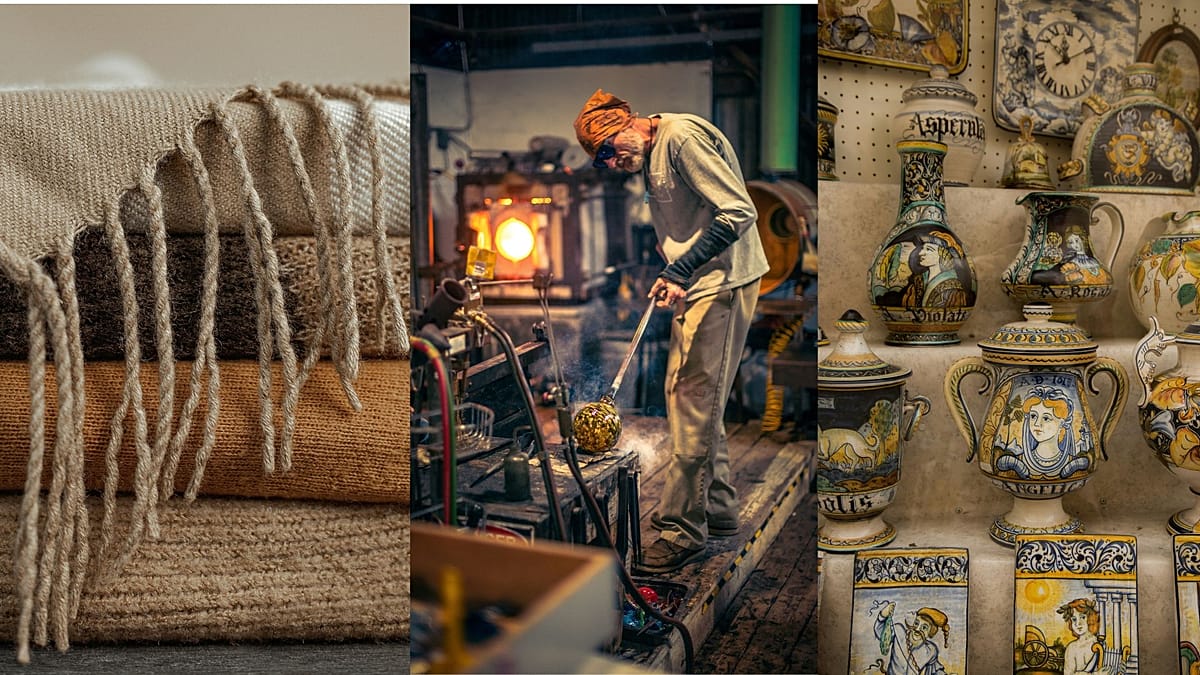
Europe’s vast rail network not only gives travellers access to major cities and their headline attractions, but also smaller towns with hyperlocal crafts and traditions to discover.

From clay-sculpting to glasswork, here are the ancient skills you can learn about and how to reach where they are still practised by train, according to booking platform Rail Europe.

Faenza: The Italian city that gave its name to European ceramics

In the heart of Emilia-Romagna, Faenza has been associated with ceramics for centuries. Its name even gave rise to the word “faience”, used internationally to describe a type of glazed earthenware.

Today, the city remains one of Europe’s great ceramic centres, home to the International Museum of Ceramics and a network of workshops, studios and schools where traditional techniques continue to evolve.

Faenza can be reached by rail via Bologna, making it an easy stopover for travellers exploring northern Italy beyond the classic Venice-Florence-Rome route.

Thiers: the blade-making capital of France

Set in the Auvergne-Rhône-Alpes region, Thiers has been known for knife-making since the Middle Ages.

For centuries, its steep streets, river valleys and workshops have been home to generations of artisans refining the skills needed to forge, polish and assemble blades.

Today, visitors can explore this heritage through the Musée de la Coutellerie, historic workshops and local makers who continue to work with traditional know-how.

Thiers can be reached by train via Clermont-Ferrand, from where there are direct links to Paris and Lyon.

Nový Bor: Czechia’s glassmaking town where fire becomes art

In northern Czechia, Nový Bor has long been associated with Bohemian glassmaking. The region’s glassmakers are known for their technical precision, decorative skill and ability to turn molten glass into objects of remarkable delicacy.

Visitors can explore the town’s glass museum, workshops and nearby glassmaking communities, where the craft remains both a cultural legacy and a contemporary creative industry. Watching glass being blown, cut or engraved offers a rare insight into a process that depends on heat, timing, patience and extraordinary manual control.

Nový Bor is accessible by rail from Prague, making it a compelling detour for travellers who want to go beyond the capital.

Tönning: German wool, natural fibres and North Sea craftsmanship

On the coast of Schleswig-Holstein, Tönning offers a more contemporary craft story, shaped by wool, natural fibres and the landscape of northern Germany.

Here, the workshop Friesenfaser works with materials connected to Nordfriesland, transforming them into pieces from wool blankets to household goods.

This is not a large museum experience, but the chance to learn about a living craft project connected to the rhythm of the coast, local materials and a slow method of production.

Tönning can be reached by train via Husum, which has direct connections to Hamburg and Westerland (Sylt).

Share. Facebook Twitter Pinterest LinkedIn Tumblr Email

Keep Reading

New European Sleeper train to launch from Brussels and Amsterdam to Copenhagen and Malmö in 2028

Greek air traffic controllers pushed to limit by tourism boom

LAX, JFK, DXB: Everything you need to know about airport codes

Sofia travel guide: How to spend 48 hours in Bulgaria’s capital

‘I saw it on TikTok’: 48% of Gen Z travellers turn to the platform for travel inspiration

Greece’s tourist numbers have risen in 2026, but visitors are spending less

These are the world’s most beautiful summer cities, according to eye-tracking technology

Spain will overtake France as the world’s most visited country by 2040, new study predicts

Ranked: The most and least expensive airlines in Europe

Editors Picks

Sophie Adenot makes her second spacewalk

August 25, 2026

Polish prosecutors charge MEP with Holocaust denial over Auschwitz ‘fake’ claim – POLITICO

August 25, 2026

Three arrested after Slovak police say they thwarted a planned arson attack

August 25, 2026

Video. Video shows tornado forming over village in France

August 25, 2026

Subscribe to News

Get the latest Europe and world news and updates directly to your inbox.

Latest News

Eni doubles down on Egyptian gas: $8.5bn in investments and 230 new wells

August 25, 2026

Mysterious, ultra-powerful AI system emerges as China closes in on the West

August 25, 2026

Sánchez’s ministers clash over whether Madrid missed Ceuta migrant warnings – POLITICO

August 25, 2026
Facebook X (Twitter) Pinterest TikTok Instagram
© 2026 Daily Guardian Europe. All Rights Reserved.
  • Privacy Policy
  • Terms
  • Advertise
  • Contact

Type above and press Enter to search. Press Esc to cancel.