
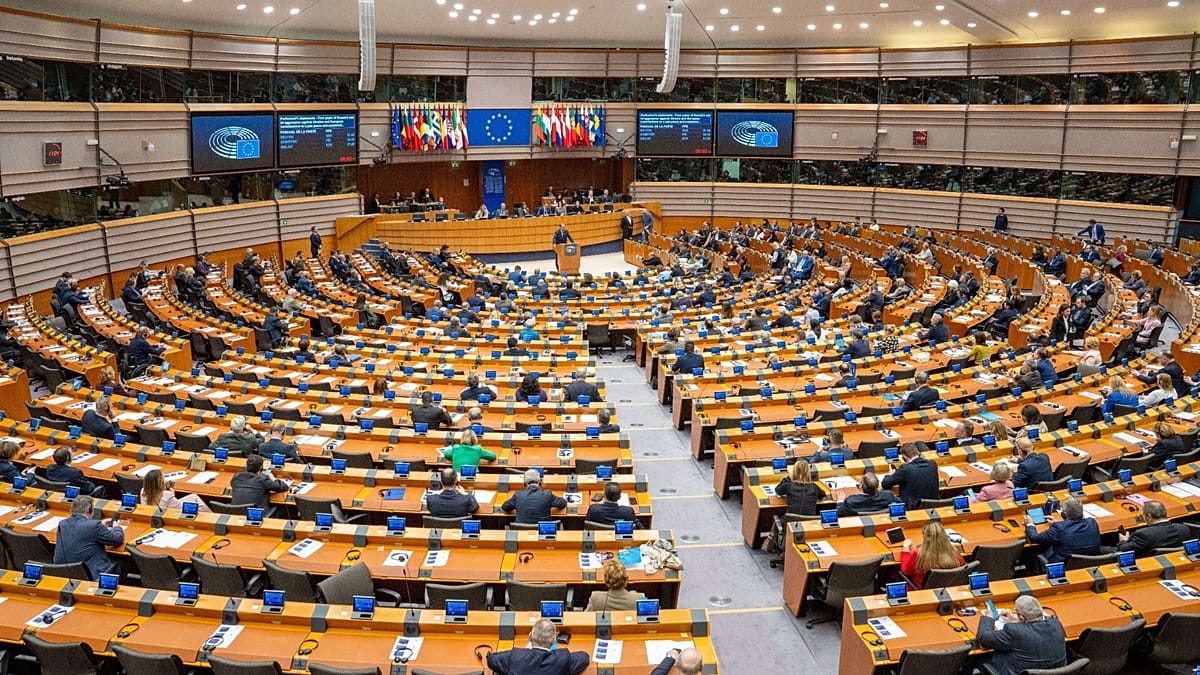
The digital euro is facing fresh delays in the European Parliament after the file’s lead rapporteur, Spanish lawmaker Fernando Navarrete Rojas of the European People’s Party (EPP), formed a minority bloc with far-right groups — leaving shadow rapporteurs unable to secure a workable majority around the draft.
The latest compromise text seen by Euronews would also narrow the project’s scope in a way that goes to the heart of the Commission’s plan.
Brussels proposed a digital form of cash that could be used both online and offline. Navarrete, by contrast, is pushing for an offline-only model.
As rapporteur, Navarrete is responsible for steering the legislative text and building agreement across political groups through negotiations with shadow rapporteurs — a process designed to produce a majority-backed position in Parliament.
The Parliament has already signalled broad support for a digital euro.
On 10 February, lawmakers adopted the European Central Bank’s annual report and backed two pro–digital euro amendments, with opposition mainly coming from some centrist and far-right MEPs.
The EPP itself is split on the file. The German delegation is strongly in favour, amid pressure from Berlin. In mid-February, Vice-Chancellor Lars Klingbeil told journalists that those opposing the digital euro were harming Europe.
Two sources familiar with the talks told Euronews that amendments tabled by Navarrete in the latest compromise text are a non-starter for groups backing the Commission’s plan, pushing the file into a legislative deadlock.
Euronews contacted lead rapporteur Navarrete for comment but had not received a response at the time of publication.
The impasse surfaced again at a meeting on Thursday, when lawmakers attempted to bridge differences after a heated discussion, claiming “the text is going nowhere”.
Another meeting is scheduled for 10 March, but sources expect a vote currently pencilled in for May to slip.
EU countries have already agreed their position in the Council. Without a Parliament mandate, the legislation cannot move to the next stage.
What is digital euro?
The digital euro has taken on new political weight as economic tensions between the EU and the US sharpen the debate over Europe’s reliance on American payment giants.
Visa and Mastercard, both US-based, underpin much of day-to-day card spending in Europe. ECB data for 2025 shows the two networks account for 61% of card payments in the EU and nearly all cross-border card payments.
The project would create an electronic form of cash issued by the European Central Bank, designed to sit alongside banknotes and the payments services offered by commercial banks.
Supporters argue it would give citizens direct access to digital “public” money — something that, for now, largely exists only in the form of cash.
Under the Commission’s proposal, users would have a digital wallet for both online and offline payments, with transactions designed so they are not trackable.
Critics say the latest compromise text in Parliament risks stripping out key parts of that vision.
“This first taste of a compromise from Mr. Navarrete sadly shines little light on any actual shift in his direction for the digital euro,” Laura Casonato, head of policy at Positive Money Europe, told Euronews.
Casonato said the draft does contain some welcome elements, including language recognising that the digital euro “should be a sovereign and secure digital means of payment that safeguard public access to central bank money” alongside clearer provisions on privacy and data security.