
Winemakers have been offered a glimmer of hope after losing one of the industry’s most important safety nets.
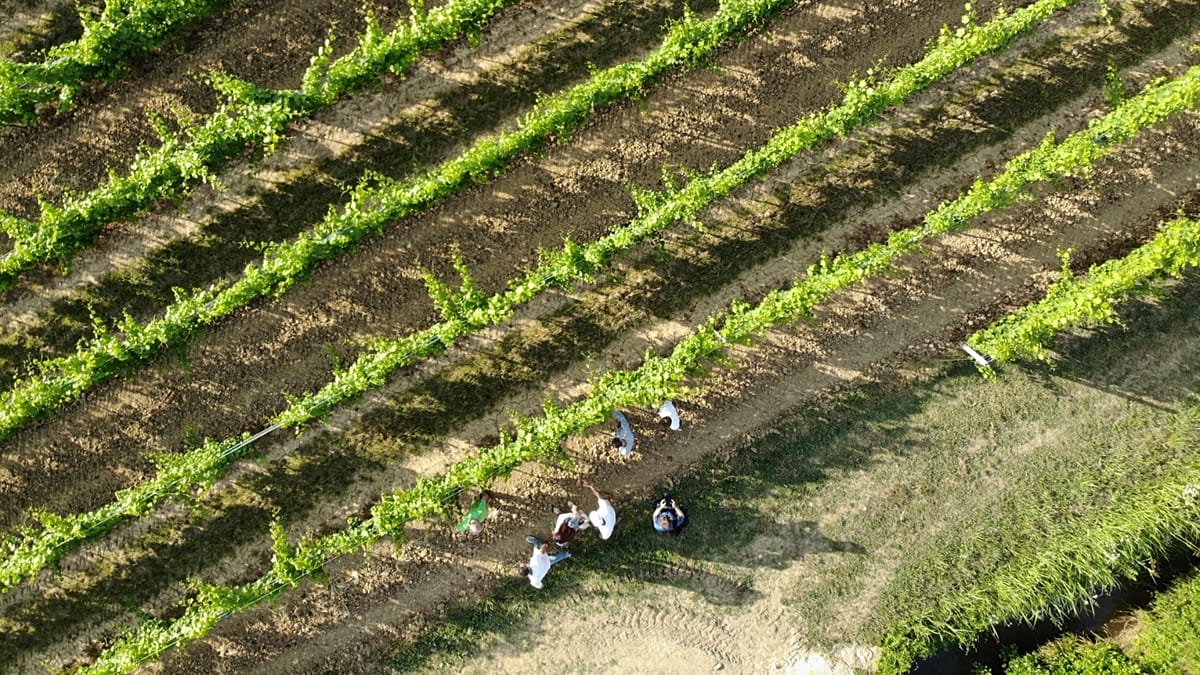
Last year, France revoked approval of 19 copper-based fungicides that farmers heavily relied on to protect their harvest from mildew and mould. The products can no longer be bought or sold as of 15 January. After that, farmers have just one year to use up their remaining stocks.
Food safety authority Anses says its decision was based on potential health risks for vineyard workers, despite arguments from the industry that toxic levels were never used. The EU has extended its copper use authorisation until mid-2029.
Anses’ move poses a serious threat to France’s wine production levels, threatening an industry that has already resorted in permanently pulling up their vines.
In 2024, the country witnessed one of the smallest harvests of the century, with total yields dropping by 18 per cent compared to 2023. The French Statistics Forecasting Department for the Ministry of Agriculture and Food confirmed that downy mildew was affecting most wine-growing areas and had sparked “major” economic losses.
Is climate change to blame for France’s mildew problem?
Climate-fuelled warming has created a water issue for winemakers in France, which witnessed sky-high temperatures of 43℃ during a series of heatwaves last summer. It pushed many regions into a drought, forcing them to rely on irrigation.
As groundwater supplies dry up, this process becomes even more costly – especially for large producers.
Rising temperatures, mixed with altered rainfall patterns and higher humidity, are also creating the perfect conditions for disease to spread. Downy mildew, specifically, requires rainfall to grow, spread and infect plants.
However, though it prefers humidity, powdery mildew doesn’t require water and can actually thrive in drier conditions.
This means the overall disease pressure window in many grape-growing areas across Europe has widened. Experts say that infection events are becoming more frequent and less predictable, which requires more intensive monitoring and often an increased use of pesticides.
It’s why Sean Smith, CEO of Eden Research, a tech company based in the UK, has come up with a “viable and sustainable” alternative to copper-pesticides. And it has just received approval in the French market.
How Mevalone may be the solution to France’s wine crisis
Eden’s solution is a unique biofungicide based on plant-derived active ingredients called Mevalone.
“These active ingredients are naturally produced by plants as a part of their ‘immune system’, and Eden uses pure versions of these molecules to formulate products that target many of the same diseases that were treated using copper fungicides,” Smith tells Euronews Green.
“Plant-derived molecules tend to have a lower carbon footprint based on the fact that, like wood, the production of these molecules involves the consumption of CO2 by the plants that produce them whilst growing.”
Copper-based fungicides are considered to have a higher cradle‑to‑farm‑gate carbon footprint per hectare than most modern synthetic fungicides, mainly because they require much higher dose rates and more passes with the sprayer.
The key to sustainable farming
Smith says Mevalone will also help support regenerative agriculture and sustainable farming practices under climate change pressures.
“Regenerative agriculture relies on the use of minimally harmful crop inputs, such as fertilisers and pesticides,” he explains. “Eden’s products have been proven to degrade rapidly in the environment. As a result, their persistence in the environment is very limited.”
Highly persistent pesticides, which are sometimes classified as forever chemicals (PFAS), have been shown to harm soil health and exert pressure on the ecosystem.
After securing regulatory approval in France, Mevalone is set to be one of the only viable options for grape growers to protect their harvests. It could be key in the battle against mildew, which will only worsen with climate change.