


Published on
More than a billion people follow it — and according to its believers, it is all-knowing. But it isn’t a religion, it’s artificial intelligence.
The use of the technology, though, is becoming a concern for many, with AI psychosis, cybersecurity, and the vast amounts of energy it needs to function.
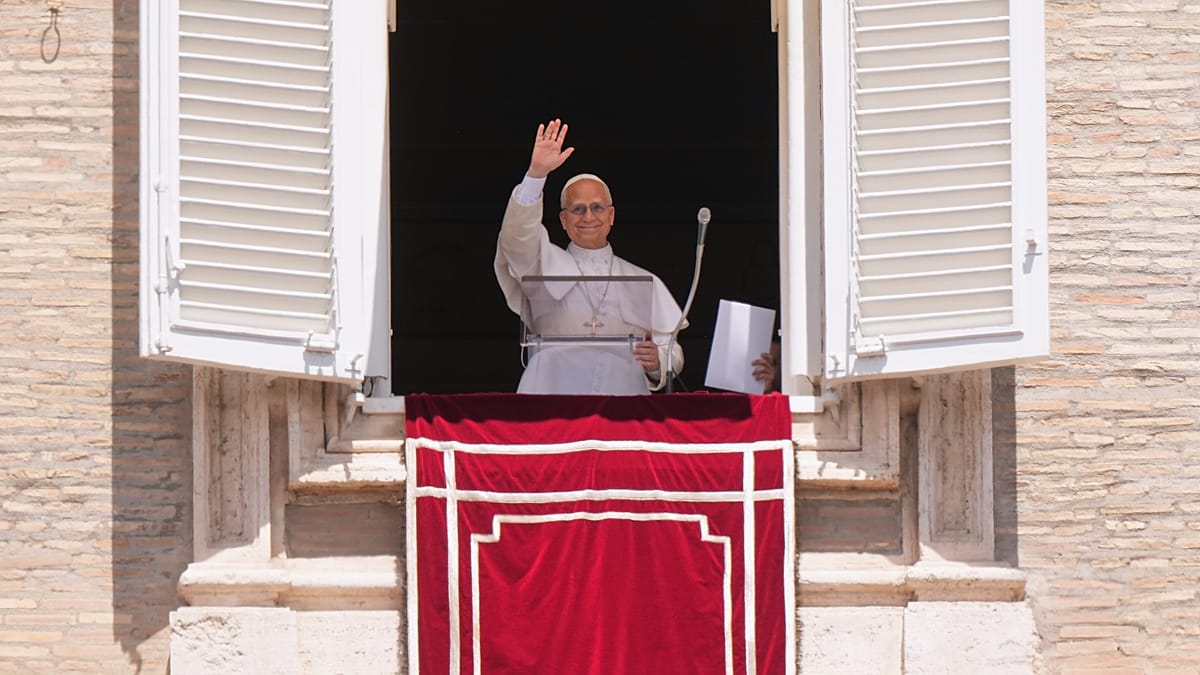
Pope Leo XIV is one of those voicing their worries, and in the first major text of his papacy, he will address the impact of AI on humanity.
Pope Leo will present a document, known as an encyclical, at the Vatican on 25 May. The co-founder of AI company Anthropic, Christopher Olah, will attend the event.
Anthropic has billed itself as the AI company that puts safety and risk mitigation at the forefront of its research. But in February, the Trump administration ordered all US agencies to stop using Anthropic’s artificial intelligence technology and imposed other major penalties for refusing to allow the U.S. military unrestricted use of its AI technology.
Anthropic is currently suing the administration, which it has accused of retaliating against it illegally because it attempts to impose limits on how its AI technology can be deployed.
The encyclical will address “the protection of the human person in the age of artificial intelligence”, the Vatican said on Monday.
The encyclical is an official letter written by the Pope to guide bishops and practitioners.
The Pontiff has made AI a priority of his young pontificate, is greatly concerned about AI in warfare and has called for monitoring of how the technology is used.
He approved the creation of a new Vatican commission on artificial intelligence on 16 May 16.
The commission’s role is to coordinate AI-related activities across Vatican institutions, sharing information, aligning on projects, and setting internal policies for AI use within the Holy See.
It draws from seven Vatican bodies, among them the Dicastery for the Doctrine of the Faith, the Pontifical Academy for Life, and the Pontifical Academy of Sciences.
The encyclical
The commission’s creation sets the stage for Pope Leo’s first encyclical, expected to tackle AI through the framework of Catholic social teaching — touching on labour rights, justice, and human dignity. The document, reportedly titled Magnifica Humanitas (“Magnificent Humanity”), is said to focus specifically on how AI is reshaping individuals and the workplace.
This isn’t the Vatican’s first foray into AI. Pope Francis spoke to the G7 on AI ethics in June 2024, and Vatican officials had long held private conversations with executives from Google, Microsoft, and Cisco on the same subject.
The Catholic Church’s internal AI guidelines took effect on January 1, 2025, mandating disclosure of AI-generated content, prohibiting AI uses that run counter to the Church’s mission, and creating a five-member compliance body to enforce the rules.