
By Euronews Roma
Published on
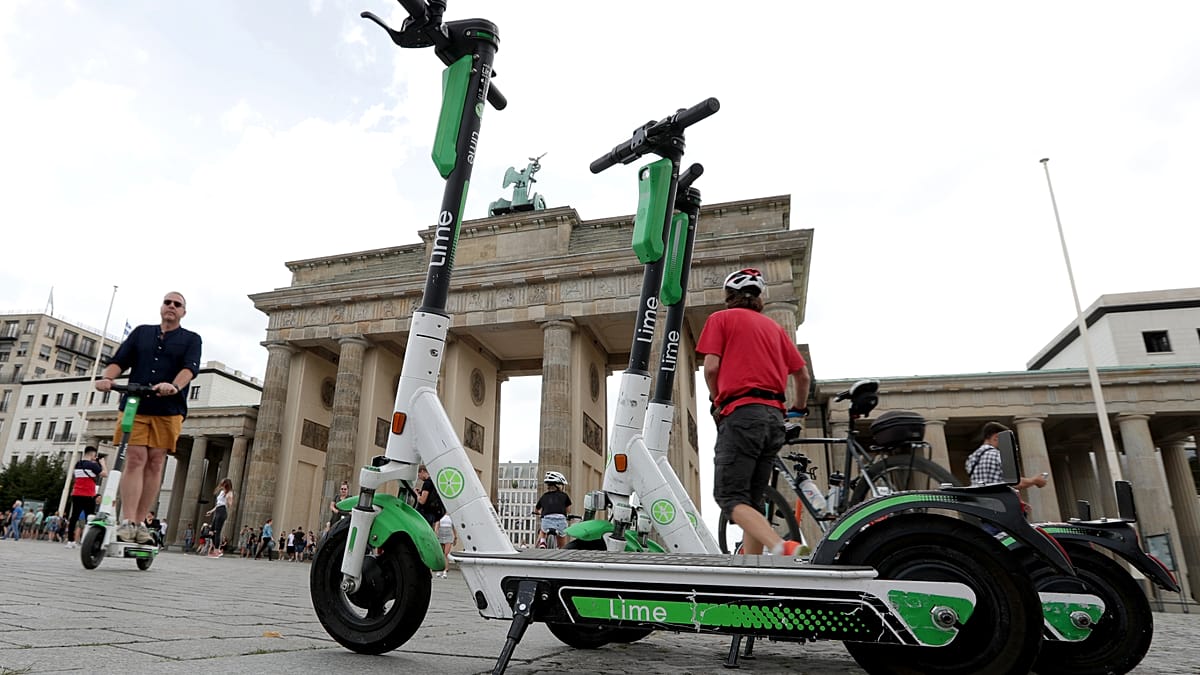
Rome has imposed its first penalty on companies that provide rental e-scooters and e-bikes, US firms Lime and Bird and German operator Dott.
The fine has been issued by the Antitrust Authority and totals €2.675 million. Following an investigation opened in November 2025, the Competition and Market Authority concluded that the companies “had obstructed access to free rides reserved for subscribers to Rome’s Local Public Transport system”.
Citizens holding a Metrebus season ticket were supposed to be entitled to free ride packages, which were not guaranteed because of inadequate organisational structures on the part of the companies, resulting in long waits to obtain the passes and a cumbersome activation process.
Another unfair practice, according to the Antitrust Authority, is the arbitrary deactivation of user accounts by Bird.
While the competent Italian authorities are seeking to guarantee efficient services for consumers, the government is also trying to regulate the circulation of e-scooters on the roads with new rules that came into force in May.
Across Europe, meanwhile, many countries have become aware of the high number of accidents involving these vehicles and have decided to restrict their use or ban them altogether.
Italy’s new rules
In April 2026 the Ministry of Infrastructure and Transport announced new rules for the circulation of e-scooters, in force since 16 May.
According to ACI, the Automobile Club d’Italia, the rules are intended to make electric vehicles on the road easier to identify, given their widespread use and the high number of crashes involving them: 3,895 last year, resulting in 23 deaths and 3,751 injuries.
The main changes concern the requirement for a licence plate and insurance for the vehicle. The identification plate is a sticker for vehicle owners, costs a flat €8.66 and can be transferred if the scooter is replaced.
Penalties for riding without a plate range from €100 to €400.
Other rules remain unchanged: riders must be at least 14 years old, helmets are compulsory, as are turn and brake indicators and front and rear lights. The speed limit is 20 km/h, and carrying passengers or objects, towing and using e-scooters on non-urban roads is prohibited.
The new rules apply to privately owned vehicles but also cover shared e-scooters provided by companies such as Lime, Bird and Dott, which are authorised to offer mobility services. In Rome this licence is valid for the period 2023–2026 and can be renewed through a public tender.
The European clampdown: from Germany and Spain to Brussels
Other European countries have also revised their laws to tackle the high number of accidents involving e-scooters.
According to the German Insurance Association, the number of insured e-scooters has increased more than fivefold since 2023, and they account for 40% of claims for third-party damage.
The same concern is shared by Hungary, which in 2025 saw a 70% increase in injury crashes involving e-scooters compared with the previous year and is preparing to amend its highway code.
In July Germany proposed a draft law that would make rental companies, including Lime and Bolt, directly responsible for accidents involving their vehicles.
Spain has also tightened the rules for e-scooters, making helmets compulsory nationwide and raising the minimum age to 15.
Other measures are more radical. In France, rental e-scooters were banned in 2023 following a popular referendum. Belgium, following France’s example, has announced that it will withdraw these vehicles from January 2027, while increasing the number of bicycles and e-bikes.
Possible legal repercussions
For now in Italy the clampdown on e-scooters has concerned only the new highway code and no measures have been taken against rental fleets.
The sanctions planned for micromobility companies are financial, but given that these practices have had a strong negative impact on customers, it cannot be ruled out that legal avenues may be pursued.
“We believe that the users involved should be compensated for the damage suffered,” said Codacons, the consumer protection association, in a statement.
“For this reason, following the Competition Authority’s decision, Codacons is assessing possible legal action against Bird, Dott and Lime to defend the interests of all Rome Metrebus season-ticket holders, users harmed by the unlawful practices identified by the Antitrust watchdog.”