
Published on •Updated
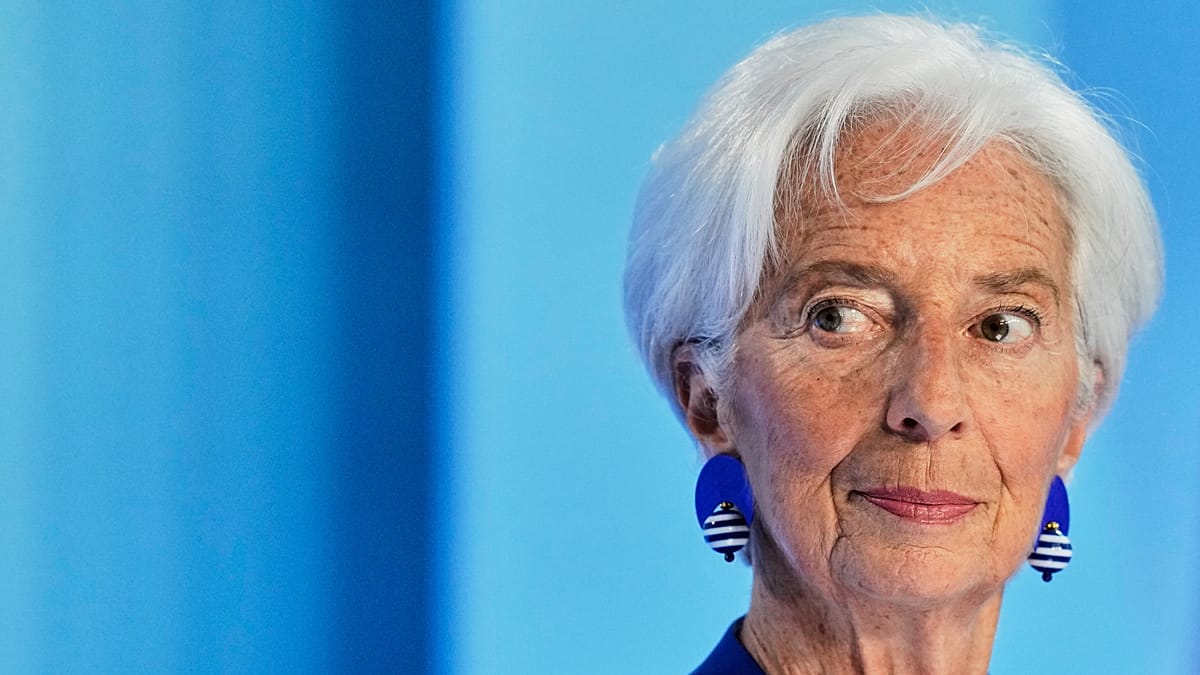
The euro will not become a global reserve currency “overnight”, European Central Bank President Christine Lagarde said on Monday in Brussels, urging lawmakers to complete the capital markets union, which she described as the most important step.
Europe is considering how to expand the global role of the euro as US President Donald Trump’s confrontational approach to foreign policy and trade has accelerated the debate.
At the centre of the discussion are three main challenges: reducing dependence on US payment infrastructure, complete the EU reform agenda, and making the euro a competitive global currency, in a landscape where the dollar’s supremacy is no longer guaranteed.
“It doesn’t happen overnight. If you look at history, no currency has been an international reserve currency unless and until it had the capacity to defend itself and to have the military might to resist counterparts,” Lagarde said during the event.
US giants Visa and Mastercard account for 61% of card payments in the eurozone and nearly all cross-border transactions, according to European Central Bank (ECB) data from 2025.
To address this, the EU has pushed for the approval of the digital euro, a public digital currency backed by the ECB and designed to complement banknotes. The legislation is expected to be approved by the end of 2026, with a crucial vote due to take place on Tuesday in the European Parliament.
Alongside the digital euro, the ECB unveiled a new payments strategy at the end of March, including the creation of two network infrastructures, known as “Pontes” and “Appia”, designed to adapt the institution to emerging technologies such as tokenisation and distributed ledger technology (DLT).
The ECB’s aim is to anchor central bank money, guaranteed by the institution, within this new technology-driven payments landscape. Lagarde mentioned as pressing priorities the development of such infrastructures, alongside the approval of the digital euro and the reform of the European capital markets.
The ECB’s push to implement this strategy is partly a response to the rise of privately issued stablecoins — crypto assets designed to be less volatile — which have steadily gained ground in the payments sector and operate on these new technologies.
While countries such as Russia and China have adopted their own public digital currencies, the US is moving in a different direction. Trump abandoned plans for a Federal Reserve digital dollar in favour of stablecoins.
The Guiding and Establishing National Innovation for US Stablecoins (GENIUS) Act, which provides a regulatory framework for these crypto assets.
As 95% of stablecoins worldwide are backed by the US dollar, Trump is seeking to strengthen the US currency through this new technology, positioning stablecoins as a key means of payment for international and strategically important transactions.
Among the proposals aimed at strengthening the EU’s international role is the creation of more euro-denominated stablecoins, according to a European Commission document on the international role of the euro seen by Euronews.