
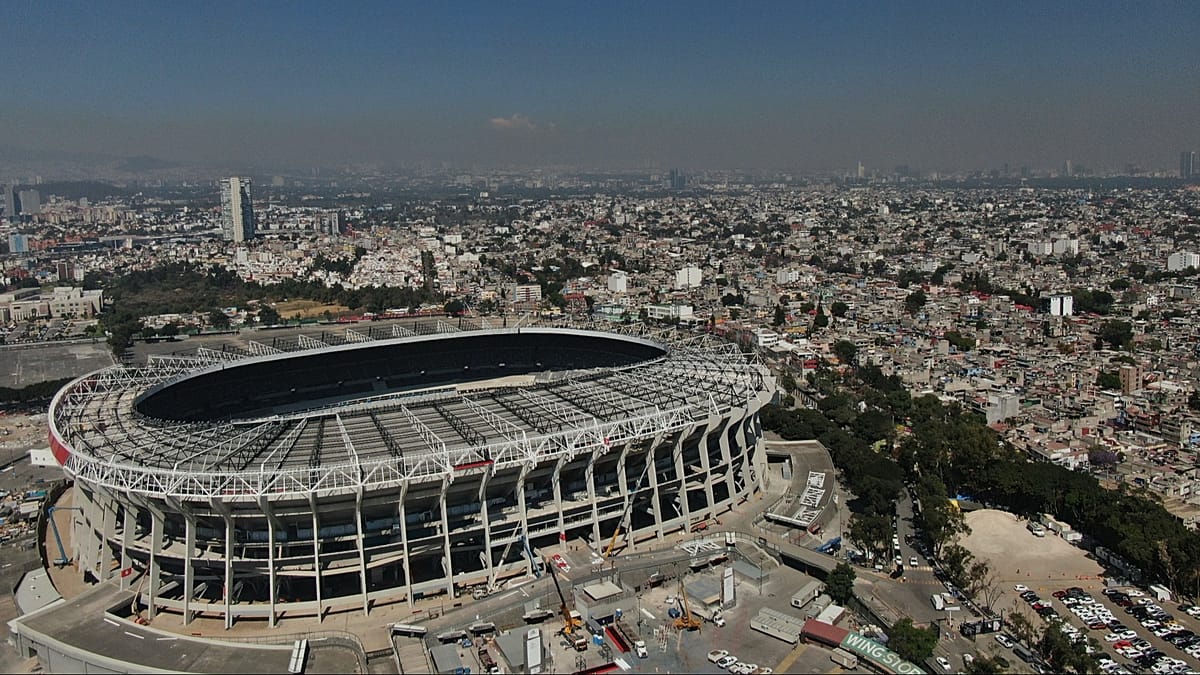
The 2026 World Cup, to be held in the United States, Canada and Mexico, could become the most polluting tournament in football history. That is the warning from the FIFA’s Climate Blind Spot (source in Spanish) report, which says that the expanded format, the geographical spread and reliance on air travel will sharply increase its climate impact.
According to the study, produced by the New Weather Institute, the next World Cup will generate at least nine million tonnes of CO₂ equivalent, almost double the average for tournaments held between 2010 and 2022, which was around 4.7 million. In broader scenarios, that figure could rise to 15 million tonnes, making the event one of the most polluting in the history of sport.
More teams, more matches, more emissions
One of the key factors is the change in format. For the first time, the World Cup will feature 48 teams and 104 matches, a 63% increase on previous editions. This expansion means more travel, more fans and greater pressure on infrastructure. The report stresses that this growth will lead to a significant increase in emissions, especially from air travel, which is already the tournament’s main source of pollution.
The most critical issue is logistics. Unlike other tournaments concentrated in a single country, the 2026 World Cup will be played in 16 cities spread across the North American continent, separated by thousands of kilometres. This will mean that teams, journalists and millions of fans will depend almost entirely on planes. In fact, the report estimates that air travel will generate more than 7.7 million tonnes of CO₂, that is, the vast majority of total emissions.
In addition, emissions linked to flights could rise by between 160% and 325% compared with previous tournaments, cementing transport as the event’s main climate problem.
A model that is hard to justify
Although the tournament will not require the mass construction of new stadiums, which partly reduces its impact, the report argues that the real problem is structural: a competition model that is ever larger, more global and more dependent on long-distance travel.
This is compounded by the lack of sustainable alternatives. Unlike Europe or Asia, North America does not have extensive high-speed rail networks that would help cut the carbon footprint of transport.
The report also questions FIFA’s climate strategy, accusing the body of having a “blind spot” when it comes to the environmental crisis. According to the authors, there is a clear gap between the organisation’s sustainability pledges and the reality of its decisions, such as expanding the tournament or choosing widely scattered host cities.
They even warn that the 2026 World Cup could worsen the climate crisis rather than help mitigate it, at a time when the world is calling for urgent cuts in emissions.
What does FIFA say?
The Fédération Internationale de Football Association (FIFA), for its part, insists that the 2026 World Cup will be accompanied by a sustainability strategy focused on reducing environmental impacts and leaving a “positive legacy” in the host cities. On its website, the organisation says it will promote sustainable construction standards in stadiums and temporary infrastructure, encourage the use of public transport and seek to cut waste, energy consumption and emissions associated with the tournament.
It also maintains that the host cities will be key to implementing long-term climate measures and promoting more sustainable practices beyond the competition itself. However, the report, produced in partnership with Scientists for Global Responsibility, Environmental Defense Fund and The Sport for Climate Action Network, warns that these measures are unlikely to offset the tournament’s structural impact.