
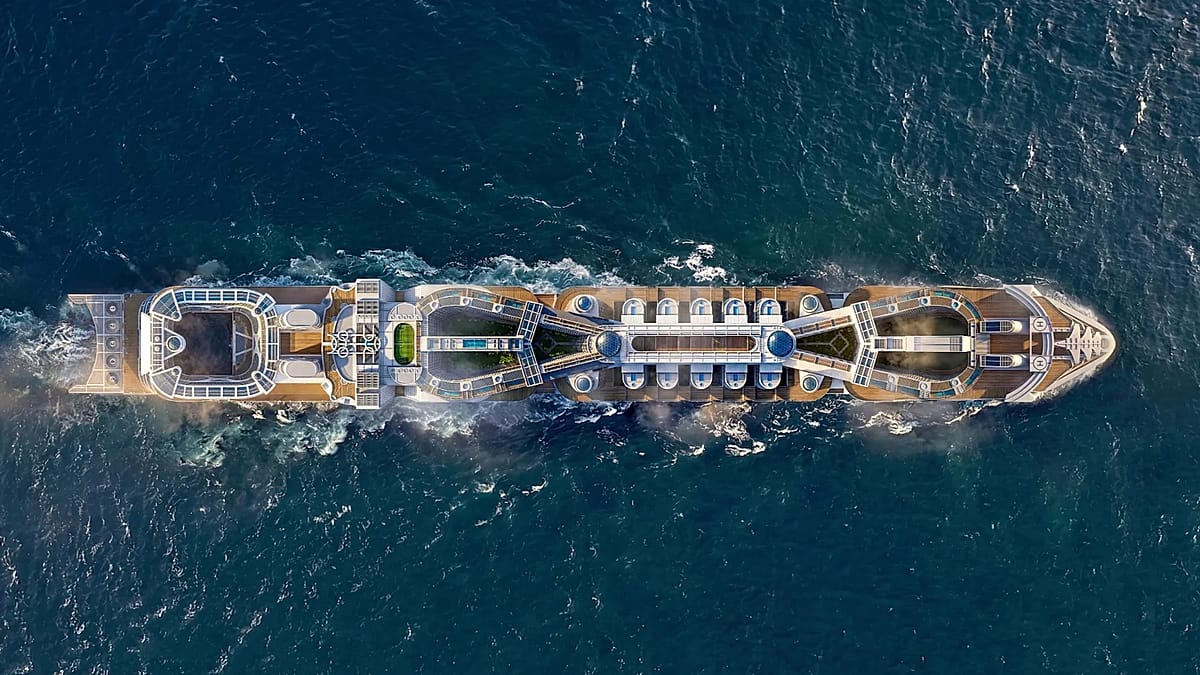
Cruise ships have been getting bigger for decades, but a proposed new vessel would make today’s floating giants look surprisingly small.
Dubbed the Freedom Ship, the ambitious project aims to create the world’s first true “city at sea” – a mile-long floating community designed to carry up to 80,000 residents, visitors and crew as it continuously circumnavigates the globe.
Complete with schools, parks, shops, hotels and even a hospital and sports stadium, its backers say it would be less a cruise ship and more a permanently inhabited ocean-going metropolis.
There are currently two “never-ending cruises” sailing around the world – the millionaire-friendly The World, a private residential cruise ship operated like a condominium complex, and the more affordable Villa Vie Odyssey. But, with a maximum physical capacity of mere hundreds of passengers, both will be significantly dwarfed by the Freedom Ship.
The vessel, which was first proposed in the late 1990s, is the brainchild of the team behind Freedom Cruise Line International.
If it does go ahead, it will be some 800ft wide, weigh 2.3 million tonnes and 30 decks high, and cost around £12 billion (€13.87bn) to bring to fruition.
While there’s no launch date on the table as yet, it’s expected to be powered by nuclear fuel and be a permanent home for 50,000 residents, as well as a further 10,000 temporary visitors, who’ll all be supported by 20,000 crew.
What would the Freedom Ship look like in practice?
With its vast capacity, the ship would carry more than eight times the number of people able to be carried on the world’s largest existing passenger boats, Royal Caribbean’s Star of the Seas and Icon of the Seas.
The sheer number of passengers means there needs to be a lot of facilities to keep everyone occupied.
Among other offerings, there will be a 15,000-seat sports stadium, two museums, a convention centre, a symphony hall and a water park.
Residents can also take advantage of a two-storey food hall, shops, banks, and a nightclub, while diving fans will be able to swim in an onboard aquarium.
For visitors, there will be two high-rise hotels and eight helipads, and children living on the ship will be educated at schools offering education from primary to college levels.
Considering the size of the colossus, there will also be a tram system to ferry passengers around, alongside 15 miles of walkways and around three acres of parks.
The boat will likely circumnavigate the globe every two years at about seven knots but, due to its size, will have to remain in international waters as it would be simply too large to dock in any port. Visitors wanting to see the ship for themselves will be able to take ferries from these ports.
How soon could the ship sail?
Florida-based Freedom Cruise Line International has tasked design firm Schopfer Associates with the creation of the vessel. The company will work alongside naval and maritime experts as well as globally-acclaimed architects.
Speaking to The Telegraph, Roger Gooch, the chief executive of Freedom Cruise Line International, says appetite for the project is strong: “We could almost justify building three ships.”
His team is currently in the process of raising the start-up funds – which will be significant – but says, “we feel very confident that we can put this together”.
When the money is in place, the ship will be constructed in Indonesia and, while it could take up to four years to complete, it’s hoped people could move into their new homes while building continues.
When it sets sail, maintenance will be done at sea, as it has no home port.
If – or when – the Freedom Ship does weigh anchor, it would be the largest maritime vessel ever constructed in history. But would you live on such a juggernaut?