
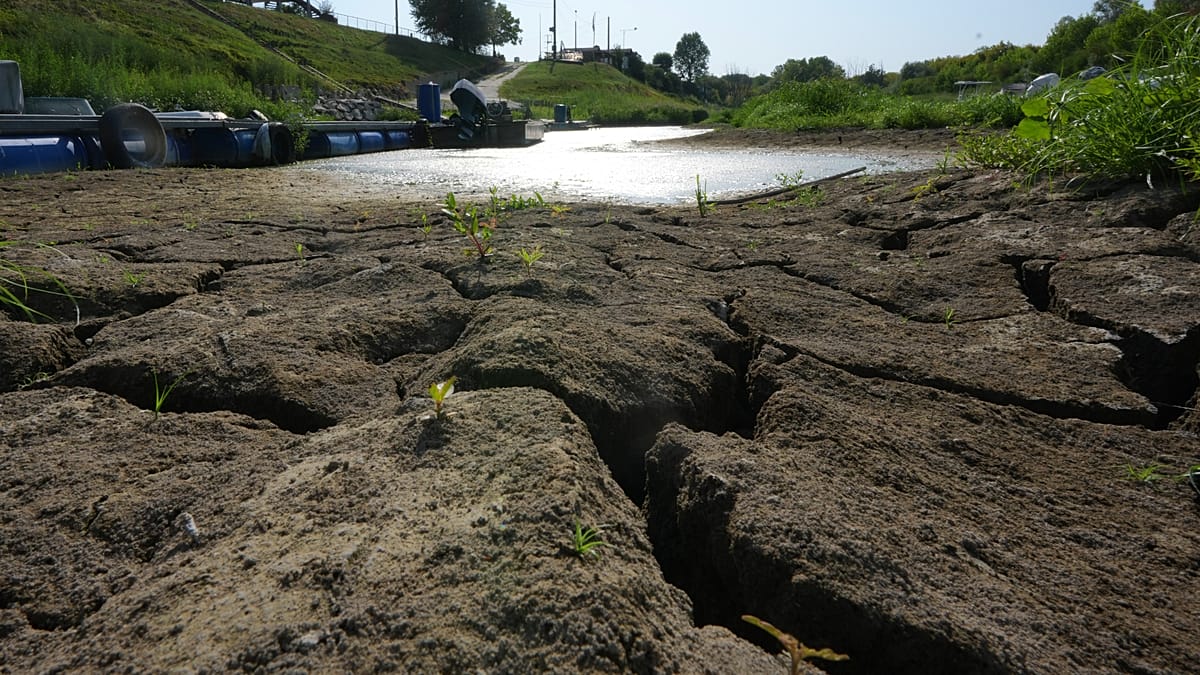
Italy’s longest river, the Po, is running unusually low in Turin amid prolonged heat and a lack of rainfall.
The Po crosses the city for around nine kilometres, but parts of its riverbed are now exposed, revealing rocks that would normally be underwater.
The low water levels are also allowing algae and aquatic vegetation to spread along the riverbanks, while wildlife is being affected by the changing conditions.
The Po is vital for agriculture and industry across northern Italy, making the falling water levels a growing concern for the region.
To boost water levels, authorities asked hydropower operators to release more water from Alpine reservoirs.
At Pontelagoscuro, near the mouth of the river, the flow has fallen to just 206 cubic metres per second, one of the lowest levels recorded this summer. It could soon drop below 200 cubic metres per second.
The lower flow is allowing seawater to move further inland. The salt wedge has reached more than 20 kilometres inland, making it harder to take water from the river for irrigation and putting crops at risk.