
Close Menu
Daily Guardian EuropeDaily Guardian Europe
  • Home
  • Europe
  • World
  • Politics
  • Business
  • Lifestyle
  • Sports
  • Travel
  • Environment
  • Culture
  • Press Release
  • Trending
What's On

SONDAGE EXCLUSIF. Municipales très incertaines à Besançon  – POLITICO

March 6, 2026

Iran’s strikes on Gulf energy sites rattle markets and raise recession fears

March 6, 2026

Iceland to hold Aug. 29 referendum on reviving EU membership talks – POLITICO

March 6, 2026

Azerbaijan says it stopped Iranian ‘terror attacks’, dismantled ‘terror cells’

March 6, 2026

Farage heads to Mar-a-Lago as Starmer-Trump relations plummet – POLITICO

March 6, 2026
Facebook X (Twitter) Instagram
Web Stories
Facebook X (Twitter) Instagram
Daily Guardian Europe
Newsletter
  • Home
  • Europe
  • World
  • Politics
  • Business
  • Lifestyle
  • Sports
  • Travel
  • Environment
  • Culture
  • Press Release
  • Trending
Daily Guardian EuropeDaily Guardian Europe
Home»Lifestyle
Lifestyle

Scientists solve mystery of little red dots seen by James Webb Space Telescope

By staffJanuary 16, 20262 Mins Read
Scientists solve mystery of little red dots seen by James Webb Space Telescope
Share
Facebook Twitter LinkedIn Pinterest Email

Published on
16/01/2026 – 7:01 GMT+1

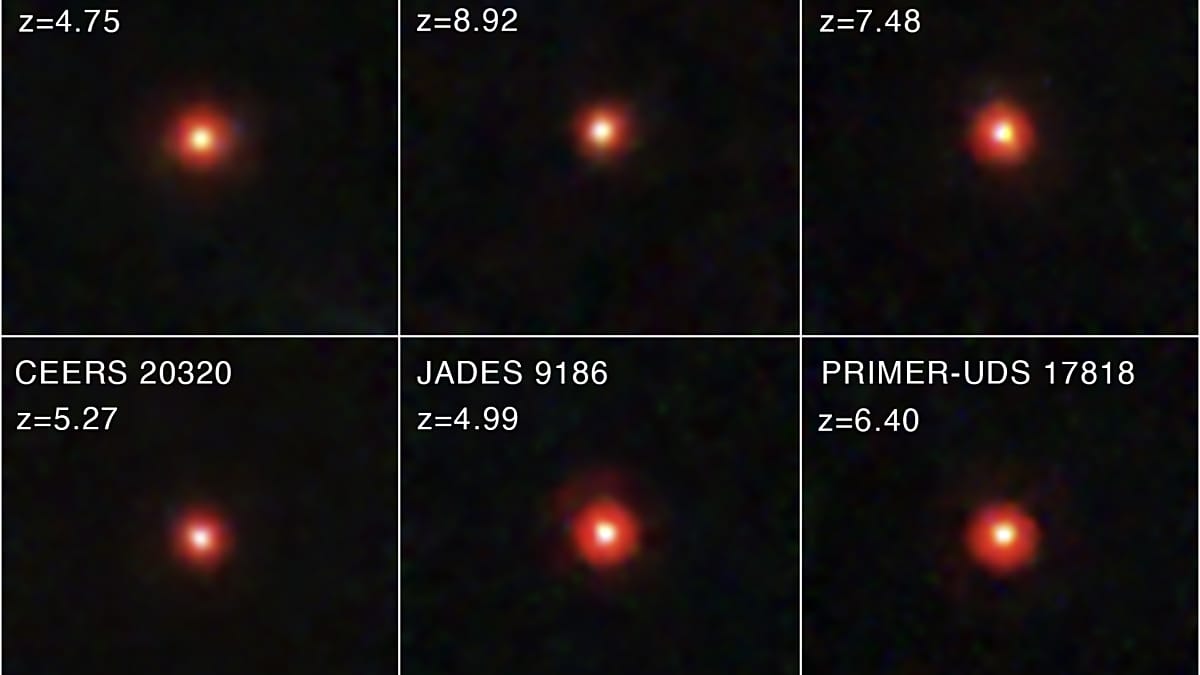
Astronomers say they have finally figured out the mysterious “little red dots,” first spotted in 2022 in images from NASA’s James Webb Space Telescope.

The objects puzzled researchers because their unusual light made it unclear what was powering them.

Early studies suggest the little red dots are extremely compact, distant galaxies and they were seen at very early times in the universe’s history, which become much rarer as the universe evolves.

The new analysis suggests the red dots are actually young supermassive black holes, a type of gigantic black hole, wrapped in gas.

Using James Webb’s advanced instruments, scientists examined how light from the galaxies is spread across different colours.

They found signs that the light is being scattered by dense, ionised gas, a process that can occur only very close to a black hole that is actively pulling in material.

As gas falls towards the black hole, it heats up and shines through the surrounding cocoon of gas, producing the red glow seen by the Webb Telescope.

The black holes are buried in dense material and therefore emit very little X-ray or radio radiation. This helps explain why they have only been seen by the Webb telescope.

The new study suggests the black holes have masses between about 100,000 and 10 million times that of the Sun.

While still enormous, they are far smaller than scientists previously thought and are the lowest-mass black holes known at such early times in the universe.

The study was published in the journal Nature.

Share. Facebook Twitter Pinterest LinkedIn Tumblr Email

Keep Reading

Meta faces privacy lawsuit over AI smart glasses

NASA honours astronomers who helped confirm humanity’s first asteroid deflection

Iran’s state media ramps up disinformation campaign as the US-Iran conflict wages

Honor’s new ‘robot phone’ wants to be your best AI friend and dance with you

AI on the battlefield: How is the US integrating AI into its military?

How to track a spy satellite |Euronews Tech Talks

‘6G is a revolution, not an evolution’ and Europe should lead it, says Qualcomm

Europe unites to build sovereign cloud and AI infrastructure to stop reliance on US

Shoot for the Starlink: How Deutsche Telekom hopes to close Europe’s cellular dead zones

Editors Picks

Iran’s strikes on Gulf energy sites rattle markets and raise recession fears

March 6, 2026

Iceland to hold Aug. 29 referendum on reviving EU membership talks – POLITICO

March 6, 2026

Azerbaijan says it stopped Iranian ‘terror attacks’, dismantled ‘terror cells’

March 6, 2026

Farage heads to Mar-a-Lago as Starmer-Trump relations plummet – POLITICO

March 6, 2026

Subscribe to News

Get the latest Europe and world news and updates directly to your inbox.

Latest News

Von der Leyen doubles down in face of energy crisis criticism – POLITICO

March 6, 2026

‘Everyone loves Bukele for it,’ El Salvador’s VP Ulloa defends mass crackdown of gangs

March 6, 2026

Macao: A year-round destination with dynamic events and a buzzing new area

March 6, 2026
Facebook X (Twitter) Pinterest TikTok Instagram
© 2026 Daily Guardian Europe. All Rights Reserved.
  • Privacy Policy
  • Terms
  • Advertise
  • Contact

Type above and press Enter to search. Press Esc to cancel.