
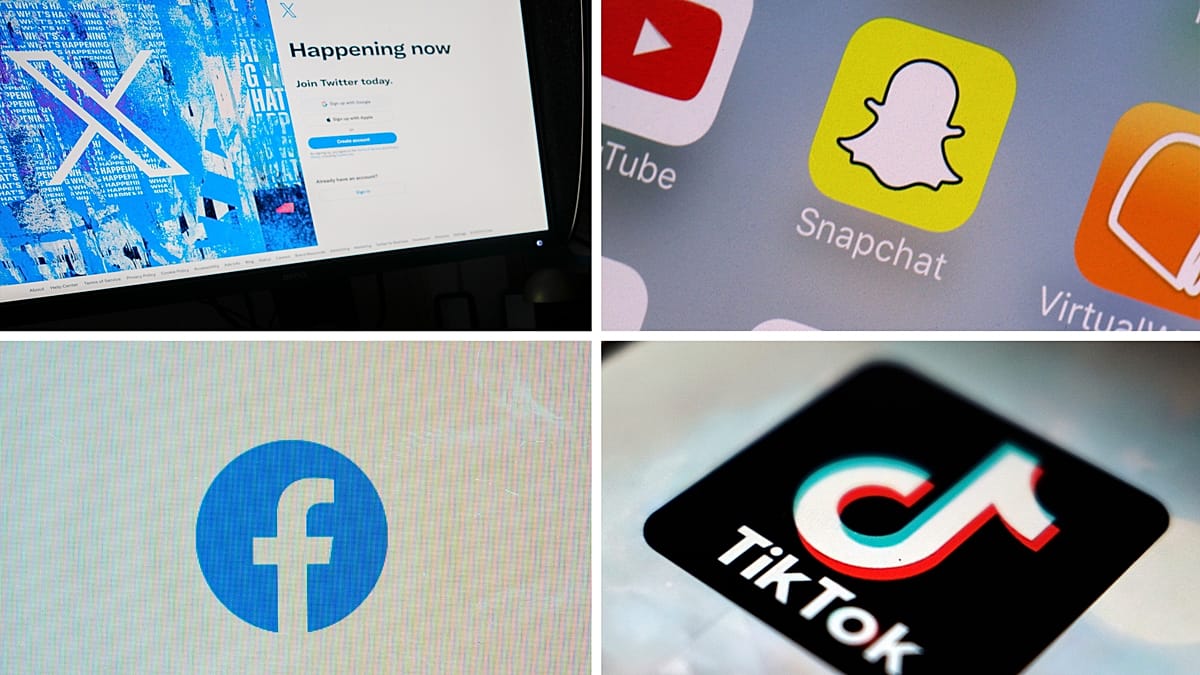
A coalition of more than 150 organisations has announced plans to build European alternatives to Big Tech’s social media, a movement backed by Brussels. It arrives as an alternative to some governments’ attempts to ban children from existing platforms, an approach that is running into trouble in court.
This week, Australia defended its world-first ban on under-16s holding social media accounts before the country’s High Court.
Reddit and the rights group Digital Freedom Project argue it breaches an implied constitutional freedom of political communication. It has closed five million accounts since December, but ministers admit it has not been as effective as hoped, with many children slipping past age checks.
France has already lost a similar fight. In August, its Constitutional Council struck down the core of the country’s under-15 ban, ruling it too broad and lacking safeguards for the age checks every user, adults included, would face.
President Emmanuel Macron has asked the government to draft a narrower version.
Even so, European governments are pressing ahead. Greece plans an under-15 ban from January 2027 and Denmark from July 2027. Spain is debating an under-16 limit, and the United Kingdom is expected to introduce its ban next year.
In September, the European Commission proposed its Kids Act, which would bar under-13s from social media accounts and limit access for 13- and 14-year-olds.
The build route ‘welcomed’ by Brussels
On Wednesday, a different approach took shape in Berlin. The European Social Association, backed by more than 150 organisations including Mastodon, launched to coordinate open, decentralised social networks that Europeans control themselves.
“Europe needs an open, interoperable and community-driven social infrastructure that reflects its democratic values and serves the public interest,” said co-convenors Michael Foster and Björn Staschen.
The idea has some backing in Brussels. The European Commission’s Open Source Strategy, published in June, names decentralised social media as one of four areas where it will support European alternatives, alongside cloud, workplace tools and secure email.
“We welcome of course the development of European social media platforms,” Commission spokesperson Thomas Regnier told Euronews Next.
“The Open Source Strategy aims at developing sovereign solutions, reducing technological dependencies and scaling up open-source alternatives in areas such as cloud, AI, internet technologies, cybersecurity and semiconductors.”
Regnier also said the Commission’s mission is to support start-ups and business accelerators but he did not set out specific funding or projects for social networks.
Caught in the net?
The two approaches could collide. Australia’s ban names 10 large commercial platforms, from TikTok to YouTube. France’s struck-down law reached much further, covering any service where users connect or share content. That definition could also have caught community-run networks like Mastodon.
The Commission says its Kids Act avoids the French law’s breadth. Encyclopaedias, educational platforms and digital news are exempt, and content that can be viewed without an account will stay accessible.
“All online services will have to prove they are safe for minors,” said Regnier. “We are reversing the burden of proof.”
Under the proposal, children under 13 would have no social media accounts. Parents could set up limited “mini accounts” for 13- and 14-year-olds, with full accounts from 15.
The Commission did not say whether the rules would apply to decentralised networks in the same way as to large platforms.
Age checks are another hurdle. Tech giants can pay for verification systems, but volunteer-run services may struggle. The EU is developing a free, privacy-preserving age-verification app, which the Commission expects to release by the end of the year.
Common ground
Both camps increasingly agree that the problem lies in how platforms are designed, not just who uses them.
Beyond its age limits, the Kids Act targets addictive features such as infinite scroll, reward mechanics and late-night notifications. Platforms that break the rules face fines of up to 6% of global turnover. This week, a Dutch MP also proposed banning “harmful addictive design features”.
Whether Europe bans, builds or does both, the platforms themselves look set to change.