
After months of negotiations and repeated delays, Germany and France on Monday ended their cooperation on the Future Combat Air System (FCAS).
According to the Élysée Palace, “the German authorities took the view that it was not possible to put further pressure on the companies concerned.”
The decision brings to an end years of efforts to develop a next-generation European fighter jet.
FCAS was widely seen as the most ambitious defence project ever undertaken in Europe. Launched in Paris in 2017 by French President Emmanuel Macron and then German Chancellor Angela Merkel, it was intended to form the backbone of European air power for decades to come.
At the heart of the programme was a fighter jet, known as the “Next Generation Weapon System” (NGWS), designed to operate alongside unmanned drones and connected through a digital combat cloud. The aircraft was expected to combine stealth technology, electronic warfare capabilities and long-range strike systems.
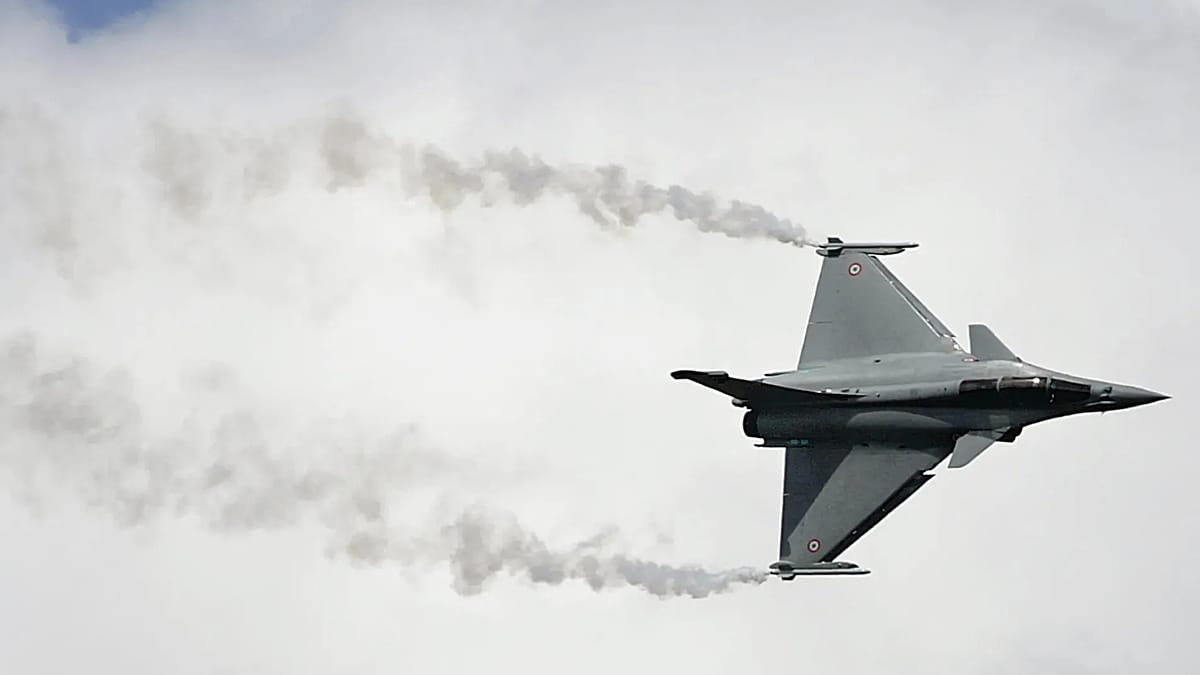
Unlike existing fighter jets such as the Eurofighter Typhoon and Dassault Rafale, FCAS was conceived as a networked system integrating aircraft, drones and sensors into a single battlefield architecture. The programme’s cost was most recently estimated at between €80bn-100bn.
Why the FCAS project failed
The main reason for the project’s collapse was an increasingly bitter dispute between the defence companies Airbus and Dassault. As recently as March, German and French leaders made a final attempt to broker a compromise between the two sides.
Under the original plans, Dassault, the French manufacturer behind the Mirage and Rafale fighter jets, was to lead development of the aircraft itself. Airbus, the Franco-German aerospace group in which both France and Germany hold stakes of about 10%, was to take responsibility for the accompanying drones. Spain also owns a minority stake in the company.
The division of labour was intended to reflect each company’s expertise. But disagreements soon emerged over control of the programme, access to sensitive technology and the ownership of intellectual property developed during the project. According to German public broadcaster ZDF, Dassault chief executive Éric Trappier was reluctant to share sensitive data and patents with Airbus.
The companies also reportedly clashed over the distribution of future revenues and the governance of the programme. A particularly contentious issue was who would ultimately lead the project. Dassault maintained that, as the prime contractor for the fighter jet, it should be in charge. Airbus, however, resisted a role that it viewed as subordinate.
Dassault defended its position by arguing that it possessed the expertise required to develop a combat aircraft “from A to Z”. Airbus, for its part, insisted that a project of FCAS’s scale required a more balanced partnership.
Despite years of negotiations and repeated political interventions, the two sides never managed to bridge those differences.
The two sides were also divided over the aircraft’s military requirements. France wanted a fighter jet capable of carrying nuclear weapons and operating from aircraft carriers, reflecting the needs of its armed forces. Germany, by contrast, saw little need for either capability.
The dispute resurfaced in early 2026 when Airbus chief executive Guillaume Faury proposed developing two separate versions of the aircraft to accommodate the differing requirements. Rather than resolving the disagreement, the suggestion appeared to deepen tensions between the partners.
At the beginning of March, Dassault accused Airbus of undermining the programme. “Airbus no longer wants to work with Dassault,” Dassault chief executive Éric Trappier told the French newspaper Le Monde in March.
Combat Air Cloud to be further developed
The fighter jet itself will not move forward, but parts of the wider programme are expected to survive. According to government sources, work will continue on the so-called combat cloud, a network intended to link drones, sensors and artificial intelligence systems and process battlefield data in real time.
Airbus is now expected to explore alternative partnerships. Industry sources have pointed to the Swedish defence company Saab AB and the British-Japanese-Italian fighter jet programme as potential avenues for cooperation. Dassault, meanwhile, is widely expected to continue work on a successor to the Rafale independently.
The collapse of FCAS underscores the difficulties of coordinating major military procurement projects across national and industrial interests, despite repeated political backing from Berlin and Paris.
Attention is now likely to shift to a narrower set of joint defence projects. At the next Franco-German ministerial council, due to be held in Germany in July, the two governments are expected to draw up a joint work plan focused on projects that both sides consider achievable and strategically worthwhile.