
Yesterday’s Spain vs Cape Verde has already gained a prime spot in football history.
It’s not just about the result, which had the reigning European champions and World Cup favourites held to a 0-0 draw against a tiny archipelago of half a million people.
The game brought to fame a name that most football fans probably never heard before.
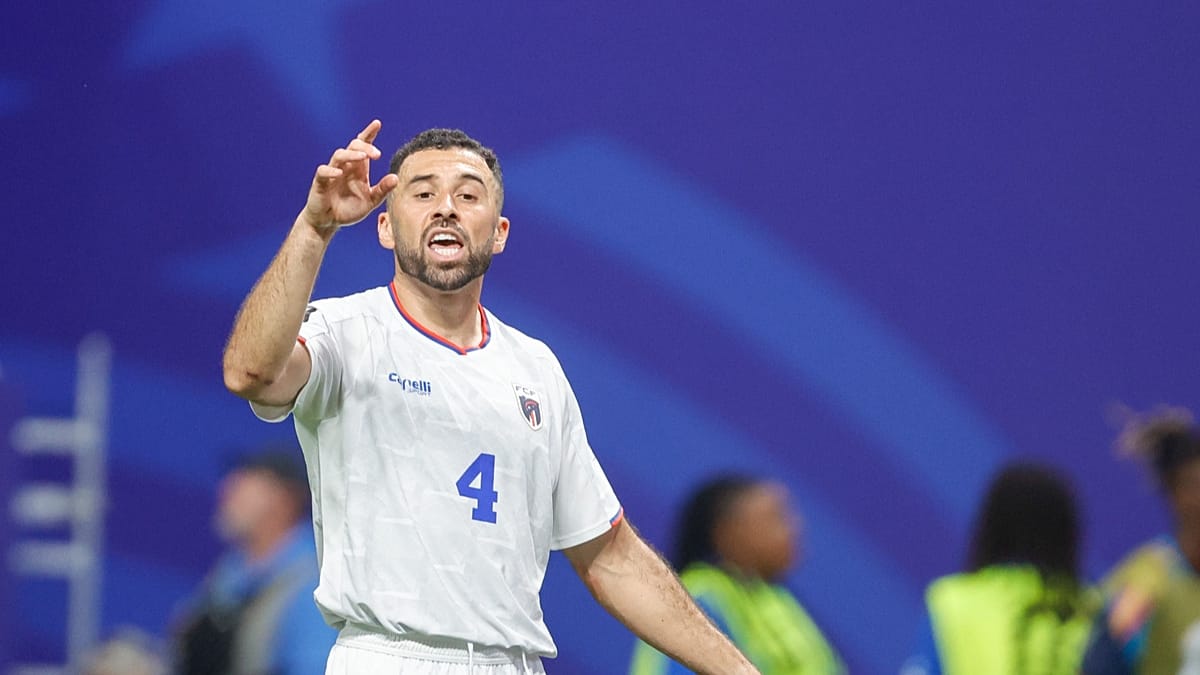
His name is Roberto “Pico” Lopes, a Cape Verde defender who plays for Ireland’s Shamrock Rovers.
What makes him special? For a start, he wasn’t even born in Cape Verde, but in Ireland, to an Irish mother and a Cape Verdean father.
But the really wild part of the story is that he got called up by the national team through LinkedIn.
That’s not exactly the usual route to international football – and the 32-year-old centre back must have thought so too.
When Cape Verde first reached out to him in 2018 on the global job-search social media platform, in Portuguese, he deliberately ignored the message, thinking it was spam.
Nine months later, the national team manager followed up, in English. That time around, Lopes saw the message, realised the opportunity was real and accepted the job.
He then made his debut for Cape Verde’s Tubarões Azuis (Blue Sharks_)_ in 2019, in a friendly win over Togo.
And yesterday, he stepped up to marshal the nation’s defence in Cape Verde’s historic first World Cup game.
And that’s not even the only reason why the game made history.
Many expected Cape Verde to spend 90 minutes hacking down Spain’s silky dribblers.
Instead, the islanders produced one of the cleanest defensive displays the tournament has ever seen – one foul throughout the entire match.
That’s the lowest foul count ever registered by a team in World Cup history.
But despite the heroic draw against Spain, the Blue Sharks still have a mountain to climb – or an ocean to cross, if you prefer.
Can Lopes and his teammates dig in once again against Uruguay and Saudi Arabia next week?
How did Cape Verde qualify for the World Cup?
Cape Verde finished the African qualifier group with 23 points, four more than Cameroon.
The team’s motto, “10 islands, one nation, one dream”, became a reality on 13th October 2025, when the nation qualified for its first World Cup with a 3-0 win over Eswatini at the National Stadium in Praia, in front of 15,000 ecstatic fans.
Following the historic achievement, the government declared 13th October a bank holiday. Few could have imagined that this dream would grow even bigger during the World Cup itself, for a nation which is currently 64th in the FIFA ranking.
Cape Verde has been independent from Portugal since 1973, with a modest economy and a massive diaspora spread across Europe.
Attracting local talent was almost impossible: players with Cape Verdean roots such as Nani, or Nelson Semedo, opted to play for Portugal instead.
Perhaps that’s also why the football federation turned to LinkedIn.
Lopes was only the first. More followed.
Today, the national team is built around players scattered across leagues in Europe, the United States, the Middle East and Africa.