
Published on
•Updated
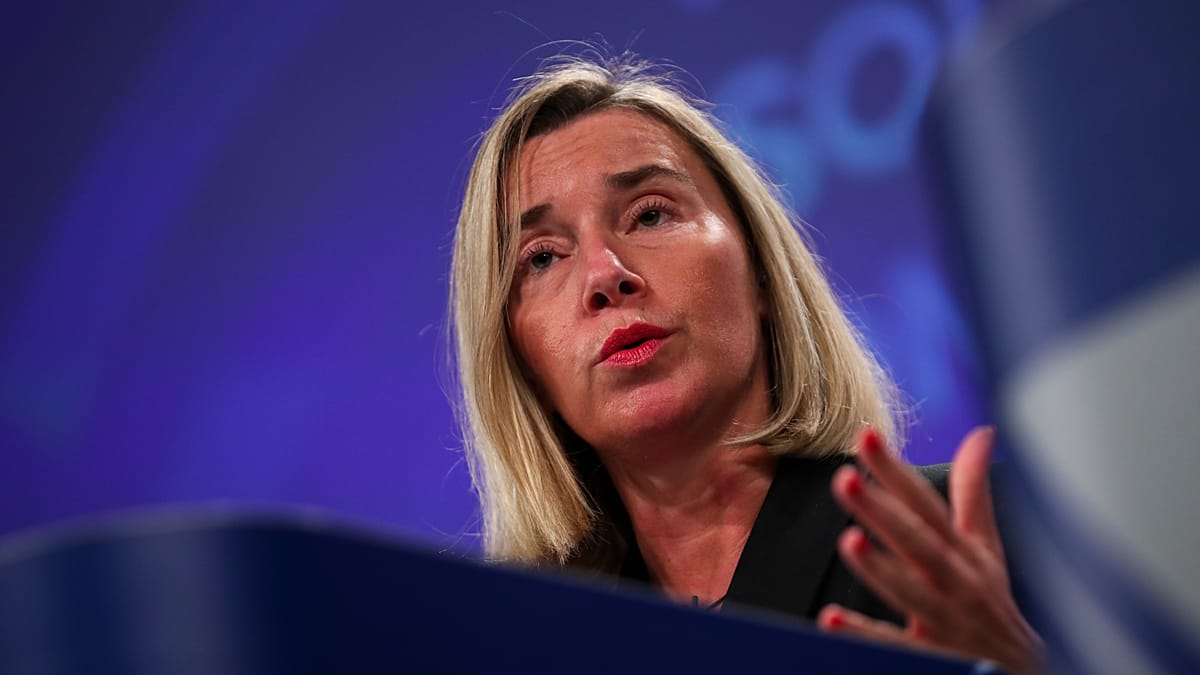
The detention of Federica Mogherini as part of an investigation into suspected fraud by the European Public Prosecutor’s Office has sent shockwaves in Brussels and Rome.
Mogherini is well-known in diplomatic circles, highly connected and has served in top political roles including the Italian foreign minister under Matteo Renzi and as High Representative of the European Union.
She currently serves as Rector of the College of Europe, an institution dedicated to European studies seen as platform to access EU jobs.
Early years: from communist youth to social democrat minister
Mogherini, born in 1973 in Rome, started her political engagement as a teenager.
In 1988, she joined the Italian Communist Youth Federation.
After the dissolution of the Italian Communist Party, she joined the social democrats, or PD. With the Italian Democratic Party, her career advanced quickly: in 2008, she became a member of the Italian parliament, with a focus on foreign affairs.
The real breakthrough came in 2014, when she was appointed Foreign Minister under the government of Matteo Renzi.
Chief diplomat of the EU and focus on Iran
Her tenure as foreign minister did not last long; that same year, she was pitched by Renzi to the High Representative job in the Juncker Commission.
Despite pushback from the Baltic states, concerned about her Russia policy and perceived appeasement of Moscow, she was appointed to High Representative in 2014, which coordinates foreign policy among member states, sits College meetings of the European Commission and chairs the EU’s foreign affairs council.
At foreign policy chief, she became a staple in international circles and her profile rose as she represented the EU in negotiations in the Iran nuclear deal JCPOA.
The College of Europe, an incubator for eurocrats
After her mandate ended, Mogherini was appointed Rector at the College of Europe in 2020 despite criticism about her lack of academic credentials for the job.
At that time, she also faced pushback citing a conflict of interest, as the College is mainly funded by the European Commission, her former employer.
The college, based in Bruges, is known for being a springboard for students looking to enter EU institutions and make career connections. It is, de facto, a soft power tool.
The fees for a full academic year amount to €30,000.
In an email statement, the College of Europe told Euronews that it would “fully cooperate with authorities in the interest of transparency and respect for the investigate process.”
Federica Mogherini could not be reached for comment at the time of publication.