
Close Menu
Daily Guardian EuropeDaily Guardian Europe
  • Home
  • Europe
  • World
  • Politics
  • Business
  • Lifestyle
  • Sports
  • Travel
  • Environment
  • Culture
  • Press Release
  • Trending
What's On

AfD surge in Germany exposes deep divisions on the Italian right

September 9, 2026

The European commute: Which EU country spends the most time getting to work?

September 9, 2026

UK commits €116m for Ukraine’s winter air defence, including Patriot missiles

September 8, 2026

Nomad Games draw to an end in Kyrgyzstan after a week of celebrating nomadic culture

September 8, 2026

EU pursues closer Israel ties on air defense and space – POLITICO

September 8, 2026
Facebook X (Twitter) Instagram
Web Stories
Facebook X (Twitter) Instagram
Daily Guardian Europe
Newsletter
  • Home
  • Europe
  • World
  • Politics
  • Business
  • Lifestyle
  • Sports
  • Travel
  • Environment
  • Culture
  • Press Release
  • Trending
Daily Guardian EuropeDaily Guardian Europe
Home»Europe
Europe

Which EU countries have the most paid online subscriptions?

By staffSeptember 2, 20262 Mins Read
Which EU countries have the most paid online subscriptions?
Share
Facebook Twitter LinkedIn Pinterest Email
By&nbspFrances Lopez&nbsp&&nbspLeo Arnoux

Published on
02/09/2026 – 10:27 GMT+2

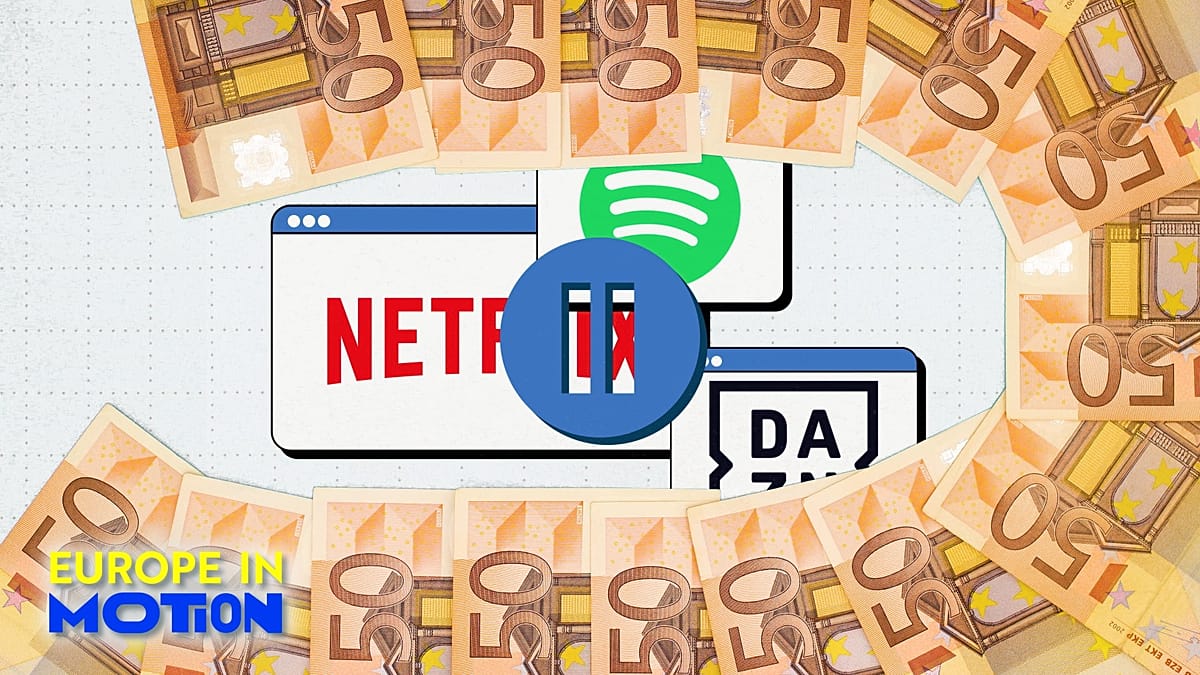
From binge-watching weekend drama series on Netflix or streaming live football matches on DAZN, nearly one in three people across the European Union now pay a recurring monthly fee just to watch films, series, or live sports online.

New data released by Eurostat shows that 32.7% of internet users across the bloc held a paid streaming subscription in 2025.

But how much Europeans actually open their wallets for digital content varies dramatically depending on the country they call home.

When breaking down the numbers by member state, a stark geographical split emerges: Ireland and Denmark lead the rankings by a wide margin, with 63.9% and 61.1% of internet users respectively paying for video and sports services such as Amazon Prime and Disney+, closely followed by the Netherlands at 59.2%.

At the other end of the spectrum, willingness to pay for streaming services drops significantly.

Bulgaria recorded the lowest adoption rate in the European Union at just 9.3%, followed by Slovenia (13.7%), Latvia (16.7%), and Lithuania (17.4%), creating a massive digital divide across the continent.

Beyond audiovisual entertainment, the data reveals clear differences in the popularity of alternative subscription sectors.

Audio platforms covering music streaming and podcasts on apps like YouTube Premium and Spotify count 23.0% of EU internet users as paying subscribers.

Traditional reads such as online news websites, digital newspapers, and magazines lag far behind at 7.2%, while interactive cloud gaming subscriptions like Xbox Game Pass trail at the bottom with 6.1%.

As digital services continue to anchor modern household routines, these figures highlight a deeply fragmented digital landscape across Europe.

Subscription services hit with lawsuits

Despite their apparent popularity in certain countries, subscription services in the EU have also come under fire from customers in recent months.

A Dutch consumer group is suing Netflix over its subscription price increases of up to 75% since 2017. It put the potential damages at up to €673 million.

It follows similar cases elsewhere in Europe, such as a court in Rome ruling in April that Netflix’s price increases in Italy were illegal. The streaming platform is appealing against the decision.

Various courts in Germany have also ruled in favour of consumers in parallel legal battles, while another in Spain is still ongoing and another in Austria concluded in an out-of-court settlement on compensation.

Share. Facebook Twitter Pinterest LinkedIn Tumblr Email

Keep Reading

AfD surge in Germany exposes deep divisions on the Italian right

The European commute: Which EU country spends the most time getting to work?

UK commits €116m for Ukraine’s winter air defence, including Patriot missiles

Technical glitch leads to more than 1,000 flight cancellations across UK

Pupils’ reading and maths skills slump across the world as digitalisation soars, PISA study shows

Sweden heads to polls in close election race dominated by welfare state and security

Ceuta President urges the EU to take firm action against Morocco, as the city is ‘on the brink of collapse’

Hungary expels 10 Russian diplomats for ‘unacceptable activities’

Global trade accounted for 35% of the EU’s carbon footprint in 2023, study finds

Editors Picks

The European commute: Which EU country spends the most time getting to work?

September 9, 2026

UK commits €116m for Ukraine’s winter air defence, including Patriot missiles

September 8, 2026

Nomad Games draw to an end in Kyrgyzstan after a week of celebrating nomadic culture

September 8, 2026

EU pursues closer Israel ties on air defense and space – POLITICO

September 8, 2026

Subscribe to News

Get the latest Europe and world news and updates directly to your inbox.

Latest News

Technical glitch leads to more than 1,000 flight cancellations across UK

September 8, 2026

Video. Latest news bulletin | September 8th, 2026 – Evening

September 8, 2026

AI is helping gangs grow illicit tobacco networks, EU auditor warns – POLITICO

September 8, 2026
Facebook X (Twitter) Pinterest TikTok Instagram
© 2026 Daily Guardian Europe. All Rights Reserved.
  • Privacy Policy
  • Terms
  • Advertise
  • Contact

Type above and press Enter to search. Press Esc to cancel.