
Close Menu
Daily Guardian EuropeDaily Guardian Europe
  • Home
  • Europe
  • World
  • Politics
  • Business
  • Lifestyle
  • Sports
  • Travel
  • Environment
  • Culture
  • Press Release
  • Trending
What's On

Iraq to collect 6 million weapons despite pushback from Iran-backed militias

September 22, 2026

One-bedroom flat rent in Portugal costs more than minimum wage

September 22, 2026

The EU spent billions on a cyberattack shield — nobody checked if it worked

September 22, 2026

New book by Princess Diana’s brother prompts war of words with King Charles

September 22, 2026

Macron pushes for energy truce between Ukraine and Russia – POLITICO

September 22, 2026
Facebook X (Twitter) Instagram
Web Stories
Facebook X (Twitter) Instagram
Daily Guardian Europe
Newsletter
  • Home
  • Europe
  • World
  • Politics
  • Business
  • Lifestyle
  • Sports
  • Travel
  • Environment
  • Culture
  • Press Release
  • Trending
Daily Guardian EuropeDaily Guardian Europe
Home»Europe
Europe

Weber warns Morocco of ‘obvious consequences’ over Ceuta border crisis

By staffSeptember 22, 20263 Mins Read
Weber warns Morocco of ‘obvious consequences’ over Ceuta border crisis
Share
Facebook Twitter LinkedIn Pinterest Email

Published on 22/09/2026 – 12:32 GMT+2•Updated
13:03

European People’s Party leader Manfred Weber warned that Morocco could face “obvious consequences” if the border with the Spanish exclave of Ceuta could not be stabilized, raising the prospect of further “uncontrolled situations” following the arrival of around 80,000 irregular migrants at the end of July.

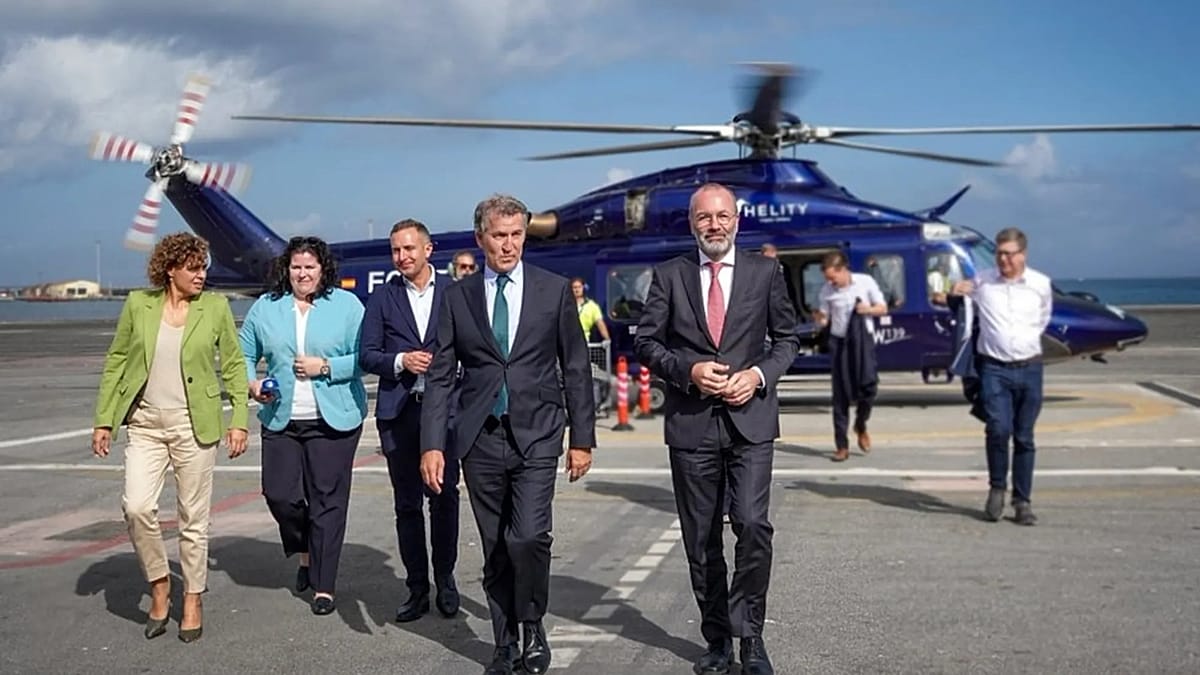
Weber was the first senior EU figure to visit Ceuta since the crisis erupted, travelling alongside Spanish opposition leader Alberto Núñez Feijóo and Ceuta President Juan Jesús Vivas.

The visit came amid growing public discontent and mounting pressure on Sánchez’s government over the presence of more than 3,000 people on the city’s streets. Madrid is struggling to complete the returns, while Moroccan authorities have so far stopped short of repatriating all of their nationals.

“If we cannot stabilize our borders, there will be obvious consequences. There is no question about it,” Weber said, referring to trade agreements, security cooperation and “other issues of great importance” in the relationship between the EU and Morocco. However, he did not specify what those consequences might entail.

Morocco is set to benefit from increased funding for border control and migration management, as part of a long-awaited partnership agreement with Brussels, but the finalization of the agreement was put on hold after the crisis erupted, according to EU officials.

The EPP leader reiterated his call for all those who entered illegally to be returned to Morocco, a position also endorsed by the European Commission.

However, Spain’s Youth Minister Sira Rego said on Monday that most unaccompanied minors stranded in Ceuta will remain in Spain, in line with national law. The decision has sparked controversy, with the right-wing opposition calling for all those who entered the exclave to be returned to Morocco.

“I think that in not so many EU countries this same situation would have lasted for over five weeks,” the EPP leader said, in a direct criticism of Sánchez’s handling of the crisis.

He also pointed to the “warnings” sent to the government before the incident occurred.

A police report leaked in early September suggested that Moroccan forces had played a role in pushing migrants into Ceuta, putting Madrid on the defensive. Spanish Interior Minister Fernando Grande-Marlaska then ordered the police to clarify the claims, which directly contradicted the government’s narrative of “trusted cooperation” with Rabat.

Weber also linked the Ceuta crisis to what he described as the “mixed signals” sent by Madrid through its large-scale regularization plan for undocumented migrants who had lived in Spain continuously for at least five months before January 1, 2026.

Almost 1.2 million people applied for residence permits under the scheme, which runs counter to the growing European crackdown on irregular immigration and the position taken by most EU countries on the issue.

Share. Facebook Twitter Pinterest LinkedIn Tumblr Email

Keep Reading

EU seals Philippines trade deal in push to diversify away from China and US

France’s president says talks with Trump on Red Sea and Ukraine were ‘constructive’

Video. Next EU budget should finance migration solutions, Greek minister says

Video. Ukraine opposes political EU sanctions delistings, deputy PM says

Live – Europe Today: Trump, Zelenskyy to meet at UN as EU fails to agree on Russia sanctions

Europe cannot afford to miss AI transformation, with fiscal dividend within reach, OECD chief says

Sunbed argument in Greece leaves 82-year-old dead after beach fight

Pressure grows on Germany’s Chancellor Friedrich Merz after bruising election defeats

EU nears deal to break impasse over French request to remove Usmanov from sanctions

Editors Picks

One-bedroom flat rent in Portugal costs more than minimum wage

September 22, 2026

The EU spent billions on a cyberattack shield — nobody checked if it worked

September 22, 2026

New book by Princess Diana’s brother prompts war of words with King Charles

September 22, 2026

Macron pushes for energy truce between Ukraine and Russia – POLITICO

September 22, 2026

Subscribe to News

Get the latest Europe and world news and updates directly to your inbox.

Latest News

Weber warns Morocco of ‘obvious consequences’ over Ceuta border crisis

September 22, 2026

Armed group shuts pipeline from Libya’s largest oil field, jeopardising exports

September 22, 2026

France’s budget: Oxfam proposes tax on ‘super-inheritances’ to raise billions

September 22, 2026
Facebook X (Twitter) Pinterest TikTok Instagram
© 2026 Daily Guardian Europe. All Rights Reserved.
  • Privacy Policy
  • Terms
  • Advertise
  • Contact

Type above and press Enter to search. Press Esc to cancel.