



Published on
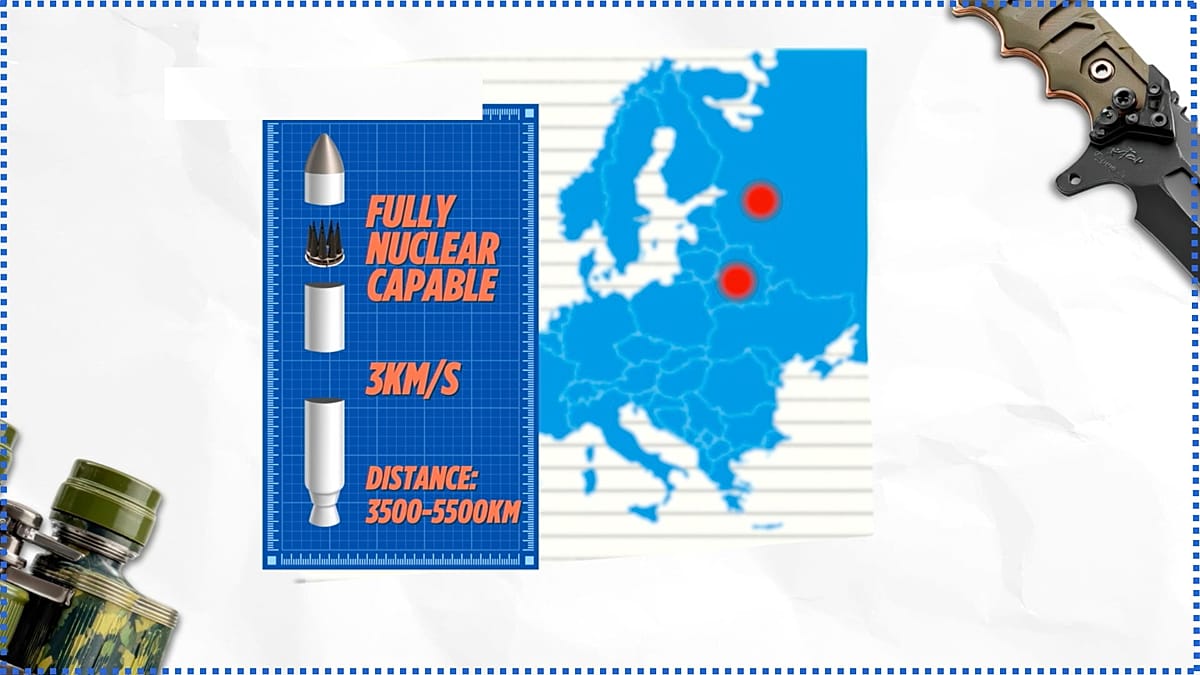
Travelling at Mach 10, or ten times the speed of sound, its range puts virtually the entire European continent within reach.
Whether launched from Russia or fired from Belarus, the Oreshnik flying roughly three kilometres per second, can physically strike Warsaw, Berlin, Paris, or London in minutes.
Now, Moscow claims this weapon is impossible to stop. And because of its extreme speed, it is indeed incredibly difficult for current air defences to shoot it down.
But military experts point out a key detail: it still flies in a predictable straight line, rather than changing direction mid-flight like a typical hypersonic missile, making it less of a superweapon than the Kremlin claims.
But does Russia really need these massive missiles to rattle the EU? Not necessarily. Just last week, suspected drone incursions ground the Lithuanian capital of Vilnius to a halt, forcing the country’s top leadership into underground bunkers.
And it serves as a reminder that in Europe, war isn’t a distant headline. Moscow uses these cheap, grey-zone tactics to test European security. So, what is Europe’s response?
Berlin is leading the charge, as Chancellor Friedrich Merz boosts Germany’s defence budget to a historic 108.2 billion euros this year.
And on the tech front, Anglo-German startup Hypersonica recently successfully tested Europe’s first sovereign hypersonic rocket in Norway.
However, in modern defence, it is not about sheer power or distance. As the classic philosophy goes, the greatest victories require no battle. The real strength of these advanced systems lies entirely in deterrence, ensuring they are never triggered. But while Europe is building weapons to prevent a war, Russia is already using them to fight one.
Watch the Euronews video in the player above for the full story.