
Close Menu
Daily Guardian EuropeDaily Guardian Europe
  • Home
  • Europe
  • World
  • Politics
  • Business
  • Lifestyle
  • Sports
  • Travel
  • Environment
  • Culture
  • Press Release
  • Trending
What's On

Ukraine peace talks pushed back as Washington juggles Iran crisis – POLITICO

February 1, 2026

Video. Latest news bulletin | February 1st, 2026 – Midday

February 1, 2026

Rafah crossing partially reopens amid continued violence across Gaza – POLITICO

February 1, 2026

Iran on Edge: Explosions, Diplomacy, and Trump’s Next Move

February 1, 2026

Iran threatens wider war if Washington strikes – POLITICO

February 1, 2026
Facebook X (Twitter) Instagram
Web Stories
Facebook X (Twitter) Instagram
Daily Guardian Europe
Newsletter
  • Home
  • Europe
  • World
  • Politics
  • Business
  • Lifestyle
  • Sports
  • Travel
  • Environment
  • Culture
  • Press Release
  • Trending
Daily Guardian EuropeDaily Guardian Europe
Home»Travel
Travel

Volcanic disruptions are one of the greatest threats to air travel. Could new forecasts change that?

By staffNovember 27, 20253 Mins Read
Volcanic disruptions are one of the greatest threats to air travel. Could new forecasts change that?
Share
Facebook Twitter LinkedIn Pinterest Email

Published on
27/11/2025 – 10:09 GMT+1

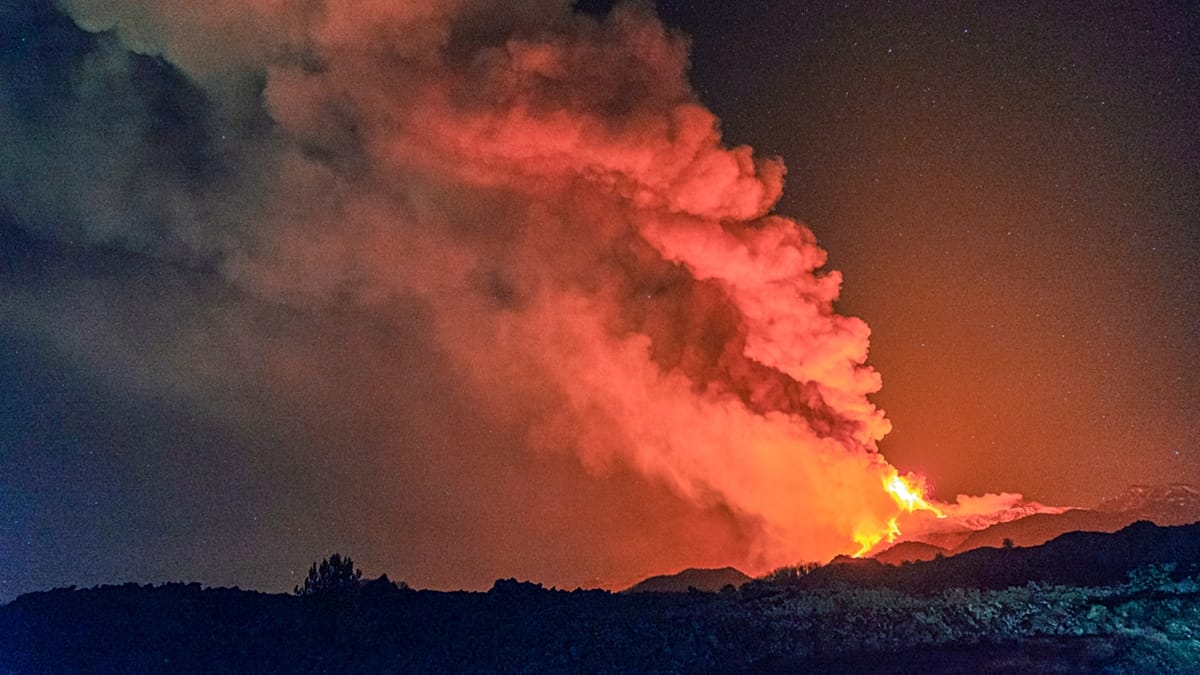
Volcanic eruptions are one of the greatest single short-term threats to air travel, but a groundbreaking solution to managing their impact has finally been unveiled.

In 2010, the eruption of the Eyjafjallajökull volcano on Iceland sent thick plumes of volcanic ash over nine kilometers into the sky. Even though the eruption was relatively small, the consequences were huge. Air travel in Europe ground to a standstill.

According to the National Centre for Atmospheric Science, airlines lost an estimated £130 million (approximately €148.49 million) every single day that airspace remained closed. Millions of passengers were left stranded from cancelled and delayed flights.

Today (27 November), the UK’s Met Office has launched a new volcanic ash forecasting provision that it says could halve disruption and keep airspace open in the event of a similar eruption to Eyjafjallajökull.

‘Significant’ problems

Volcanic ash can cause “significant problems” with aircraft, and has the potential to stop or severely damage jet engines. However, at lower concentrations of ash, flights may still be able to operate if they receive authorisation.

Ash forecast data provided by the Met Office, in its role as the London Volcanic Ash Advisory Centre (VAAC), helps airlinesdecide where they can safely operate and reduces the amount of North Atlantic and European airspace that must be avoided.

VAAC London is responsible for issuing forecasts forvolcanic eruptionsoriginating in Iceland and the north-eastern corner of the North Atlantic.

But as our skies get busier, the need for better, more accurate data around volcanic ash is growing.

The Met Office’s new volcanic ash service

The Met Office is one of the first of the nice VAACs in tandem with Meteo France (VAAC Toulouse) to start producing new, higher-resolution Quantitative Volcanic Ash (QVA) forecasts required under new regulations. The seven other VAACs will follow next year.

This new service will be available for free to all airlines in the aviation industry worldwide, and comprises gridded forecasts which provide the expected ash concentration for 12 horizontal slices of the atmosphere (from the ground all the way up to around 60,000ft).

It will also predict the likelihood of certain ash concentrations being exceeded.

‘Halving’ flight disruption

“With our new service, we estimate that the disruption today from an eruption of Eyjafjallajökull would be half of that experienced in April 2010,” says the Met Office’s Mark Seltzer, Expert Operational Lead for VAAC London.

Met Office aviation specialist Karen Shorey says the QVA data will help airlines make more “informed decisions” to avoid higher concentrations of ash, minimising the airspace that needs to be closed in the event of a future eruption.

Share. Facebook Twitter Pinterest LinkedIn Tumblr Email

Keep Reading

How an AI-generated travel website sent tourists to a non-existent hot spring attraction

Why this overlooked Greek island is appearing on must-visit destination lists for 2026

The rise of cold climate viticulture: Unexpected destinations wine lovers need to visit

Fitur 2026: Innovation, sustainability and a tribute to the Adamuz accident victims

This year could be a surprisingly affordable time to see Japan’s cherry blossoms

The major new travel hubs that are going to change the way we fly

Japan is building the world’s fastest train- but will it ever come to Europe?

Fastest-growing tourism destinations revealed in new UN report – and one is in Europe

‘Tourism creates bridges between nations’, says Saudi Arabia’s Minister of Tourism at WEF

Editors Picks

Video. Latest news bulletin | February 1st, 2026 – Midday

February 1, 2026

Rafah crossing partially reopens amid continued violence across Gaza – POLITICO

February 1, 2026

Iran on Edge: Explosions, Diplomacy, and Trump’s Next Move

February 1, 2026

Iran threatens wider war if Washington strikes – POLITICO

February 1, 2026

Subscribe to News

Get the latest Europe and world news and updates directly to your inbox.

Latest News

‘La Casa dei Grifi’: Inside one of Rome’s most ancient homes

February 1, 2026

Trump says US ‘starting to talk to Cuba’ as Washington moves to cut Havana’s oil supplies

February 1, 2026

Video. Latest news bulletin | February 1st, 2026 – Morning

February 1, 2026
Facebook X (Twitter) Pinterest TikTok Instagram
© 2026 Daily Guardian Europe. All Rights Reserved.
  • Privacy Policy
  • Terms
  • Advertise
  • Contact

Type above and press Enter to search. Press Esc to cancel.