




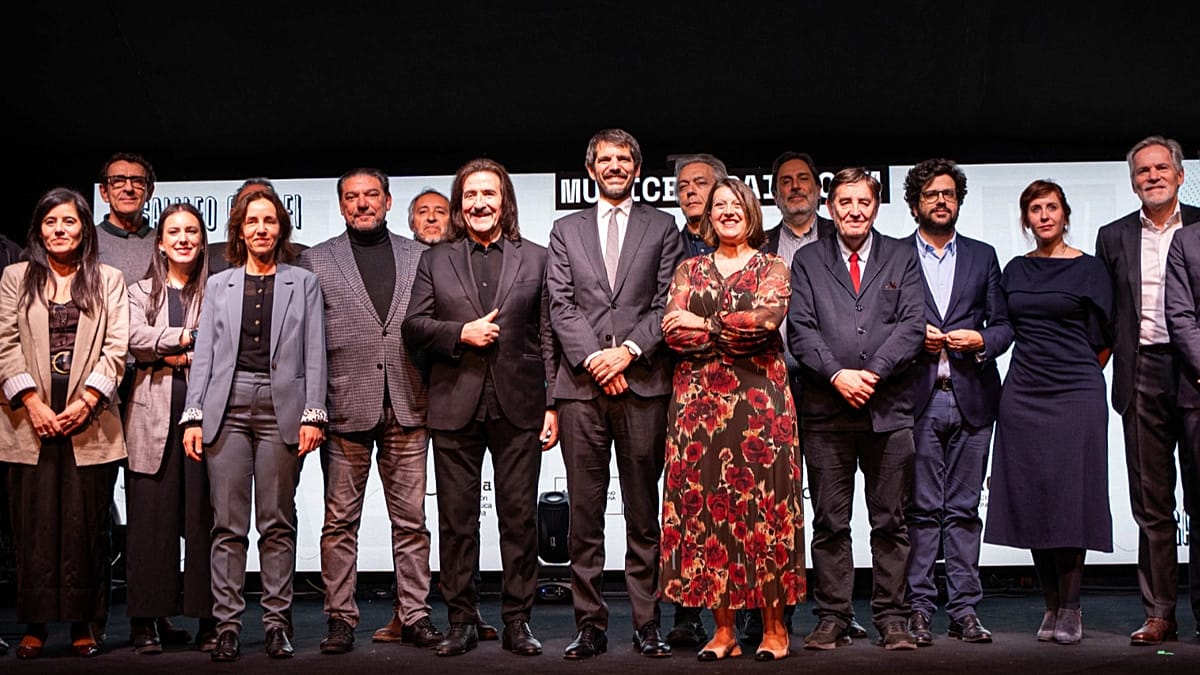
After observing the soft power effect that Spanish-language music has had over the past decade for Spain, both for the prestige of the language and for the country itself, the Cervantes Institute and Spain’s Culture Ministry have decided to step in.
The body, which is the largest public institution dedicated to promoting Spanish internationally, particularly its language and literature, has this week approved the creation of a similar structure for music composed (or produced) in the language of Cervantes, though with a focus on Spain itself.
It will be called Music by Spain and will be backed by the Es_Música Federation, Acción Cultural Española (AC/E) and AECID, the Spanish Agency for International Development Cooperation, as well as by the Cervantes Institute itself and the ministry headed by Ernest Urtasun. The Culture Ministry will support the work of this Export Office with annual funding of 100,000 euros.
The office will organise its work in several areas designed to support and strengthen the international presence of Spanish music, such as trade fairs, new strategic markets and trade missions.
“Among its functions”, the Cervantes press release explains, “will be to facilitate access for music professionals in Spain to international markets, taking into account the diversity of genres, formats and business models in the sector”.
Culture Minister Ernest Urtasun stressed that this initiative represents a step change for the industry: “These are tools that bring together information, support and market intelligence, making it possible to better coordinate the efforts of institutions, companies and artists on the global stage and, above all, they are tools that democratise access to international opportunities, especially for those who need it most”.
The initiative aims, from within the public sector, to produce analyses of international trends, markets and opportunities and will disseminate information on different programmes, calls, markets, fairs and networks of interest to the industry.
The Cervantes Institute’s Director of Culture, Raquel Caleya,recalled that work is already under way on the development of a tool (a global map of Spanish-language music) to centralise data on the consumption of Spanish-language music, which has until now been in the hands of certain private companies that produced this type of report.
The boom in Spanish-language music has only just begun
In the United States alone, the world’s largest entertainment market with 1.5 trillion streams and the second country in the world with the most Spanish speakers, Spanish-language music (with 120.9 billion plays) came close to overtaking country music (122.5 billion) according to Luminate’s final 2025 report, one of the private providers of cultural consumption data mentioned above.
Another annual report, this time from IFPI, the International Federation of the Phonographic Industry, for 2023, shows that Spanish was the language of 21% of the 500 most streamed songs on Spotify, behind English (75%) but well ahead of other demographically important languages such as Korean, Hindi, Arabic or Portuguese.
On YouTube, the same share of songs (21% of the 100 most listened-to tracks worldwide), and 7% of the 30 most viewed video clips in the platform’s history are in Spanish, with a total of 13 billion views.