

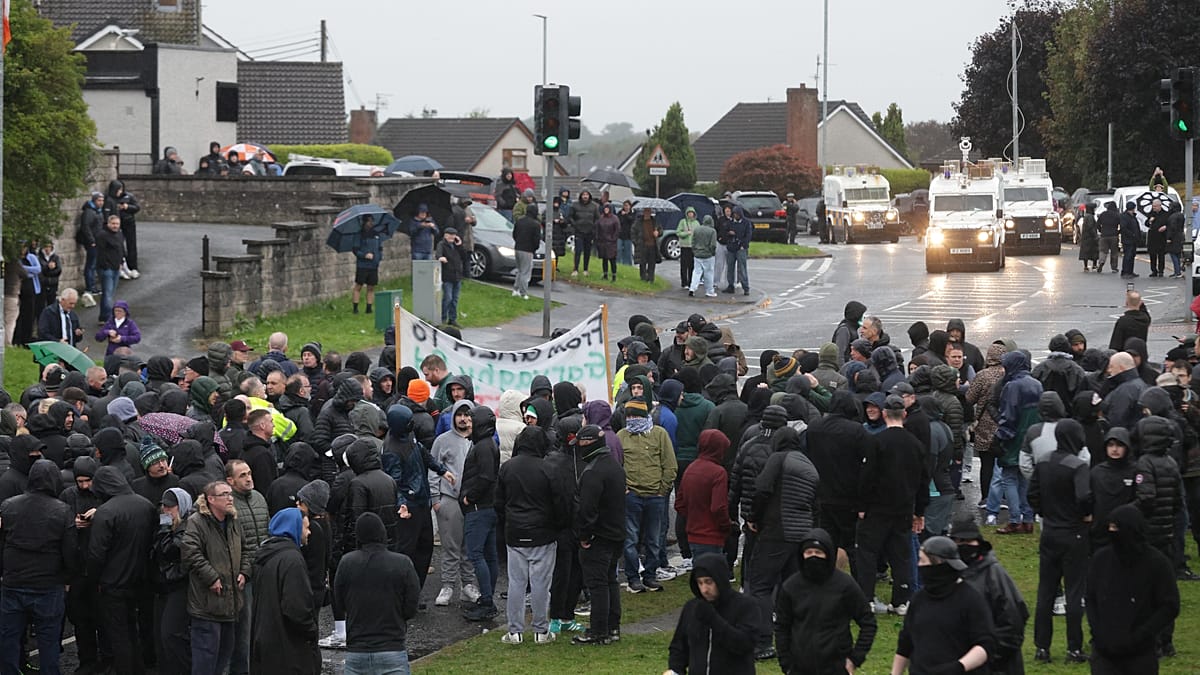
Around 2,000 people gathered despite heavy rain, while police monitored the scene with vehicles and a helicopter. The 35 Orange Order members authorised to take part remained inside a nearby church as the route was blocked. The limited parade was due to pass along the road without bands or supporters, in what would have been the first such procession there since 1998.
The standoff followed a late-night legal battle. A High Court judge initially halted the parade on Saturday, saying the long-running dispute had the potential to escalate. But the Court of Appeal overturned the ruling shortly before midnight, with Chief Justice Siobhan Keegan saying the judge had “unfortunately erred in law”. A subsequent High Court challenge was dismissed in the early hours of Sunday.
The procession was scheduled to leave at 8am and finish by 9.30am, but the PSNI said the road was not clear, delaying the march.
The decision has triggered strong criticism from nationalist leaders. First Minister Michelle O’Neill questioned why the route had been reopened after 28 years, while Sinn Féin president Mary Lou McDonald called for the British government and police to stop the parade.
Prime Minister Andy Burnham appealed for calm, saying the gains made since the Good Friday Agreement must not be undone.
The confrontation revives memories of the Drumcree dispute, when the Garvaghy Road became a major flashpoint during the Troubles.