
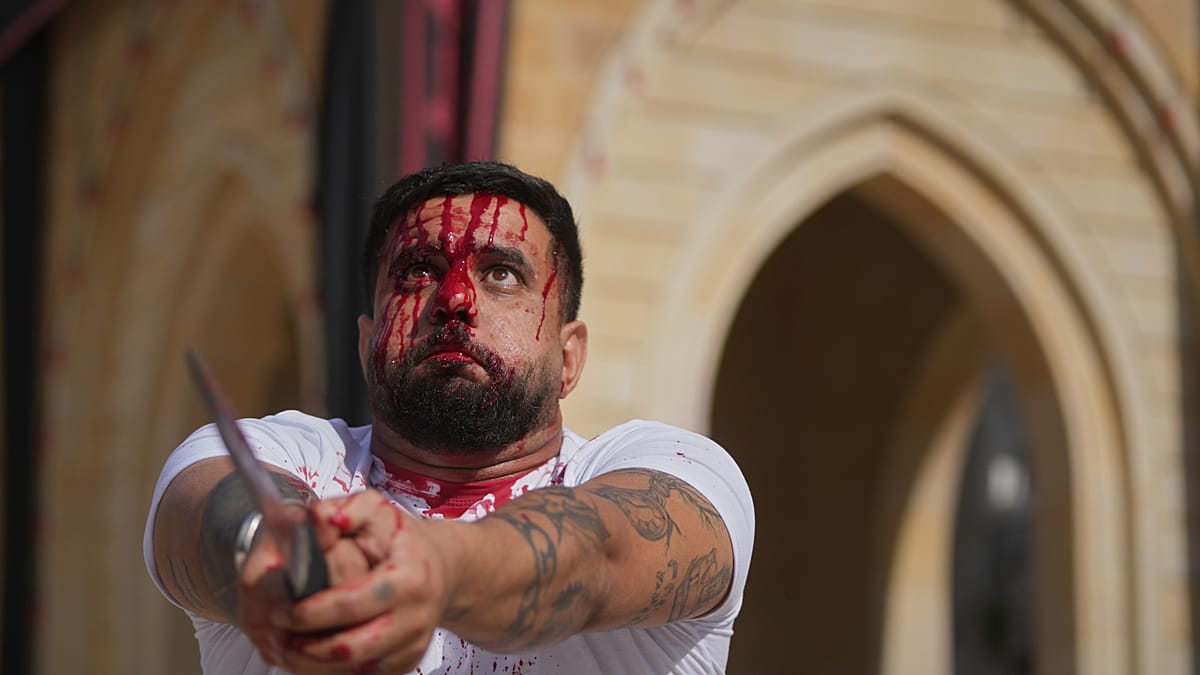
The ceremony took place near Nabatieh’s main square, where damaged buildings and piles of rubble remained visible after the fighting. While most participants marked Ashoura with processions and mourning prayers, a small minority performed tatbir, a disputed ritual involving self-inflicted wounds with blades. The practice is observed by some Shiite communities but rejected by many others, including Hezbollah.
Earlier the same day, Israeli strikes were reported in nearby Nabatieh al-Fawqa, underlining the tense security backdrop to the commemoration.
Mourners processed through neighbourhoods scarred by recent Israeli airstrikes, carrying religious banners and taking part in traditional rituals honouring Imam Hussein, the grandson of the Prophet Muhammad, who was killed at the Battle of Karbala in AD 680. The event served as both a sacred commemoration and a testament to the resilience of southern Lebanon’s communities.
Falling on the 10th day of Muharram, the first month of the Islamic lunar calendar, Ashoura is commemorated annually by millions of Shiite Muslims throughout the Middle East and around the world.