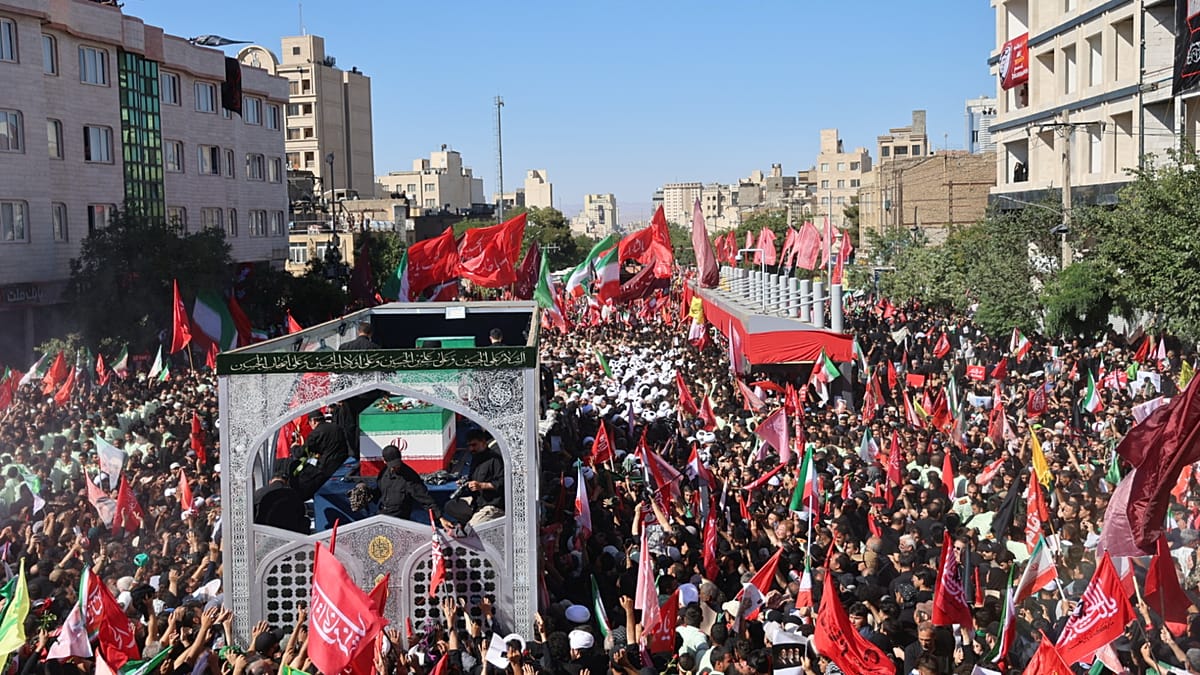





A torchlit procession from Republic Square to the Tsitsernakaberd Memorial paid tribute to an estimated 1.5 million Armenians killed in 1915 under the Ottoman Empire. The commemoration remains central to national identity and continues to shape relations with Turkey, which rejects the genocide label despite recognition by more than two dozen countries, including the United Kingdom, France and Germany.
On 23 April, crowds gathered again at the memorial to lay flowers at the eternal flame, while parallel events took place across the Armenian diaspora, notably in London, Paris and Los Angeles.
Thousands joined the silent march, led by the youth wing of the Armenian Revolutionary Federation. Participants carried torches and banners, and some burned Turkish and Azerbaijani flags in protest against denial of the genocide and recent tensions.
Demonstrators also voiced frustration over relations with Azerbaijan following the 2023 Nagorno-Karabakh conflict, as well as Ankara’s backing of Baku. Although Armenia and Turkey have taken tentative steps towards normalising ties since 2022, including direct flights and trade talks, progress remains fragile and public sentiment cautious amid stalled border reopening.
Annual commemorations in Yerevan continue to blend remembrance with current geopolitical concerns, sustaining calls for recognition and justice more than a century after the events.