
Uzbekistan’s shadow economy accounted for 33% of gross domestic product in 2025, down from an estimated 45–50% in 2019, according to data from the Ministry of Economy and Finance.
The decline coincided with changes to the tax system, the expansion of digital tax administration, and the wider use of electronic payments.
Informal employment remains concentrated in construction, agriculture, and trade and food services — sectors that have traditionally relied on seasonal labour, flexible hiring, and lower compliance costs, according to the Center for Economic Research and Reforms.
Rather than expanding enforcement alone, authorities have prioritised administrative simplification and digital tools. The Ministry of Economy and Finance told Euronews that reforms focusing on tax simplification, digital business registration, and targeted incentives have contributed to higher reporting and compliance.
International experience has informed this approach. Data from Norges Bank shows that 97–98% of payments in Norway were cashless in 2024, while consultancy EY estimates Norway’s shadow economy at 6.4% of GDP. Estonia, which has introduced digital tax filing, electronic invoices, and nationwide electronic identification, is estimated to have reduced its shadow economy to around 10% of GDP.
Tax reform and automation
Uzbekistan launched comprehensive tax reforms in 2017 aimed at reducing complexity and encouraging voluntary compliance. The number of taxes was reduced from 13 to nine, while rates were lowered. Value-added tax was cut gradually from 20% in 2019 to 12% by 2023.
Tax administration has increasingly shifted online. Farrukh Akhmedjanov, a department head at the State Tax Committee, said tax arrears now trigger automated notifications through taxpayers’ online accounts within three days, without manual intervention. Payments and balances are updated in real time, and certificates confirming the absence of tax debt can be obtained digitally via the my.gov.uz public services portal.
Individuals can check and pay taxes using the “Soliq” mobile application, including payments on behalf of family members. As of 1 December 2025, more than 14.5 million users were registered on the app, with over 13 million active users, according to the State Tax Committee.
The authorities have expanded the platform to include a dedicated section for businesses, push notifications, remote identification and AI-based support. In November 2025, services within the app were accessed 89 million times.
The introduction of electronic invoices, online cash registers, digital labelling and electronic freight bills, alongside incentive mechanisms such as consumer cashback programmes, has brought an estimated 10–20% of previously unreported activity into the formal economy across several sectors, the tax authorities said.
As a result, tax revenues reached €11.27bn from January to September 2025, up 18% from a year earlier. The fastest growth was recorded in Navoi, Fergana, Syrdarya, and Tashkent regions.
Incentives for businesses and consumers
To encourage formalisation, authorities have introduced financial incentives alongside regulatory changes. Businesses in sectors with high levels of informality, including food services and agriculture, are eligible for partial VAT refunds. Between January and November 2025, €5.6mn was returned under the scheme.
Consumers are also encouraged to participate through a cashback mechanism. Users submitting fiscal receipts via the Soliq app receive 1% cashback on purchases. In 2025, 6.8 million users received cashback totalling €94.8mn, according to official data.
Turnover recorded through online cash registers reached €18.04bn in 2025, an increase of 18.4% compared with the previous year.
Formalising agricultural transactions
Digital tools have also been introduced to formalise agricultural purchases. From December 2024, catering companies, followed by exporters in March 2025 and all businesses by November 2025, were allowed to issue electronic purchase certificates when buying agricultural products from individuals.
The system does not require sellers to provide personal identification numbers, reducing administrative barriers. By December 2025, 614 catering businesses had purchased agricultural products worth €22.28mn, while 414 exporters bought products valued at more than €521.4mn.
Shift towards cashless payments
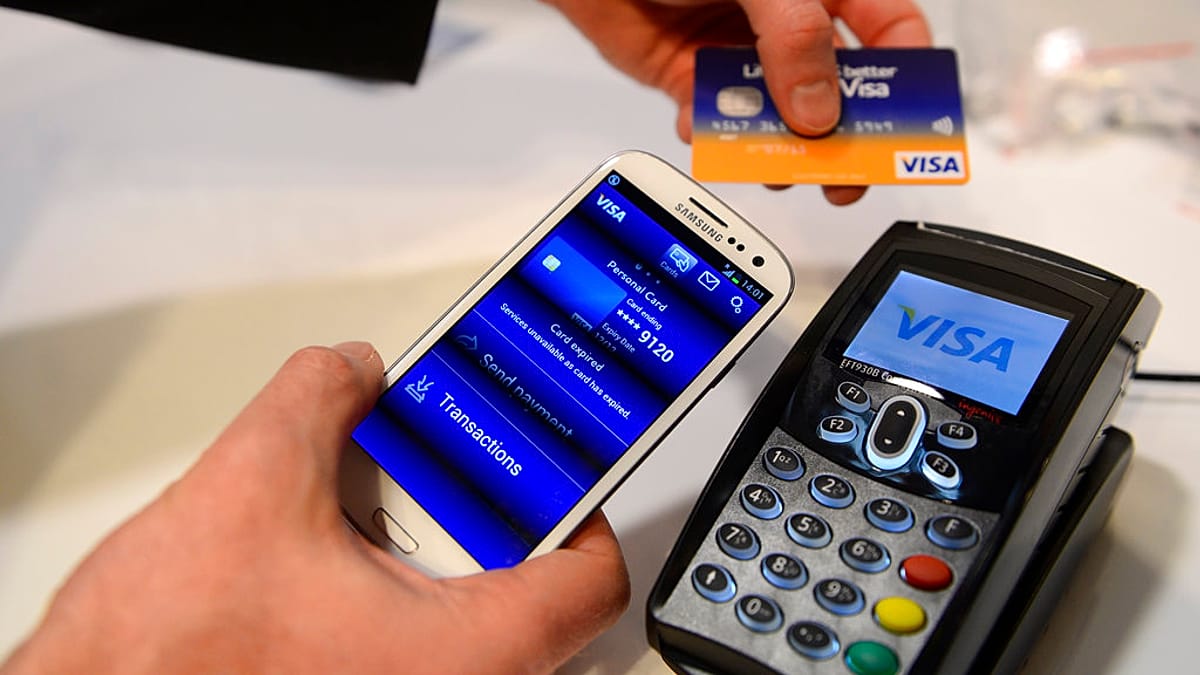
The digitalisation of payments has become a central element of Uzbekistan’s strategy. The Ministry of Economy and Finance said the transition to fully cashless payments in Tashkent’s public transport system increased transaction volumes by 38%, while budget revenues rose by 129% compared with the same period in 2024.
The system operates through ATTO, a mobile payment platform covering buses and the metro. Following automation, authorities found that actual passenger numbers were around 30% higher than previously recorded.
From 1 April 2026, payments for public services, utilities, alcohol and tobacco, high-value goods, real estate and vehicles will be accepted only through bank cards or electronic payment systems.
“If these payments are made between individuals, they will be processed through a bank, with funds deposited into accounts opened for them,” said Feruz Nabiyev, a senior specialist at the Ministry of Economy and Finance.
In 2024, around 40% of all payments in Uzbekistan were cashless, and platforms such as my.gov.uz already process millions of electronic transactions for public services and utility bills.
Since late 2024, fees for drinking water and wastewater services have been accepted exclusively in electronic form, a move aimed at improving transparency and reducing corruption.
Uzbekistan has also introduced a universal QR code for retail and service businesses. Aziz Umirzakov, head of taxation methodology at the State Tax Committee, said pilot testing began in December 2025, with full rollout planned for February 2026. Acceptance of the unified QR code will become mandatory by July 2026.
Customs digitalisation
Digital reforms have extended to customs administration. The Customs Committee said electronic data exchange and simplified procedures have reduced costs for businesses, particularly small and medium-sized enterprises.
Foreign trade turnover reached €43.71bn in 2024 and €46.04bn in the first 11 months of 2025, an increase of 16%. Customs processing times have been reduced from several days to, in many cases, a few hours, according to officials.
Uzbekistan ranked 88th in the World Bank’s Logistics Performance Index in 2023, up from 118th in 2016.
“While violations have not been eliminated, digital systems and risk management tools have improved detection and prevention,” said Husan Tangriyev, head of the Customs Committee’s press service.