

Published on
Data centres were on the ballot in the US midterm elections, with Democratic candidates who pledged to halt development claiming victory on Tuesday night.
The states of Texas, Georgia, and Ohio, which have become magnets for firms wanting to build out data centres to power artificial intelligence, voted for Democratic candidates who have vowed to crack down on the technology.
More than half of Americans are more fearful than excited about AI, according to a 2025 Pew Research Center poll.
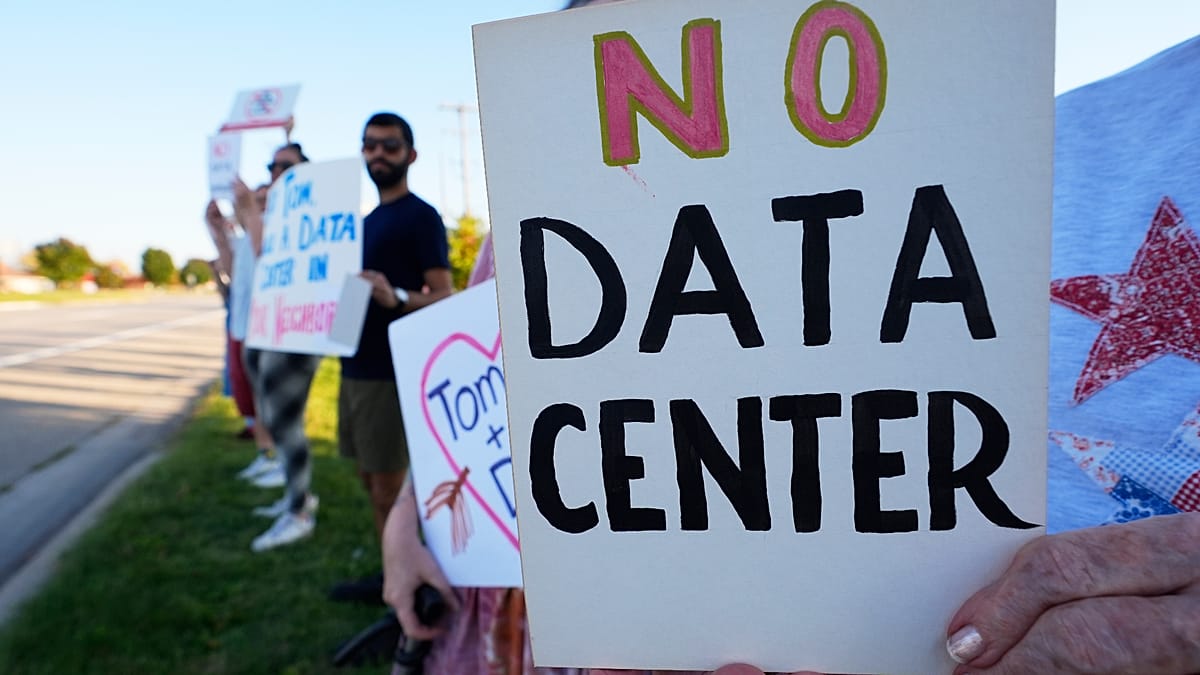
They are also concerned about data centres, which use massive amounts of energy, make a lot of noise and cause pollution, and require a lot of land. At least 45 data centre projects were disrupted in the second half of 2026 due to local opposition, according to Data Center Watch, a research project run by the company 10a Labs.
US President Donald Trump has championed the build-out of data centres and in September, called a pushback against them and AI safety concerns “all a hoax,” adding that “data centres are great, and they make people wealthy, and they make states wealthy”.
More than 50% of respondents said AI and data centres were a “crucial or a major factor” in their decision to vote in the midterm elections, according to an NBC exit poll.
Texas has lured in the tech giants OpenAI, Anthropic, Oracle, Microsoft, Google, Meta, and Amazon with tax breaks and promises of land and energy.
Republican governor Greg Abbott tried to make the state an AI “epicentre” in September, but he later shifted course and paused permits for new data centres pending an audit.
The U-turn followed his Democratic opponent Gina Hinojosa pledged to temporarily halt all new data centre construction until there were legal safeguards.
Elon Musk, who pumped $474 million (€420 million) into the Republicans for the midterms and has been building his “Colossus” – a massive cluster of AI-native data centres and supercomputers in Memphis – wrote on X “data centres in space looking pretty appealing right now,” following Tuesday’s election result.
In Ohio, voters fiercely rejected data centres, with 15 municipalities passing bans or implementing other restrictions.
Meta has planned to spend $1 billion (€890m) to construct a data centre in Ohio, and Amazon Web Services has also planned to spend $2 billion (€1.78bn) in the state.