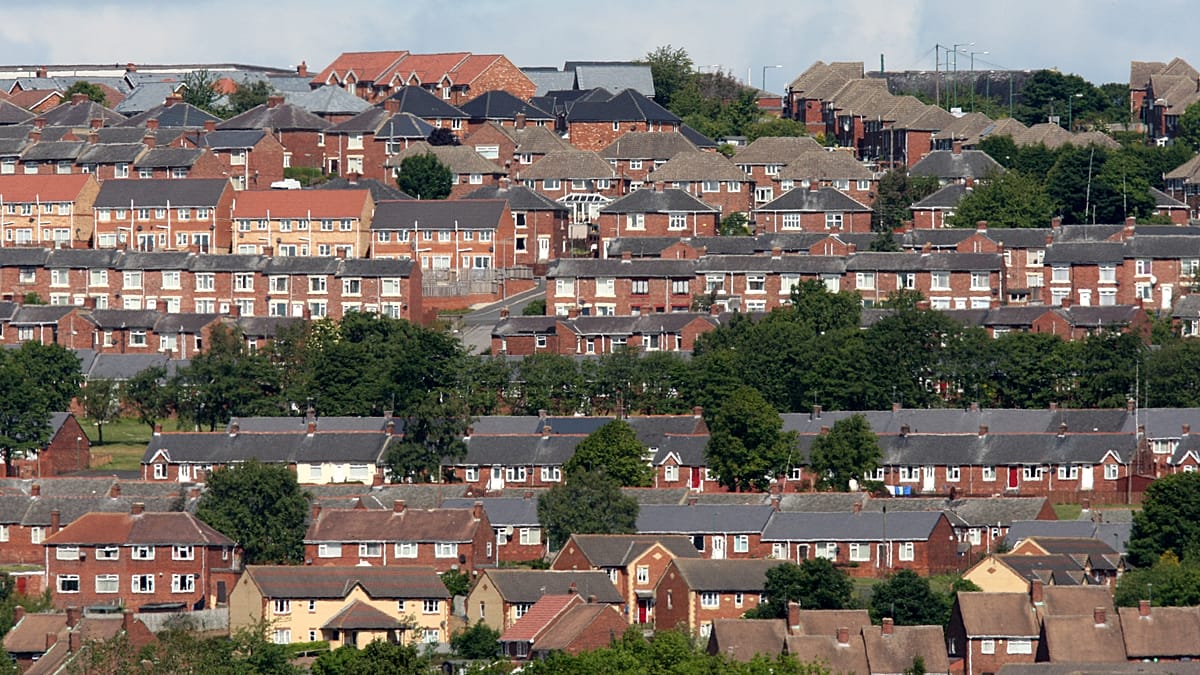
UK house asking prices were effectively unchanged in February after a strong start to the year, offering what analysts describe as a potential window of stability for both domestic and international buyers, according to the Rightmove property listings platform.
These findings matter since asking prices are one of the earliest signals of where the market may be heading, and February’s pause comes just after an unusually strong January — suggesting sellers may be testing the market while buyers regain leverage.
“Despite the standstill in prices in February, January’s record asking price increase for the time of year means that it is still the strongest start to a year for asking prices since 2020,” the latest Rightmove report stated.
The market showed signs of stabilising as supply rose and buyer demand softened, with the average asking price of a newly listed home falling by just £12 (€13.8) in February to £368,019 (€423,571).
Despite the pause, prices are still up compared with the end of last year.
The early-year momentum reflects improving confidence among sellers after political uncertainty in late 2025.
The report highlights that more owners have come to the market, pushing the number of homes for sale to its highest level for this time of year in more than a decade.
“Number of homes for sale is at an 11-year high for this time of year, giving buyers more choice and negotiating power,” the report continued.
With more properties available and mortgage rates easing from last year’s highs, the balance in the market has shifted slightly towards buyers.
Crucially, wage growth has outpaced property price rises over the past three years, improving affordability in relative terms, making “2026… a good year to buy”.
Buyers across the Channel?
EU-based investors have long been drawn to UK property for a mix of reasons, such as London’s status as a global city, deep rental demand in university and employment hubs, and the perception of the UK as a comparatively transparent, rules-based market for property ownership.
However, the path to owning UK property is not entirely straightforward for European investors. While the headline price trend may appear stable, transaction costs remain high, particularly for non-resident buyers.
For European investors, the apparent stability in prices comes with a series of tax and financing pitfalls that can quickly erode any perceived advantages due to recent price stability.
Overseas purchasers face an additional stamp duty surcharge when purchasing real estate in England, while those who already own property elsewhere are also subject to higher-rate charges.
The stamp duty is a tax paid to the government when you purchase property in the UK and it gets charged in categories or bands depending on the purchase price. The duty is due shortly after completion — meaning buyers need cash available upfront, on top of the deposit and legal fees.
The combined effect can significantly increase the upfront cost of a purchase, particularly in higher-value or sought-after areas.
Non-resident buyers often face stricter lending criteria, higher deposit requirements, and fewer mortgage options. Currency fluctuations add further uncertainty for euro-denominated investors.
For example, a French buyer purchasing a £400,000 (€460,380) flat in London as an investment could face a very different bill from a local first-time buyer.
As a non-resident and second-home purchaser, they would likely be subject to both the higher-rates surcharge and the additional overseas buyer levy on top of the standard stamp duty bands.
Once legal fees, a larger deposit and currency conversion costs are included, the total cash needed at completion could be significantly higher than the headline purchase price suggests — erasing much of the apparent advantage of stable or slightly lower asking prices.
Increased competition
The current market conditions also reflect a more competitive environment among sellers, with fewer buyers than at the same point last year.
“Competition among sellers remains at an eleven-year high, and buying activity is lower than at this time in 2025,” the report continued.
That slowdown follows a particularly active start to 2025, when many buyers rushed to complete transactions ahead of stamp duty changes. Without the same tax deadlines this year, demand has returned to more typical levels.
Sellers appear to be responding by holding prices steady rather than pushing for further gains.
“Sellers have taken a more cautious approach by holding onto January’s gains rather than pushing prices higher at a time when competition is high and the market is still very price-sensitive,” the report concluded.
For domestic buyers, the combination of higher supply, steadier prices and improving borrowing conditions may create better opportunities than in recent years.
Yet for European investors, the overall cost of entry remains shaped as much by taxes and financing constraints as by the asking price itself.