


Prime Minister Keir Starmer pledged on Monday to prove the “doubters” in his own party and among the electorate as a whole wrong as he tries to fight off demands to step down after devastating local election results for his Labour Party.
Starmer argued that he will “face up to the big challenges” and restore “hope” to the country.
That includes getting closer to the European Union and “putting Britain at the heart of Europe,” a decade after the UK voted to leave the EU.
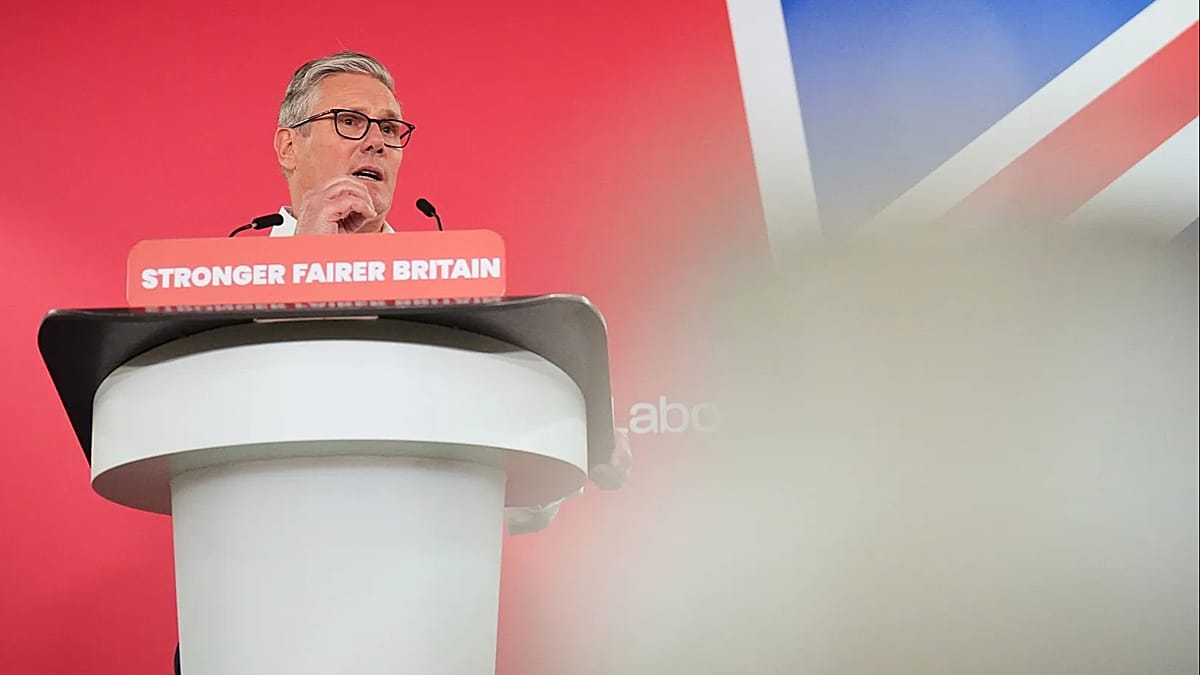
“I know I have my doubters and I know I need to prove them wrong and I will,” Starmer said during a speech in London.
He vowed to prove to millions of people “tired of a status quo that has failed them” that the government is on their side.
He said Labour is in “a battle for the soul of our nation,” and the UK will go down “a dark path” if Reform UK, the anti-immigration party led by Nigel Farage, comes to power.
But Starmer’s position is fragile, with dozens of lawmakers calling for him to announce a date for his departure.
Former Deputy Prime Minister Angela Rayner, a powerful lawmaker often seen as a potential challenger, said “what we are doing isn’t working and it needs to change.”
Rayner did not explicitly call for Starmer to quit, but accused him of presiding over “a toxic culture of cronyism” and said the government must “stay true to labour and social democratic values” and ease the cost of living for working people.
“This may be our last chance,” Rayner said in a statement on Sunday.
Labour has been plunged into gloom by heavy losses last week in local elections across England and legislative votes in Scotland and Wales.
The elections have been interpreted as an unofficial referendum on Starmer, whose popularity has plummeted since he swept to power in a landslide less than two years ago.
His government has struggled to deliver promised economic growth, repair tattered public services and ease the cost of living and been hamstrung by repeated missteps and policy U-turns on issues including welfare reform.
He has been further hurt by his disastrous decision to appoint Peter Mandelson, a scandal-tarnished friend of convicted sex offender Jeffrey Epstein, as Britain’s ambassador to the United States.
Last week’s elections saw Labour squeezed from both right and left, losing votes to both Reform UK and the “eco-populist” Green Party. It reflects the increasing fragmentation of British politics, long dominated by Labour and the Conservatives.
Starmer hopes to regain momentum with Monday’s speech and an ambitious set of legislative plans to be set out in a speech Wednesday by King Charles III at the State Opening of Parliament.
He told an audience of party lawmakers and activists in his speech that the government will take control of Britain’s energy, economic and defence security and make the country fairer.
He announced he would introduce legislation to nationalise Chinese-owned British Steel, after the government took control of the company last year.
“Legislation will be brought forward this week to give the government powers…to take full national ownership of British Steel,” Starmer said.
A key policy is closer ties with the EU, which the United Kingdom left in 2020, four years after the “leave” side narrowly won a membership referendum.
Starmer’s government has already moved to ease some of the trade restrictions that have burdened British businesses since Brexit and he says he will secure a youth mobility deal so young people can spend a few years working across the continent.
Starmer said the government would be “defined by rebuilding our relationship with Europe.”
Labour campaigned to stay in the EU during the 2016 referendum campaign, but has been reluctant to reopen a debate that bitterly divided the country.
Starmer has ruled out seeking to re-enter the EU, or to rejoin the bloc’s customs union or single market, things that would make a big difference to British businesses.
Additional sources • AP, AFP