




Published on
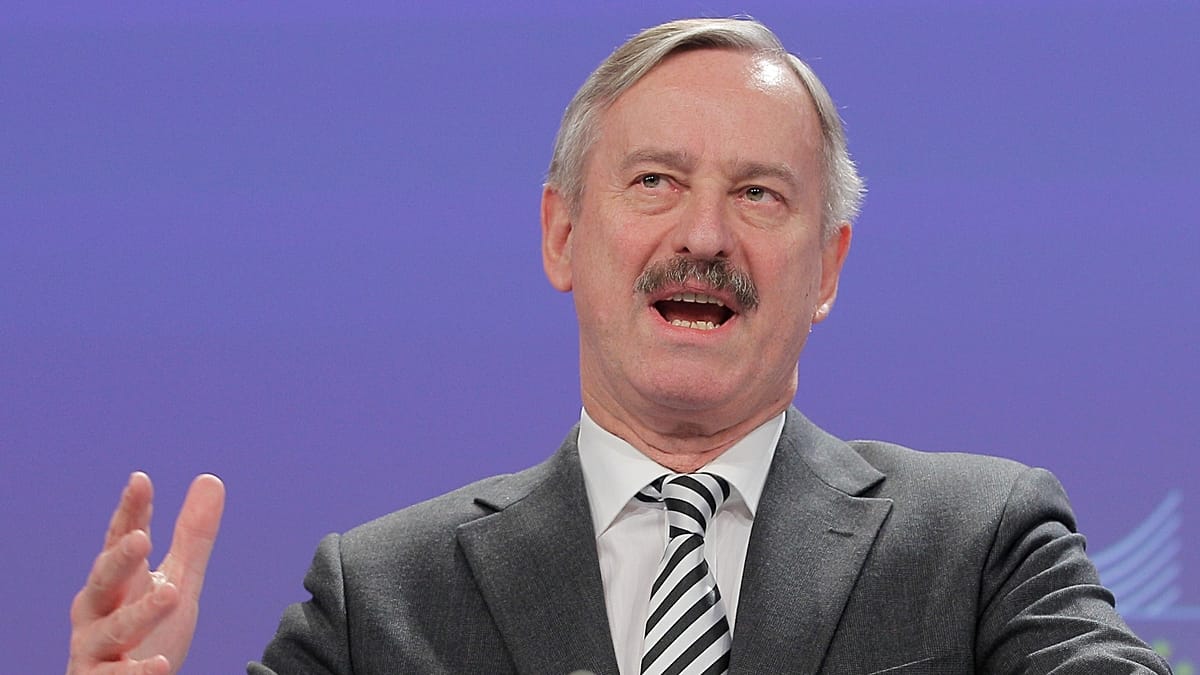
EU Trade Commissioner Maroš Šefčovič pledged on Friday a new instrument designed to help European businesses diversify suppliers and prevent shortages of critical materials from China.
“Diversification now requires a dedicated instrument,” Šefčovič said at the Brussels Economic Security Forum, organised by the European Policy Centre and partnered by Euronews. “Recent industrial cases, in particular supplies of chips and rare earths, have reinforced my conviction that a step change is necessary.”
His announcement follows disruptions to European strategic industries last year when China blocked exports of rare earths — essential for green technologies and the defence sector — as well as chips used by the automotive industry.
However, such a move could further inflame tensions with Beijing, which has already threatened retaliation if the EU closes its market to Chinese companies.
“Industry must do its part”
Šefčovič later told Euronews that the approach would involve requiring companies to source from three different suppliers, although it still had to be determined “what to really do with the legal proposal.”
The proposal would ensure that companies do not rely entirely on a single supplier, such as China. However, EU businesses may be reluctant to support such a measure if it increases production costs.
The commissioner said economic security was a shared “responsibility” and that European companies should treat geopolitical risks as part of their “core businesses.”
“Industry stands on the front line. We must have their back, but industry also must do its part.”
In 2025, Dutch authorities took over chipmaker Nexperia amid concerns that its Chinese owner, Wingtech Technology, might relocate key operations and intellectual property to China. Beijing responded by temporarily blocking exports of chips essential to Nexperia’s products and to the European automotive industry.
The threat facing Europe does not stem solely from chip supplies. It also comes from the bloc’s dependence on Chinese rare earths, 90% of which are refined and processed by the Asian giant.
During last year’s trade tensions with the United States, China also halted exports of rare earths. Shipments resumed after several weeks of negotiations, but the truce was agreed for only one year, until October 2026, leaving Europe with a Sword of Damocles hanging over it.
Relations between China and the EU are increasingly strained as Brussels prepares new tools to protect itself from surging Chinese overcapacity. The bloc faces a record trade deficit of €359.9 billion and continues to struggle to restore a level playing field with Beijing despite sustained efforts at dialogue.
At the same time, European businesses complain of unfair Chinese trade practices, while several member states — including France, Italy, Spain, the Netherlands and Lithuania — have urged the Commission to take a tougher stance through new trade defence instruments.
But two proposed EU pieces of legislation — the so-called Industrial Accelerator Act and the Cybersecurity Act — aimed at tightening access to the EU market for Chinese companies have already drawn threats of retaliation from Beijing, raising the prospect of a trade war if the EU moves further.